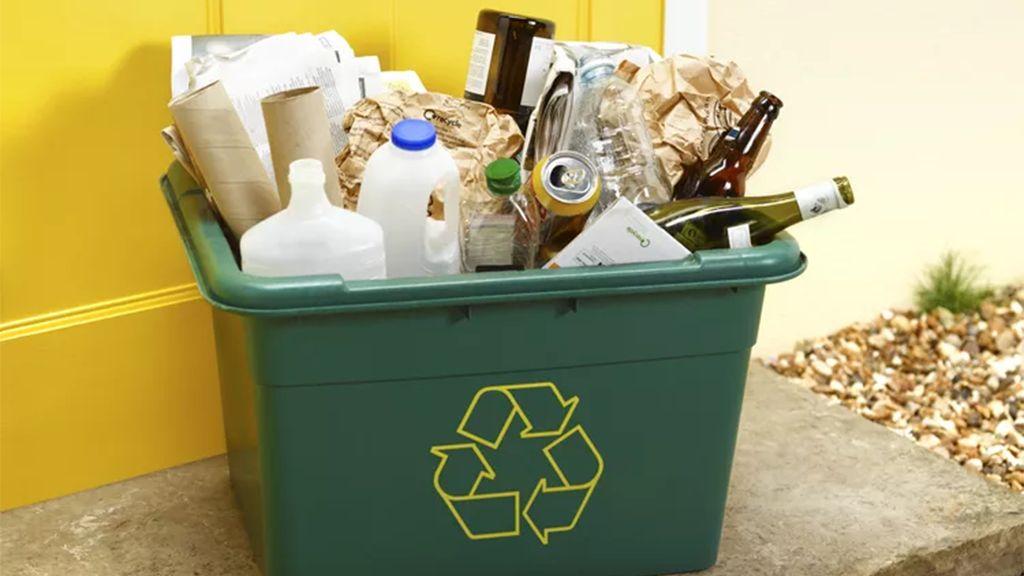

Recycling Product News’ top stories from 2025
Discover the top recycling industry stories of the year with insights into the challenges operations faced and the innovations that moved the sector forward

In 2025, the recycling industry faced several key challenges — like tariffs, global trading issues, and volatile pricing markets — yet it continues to meet these issues head-on.
We've gathered our standout stories from the year to give a clear look at how the industry has changed and the forces driving it. From breakthroughs in recycling equipment to a hard look at the challenges facing recycling, the industry is advancing future-focused technologies even amid tight markets. Check out the top articles from 2025 below.
This is what recycling leadership looks like
M&M Recycling is a multi-generational scrap processing business in Atlanta, Georgia, run by a dedicated family, Susan and Clinton Weinstein, their daughter, Saren Weinstein-Schapiro, and their son, Ryan Weinstein. Our senior writer, Meghan Barton, sat down with Saren and Susan to learn more about what it takes to encourage more women into leadership roles in the recycling industry, and how the family has evolved alongside the scrap industry, adopting the latest technologies and forging new ways of managing legacy operations.
Read more about M&M Recycling's mother-daughter duo and the culture of visibility and success that the two have created here.
What the recycling industry can learn from residential lithium-ion battery fires
In late 2024, Clean Core Research (CCR) performed an in-depth investigation of a massive lithium-ion battery fire at a Newfoundland home. The company made an unexpected discovery — soot was actively corroding surfaces, including electrical infrastructure untouched by the original fire. This finding showed that corrosive materials can spread long after the fire has been extinguished. Owner of CCR, Randy Narine, shares the dangerous reality of lithium-ion battery fires and how little is understood.
Discover how CCR is working diligently to understand the long-lasting effects of lithium-ion battery fires here.
Four generations of scrap expertise drives Lewis Salvage's innovative approach to orthopedic recycling
Lewis Salvage is approaching a century in business with advancements in modern scrap recycling. From humble beginnings in steel, coal, and paper, the company has experienced a revitalization under the leadership of Cary Lewis, fourth-generation owner. Now, Lewis Salvage expertly processes ferrous and non-ferrous metals while opening the door to new opportunities. Recycling Product News editor Slone Fox spoke with Cary to learn more about how generational knowledge of the industry helps his business evolve in a changing landscape.
Learn more about how Lewis Salvage brings an innovative approach to scrap processing here.
Debunking 7 myths about scrap metal trading
The scrap metal recycling market has long operated on old-school methods, word of mouth, and a hazy guise of price discovery. However, Buddy, a marketplace platform and trade OS, is working to create a more transparent system for scrap metal trading. Founders Lisa and Stu Kagan broke down the top myths in scrap metal trading that are currently holding the industry back.
Read more about how Buddy is expanding the scrap metal recycling marketplace here.
Brett Ekart's guide to future-proofing your scrap business
Experts in scrap know how this fast-paced industry relies on a strong and dedicated workforce. Editor Slone Fox caught up with Brett Ekart of United Metals Recycling to break down how to build a business that stands the test of time, even in a constantly changing industry. As a third-generation leader of a family business, Ekart lays out a blueprint for building and maintaining a long-term business in the scrap metal industry.
Learn more about Ekart's tips to success in the scrap industry here.
Compact recycling robots bring automation to tight MRF spaces
To accommodate the changes in packaging, meet stricter purity standards, and do it all with less workers on the floor, companies can adapt with plug-and-play robotics to advance sorting efficiency quickly. For example, Machinex's latest sorting robot, the SamurAI Optima, is a space-saving option designed for maximum flexibility in material sorting facilities (MRFs) to address the most labour-intensive or contamination-prone areas first.
Learn more about how adding AI to the line can continuously improve sorting quality here.
How a college project became a thriving scrap metal recycling business
When Prestige Auto & Metal Recycling began as a feasibility study on metal recycling for a college business project, Keny Daniele never thought it could evolve into a full-service scrapyard. Our senior writer Meghan Barton caught up with Keny to learn how he leveraged his education, passion for heavy equipment, and relentless drive to build the operation into something far surpassing its scholarly beginnings. Now, processing both ferrous and non-ferrous metals, Prestige operates as a self-service auto parts yard, standing out by attracting both private and commercial clients.
Learn more about how Keny Daniele turned a college project into a thriving scrap metal recycling business here.
Unravelling recovered paper price trends
In the first half of 2025, domestic (U.S.) and export prices of corrugated recycled fibre reached new lows. Although the price is constantly fluctuating, seeing the national average bottom out drove researchers to look closer at the trends causing this change. Recycled materials editor Huban Kasimi from Davis Index shares some of the major influences and trends affecting Old Corrugated Containers (OCC), like the limited supply of recycled fibre, soft demand, mill closures, and cautious buyers, along with fallout from U.S. tariffs.
Learn more about the changing prices of corrugated recycled fibre here.
What does it take to be Recycler of the Year?
Earlier this year, the Construction & Demolition Recycling Association (CDRA) named Richard S. Burns & Co. as Recycler of the Year, recognizing its leadership in material diversion, innovation, and industry progress. But what does it really take to earn that title? Editor Slone Fox spoke with owner Allen Burns about its standout innovation that helped the company land the title, the TOMMYcart system — a barcoded cart-based collection method that allows for precise tracking, clean collection, and enhanced diversion analytics.
Discover what it takes to become Recycler of the Year here.
A look at the equipment add-ons helping recycling facilities boost consistency and reduce missorts
VAN DYK Recycling Solutions has been working with operators to add equipment and system designs that respond to the rise of material complexity, changing packaging streams, and heightened quality demands. The company has partnered with industry experts like Günther, TOMRA, and Greyparrot to add solutions like optical sorters with AI-based analyzers to boost purity levels through advanced detection.
Learn more about VAN DYK's equipment and system improvements to adhere to evolving recycling demands here.
How to decide between two-mass and brute force vibratory screens
Vibratory screens are a critical component of material recovery systems; however, not all screens are created equal. An important choice that recyclers make is deciding between two-mass or brute force vibratory screens. General Kinematics breaks down the important differences between these machines, like the performance needed for optimal efficiency, the type of material being processed, and the lifespan and maintenance that can be expected, critical components that recyclers need to think about before taking the plunge.
Learn more about the difference between two-mass and brute force vibratory screens here.
The paradox of paper recycling
The difficulty of recycling paper does not come from the material itself; paper and corrugated cardboard are incredibly versatile, abundant in recycling streams, and simple to process. Despite all of these factors, it continues to end up in landfills. Identifying barriers, like issues with limited infrastructure and contamination from food, is the first step in creating new systems to trap more of the unrecycled materials. Companies like Juno Technology are working hard to reverse the paradox of paper recycling with new waste diversion technologies. Options like optical sorting, electromechanical sorting, and anaerobic digestion have made resource recovery more approachable for the solid waste and recovery industry.
Read on about the issues surrounding paper recycling here.
Company info






5050 Rickert Rd.
Crystal Lake, IL
US, 60014
Website:
generalkinematics.com/recycling-equipment