

Unravelling recovered paper price trends
Corrugated recycled fibre prices reached new lows in the first half of 2025
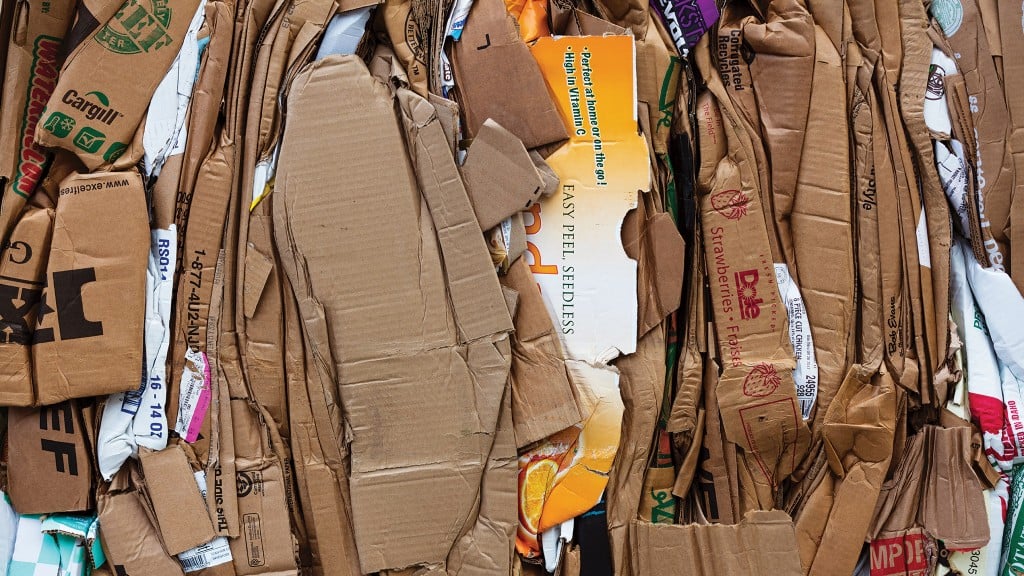
Domestic (U.S.) and export prices of corrugated recycled fibre reached new lows in the first half (H1) of 2025. Although market participants indicated that these prices may have bottomed out, it's interesting to understand the factors that influence them.
Recent trends in OCC
The monthly domestic Baled #11 Old Corrugated Containers (OCC) Davis Index prices closed at $75-95/net tons Free On Board (FOB) seller dock after the monthly trades concluded on June 12. In the same week, the export OCC indexes were $136-139 per net ton Free Alongside Ship (FAS) in all major port cities, including New York and Los Angeles.
Market participants, however, note that although current levels are low, prices for corrugated grades have declined further than what is currently being seen. Between June and August 2023, the monthly domestic Davis Indexes for OCC closed at nearly $65-83 per net ton across all U.S. regions. It's worth noting that 2024 was a particularly optimistic year for the recovered paper industry. Prices in a few regions reached $160-165 per net ton for most of H1 that year.
Recent trends appear to be unalarming to most participants. A few cited that the national average bottomed out at about $20-25 per net ton in 2019 after China discontinued importing recycled fibre from the U.S. Most of them stated that they aren't worried about the deceleration that took place seven years ago. However, the major influences driving the current prices are interesting in themselves.
Limited supply of recycled fibre
The supply and demand of recycled fibre remain at the core of the recovered paper industry. Generation volumes have been underwhelming since mid-2024, and although there have been sporadic regional upticks, the overall collection has yet to catch up.
Residential curbside collection in the U.S. has been challenging. The Recycling Partnership's estimates show that the capture rates for all recyclable materials in the U.S. were around 20 percent in 2024 and 32 percent in 2023. This means that almost 70 percent of valuable commodities are likely waylaid or landfilled, affecting the supply of essential commodities like cardboard, cartons, and other accepted food packaging.
Moreover, with office vacancy rates as high as 25 percent in major financial hubs across both coasts, the availability of de-inked materials, such as office paper and newsprint, has dwindled. The impact of limited supply is becoming more noticeable now as other factors emerge.
Soft demand, mill closures, and cautious buyers
On the demand side, domestic and export tonnage movements have slowed considerably this year. When asked about depleting volumes regionally, several participants highlighted a rising number of mill closures.
U.S.-based specialty paper manufacturer Pixelle issued a Worker Adjustment and Retraining Notification (WARN) for its Chillicothe, Ohio, site in June 2025. This will likely put a dent in the company's 1 million net tons of annual capacity from the remaining four mills.
Smurfit-Westrock has shut down its coated recycled cartonboard (CRB) site in Minnesota and a containerboard mill in Forney, Texas, this year. The global producer estimates losing nearly 500,000 net tons per year after these closures.
Earlier this year, International Paper announced the shuttering of multiple U.S. facilities by the end of April 2025. The most significant will be the Red River containerboard mill in Louisiana, which will cost the company 800,000 net tons in annual lost capacity.
Georgia-Pacific will wind down more than 1 million net tons worth of linerboard and medium corrugating operations in Georgia after closing its Cedar Springs operations.
The impact of reduced recycled fibre volumes is gradually becoming apparent in mill pricing.
On the export side, market participants continue to see fewer shipped volumes out of all major port cities in the U.S. Between January and April of both 2025 and 2024, the country's total recovered paper exports have been rangebound at 4-4.5 million net tons, according to Census Bureau data.
These are almost 1 million net tons lower than the 5 million net tons exported in 2023 and approximately 5.8 million net tons in 2022. The good news is that Asian demand for U.S. export-grade recycled fibre continues to be strong. However, most buyers consider the current price levels to be expensive.
Fallout of tariffs
Market participants continue to unravel the intricacies of President Trump's recently announced 25-50 percent tariffs on imports of recyclable materials. While many claim that the effect is minimal on fibre, the impact is more pronounced on finished paper products, such as corrugated boxes.
However, recent Census Bureau statistics show that the U.S. is buying less material from two major sellers, Mexico and Canada. Total annual imports fell 21 percent in the first four months of 2025 to 278,000 net tons from 350,000 net tons (approximately) and were down 46 percent in April to about 51,000 net tons against almost 95,000 net tons in the same month of 2024.
The consensus among market participants is that packaging plants are still profitable. However, domestic generation may take some time to reach volumes that align with expectations. Many believe that although the current domestic and export levels are low, they are unlikely to return to normal anytime soon.