

Debunking 7 myths about scrap metal trading
How technology is reshaping one of recycling's most opaque markets
Scrap metal has long been the backbone of the recycling industry, with millions of tonnes of material moved each year across domestic and global markets.
Yet, for all its importance, the sector has historically operated in a haze of opacity, where price discovery is patchy, information is uneven, and the strength of one's personal network at any given point in time, in any given market, often determines trading outcomes. But markets move, trading lanes shift, and the ground beneath those relationships is constantly changing.
That lack of clarity isn't intentional. It's the byproduct of decades of trading built on relationships, handshake deals, and limited visibility. In a world where information translates into bargaining power, opacity has become accepted as simply "how things are done."
But technology is showing that it doesn't have to be this way. With greater transparency, sellers gain access to more buyers and better prices, while buyers gain broader access to supply — creating a healthier, more resilient marketplace for all stakeholders.
One of the platforms emerging to bring transparency to this space is Buddy, a digital marketplace and trade OS built "for scrappies, by scrappies." Since its launch, it has given North American recyclers access to a broader set of vetted buyers, helping form and build new relationships and delivering stronger prices. For buyers, Buddy has created access to trusted sources of supply on tap, while simplifying the mechanics of trading.
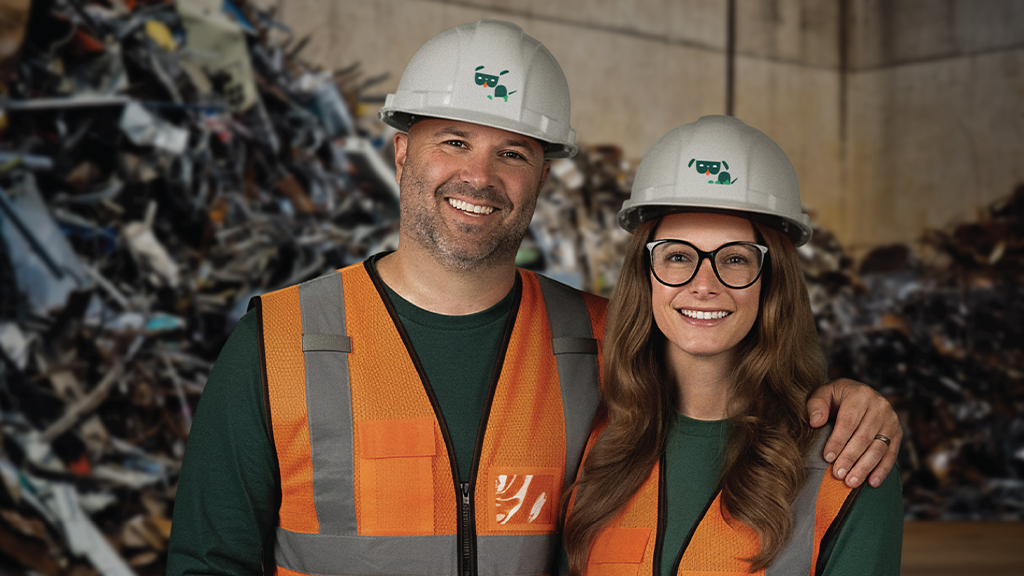
In this article, Buddy founders Lisa and Stu Kagan break down seven persistent myths about scrap trading and explore how transparency and digital tools are transforming the market — for the benefit of both relationships and results.
The roots of opacity
Scrap trading has always relied on relationships. For most recyclers, those relationships are with two to four key buyers for each major grade they sell. When markets move, the natural instinct is to pick up the phone: "Hey, what are prices at the moment for commodity X?"
Those conversations remain essential, but they also highlight the industry's structural imbalance.
Scrap metal recyclers rely on indices such as Comex, AMM, or the LME as important proxies, and they play a vital role in shaping market dynamics and sentiment. However, they don't provide the full picture when it comes to scrap, which still lacks a transparent, real-time, trade-verified index that reflects secondary material values. That has meant recyclers depend heavily on their buyers to provide pricing signals — signals they also use to set their own buying prices.
Buyers have traditionally filled this role out of necessity. Their scale and reach allow them to aggregate supply, secure better prices, provide market access through their own networks, manage logistics, handle paperwork, and share market intel and advice. What's shifting now is not the value of those relationships, but the foundation beneath them.
With technology providing real-time, trade-verified data, recyclers no longer have to call a buyer just to ask where the market is. They already know. That levels the playing field and turns the conversation toward higher-value questions: What terms can we agree on? What volumes make sense? How do we grow this partnership?
Myth 1: Market opacity is unavoidable
For decades, opacity was seen as inherent to the way scrap trading was done. Traders relied on fragmented networks where visibility was scarce, and many assumed it had to stay that way. But digital platforms are now aggregating pricing and demand signals, giving sellers confidence in their options and buyers broader access to supply.
Blaine Cash of Recycle Management captures this shift: "It is allowing me to see more buyers. Now I get to see what the real market is instead of just one or two people telling me. I really do not make a deal until I've seen five bids now. Before Buddy, we didn't have five people to choose from."
Myth 2: I already have the best buyers
It's natural for recyclers to trust the buyers they know. Strong relationships are built over time, and those buyers often provide invaluable service beyond pricing. But the assumption that existing buyers always offer the best price is harder to defend.
Markets move quickly. A buyer who locked in a position today might be at a disadvantage compared to one who secures their position later when conditions shift. Relationships will always matter, but transparency ensures that those relationships are based on mutual benefit rather than blind reliance.
Diversifying the buyer base doesn't mean abandoning trust; it means testing the market to confirm that trust is yielding competitive outcomes. As Conner Wilkinson of Wilkinson Gary Iron & Metal notes: "In my first week, I threw up some aluminum [on Buddy] and got eight offers in a day, from companies I'd never even heard of. I ended up doing business with five of them."
A strong partner will want recyclers to secure the best deal for their long-term sustainability, even if that means losing a particular load. Technology helps prove out those dynamics, keeping relationships anchored in transparency and long-term value.
"Everyone is skeptical at first, and I get it," says Stu Kagan. "But 100 percent of people understand the value after seeing the platform."
Myth 3: A handful of strong relationships is enough
It's tempting to believe that a few trusted buyers will always be enough to keep material moving. Strong relationships are vital, but markets are never static. Export tariffs, shipping disruptions, and sudden demand swings have all left recyclers scrambling to find outlets when traditional lanes closed.
The only constant in scrap trading is change. Technology widens the circle, ensuring recyclers always have a home for their metal without sacrificing the depth of existing partnerships.
Myth 4: Technology erodes relationships
Some fear that digital tools could depersonalize the business, replacing the handshake with a cold algorithm. But in reality, transparency strengthens trust. When both sides see the same data, expectations align more easily. Technology doesn't replace relationships; it reinforces them.
"Buddy hasn't changed the trust in our industry," says Wilkinson. "It has reinforced it. Everyone's vetted and hitting confirm feels like the digital handshake."
Myth 5: Negotiation is only about the price
Negotiation is central to scrap trading, but it has never been just about price. Skilled negotiation weaves together material quality, logistics, payment terms, and trust between buyer and seller.
Historically, proving material quality often required years of trading together. Technology now helps shorten that curve. By using trade-verified data to build a reputation for consistent quality, sellers can give lesser-known buyers the confidence to price their material more competitively, without waiting years to establish that trust.
Myth 6: A gut feeling alone is enough
Unlike primary metals, scrap has never had a true system of record for trade data. A price only formally exists when a deal is struck and payment is made. In reality, though, every negotiation contains valuable signals that traditionally vanish into the ether once a load is sold.
By using a marketplace to trade, recyclers begin generating data-rich profiles — not just on their own material quality, but also on buyer responsiveness, reliability, and how their deals compare to broader market trends. Over time, this builds a living system of record that helps sellers drive better trading outcomes in real time.
Lisa Kagan, co-founder of Buddy, puts it this way: "AI may be the buzzword of the moment, but it's important to understand the foundation beneath it: data. Data is to AI what shredder feed is to a shredder. Without it, there's nothing to process. This is a watershed moment for the industry — one that will only reach its full potential if recyclers embrace a more data-driven approach."
Myth 7: Change is hard
Scrap trading has a reputation for being slow to adapt, but change doesn't have to be painful. Modern platforms are designed with usability front and centre, making the leap easier than many expect.
In Buddy's case, the app was intentionally designed to be intuitive: "So easy, even your dad can use it." Recyclers who once hesitated are finding that listing a load, comparing offers, and closing deals takes just a few taps.
"It's so simple," says Derrick Brion of Clayton County Recycling. "Simplicity and time savings."
Those gains matter in a business where hours saved are money earned.
From opacity to clarity
The opacity of scrap trading may have once felt inevitable, but technology is proving otherwise. Marketplaces that provide transparency, competition, and standardization are changing the way recyclers do business.
And, as Wilkinson points out, the impact goes beyond numbers: "When you feel cornered into choosing between the lesser of two evils, Buddy gives you fresh options. There's always someone else bidding."
The shift to transparency is not about dismantling the relationships that have always defined this industry — it's about strengthening them. By removing unnecessary uncertainty, technology allows traders to focus on what matters most: trust, service, and sustainable long-term growth.
That shift is accelerating. In September, Buddy launched its domestic trading platform, giving recyclers the ability to connect with more vetted buyers across North America.
"Having seen the impact we made on the export side of things, I believe domestic U.S. trading is going to be a game changer for all involved," says Stu.
Buddy's business model reflects its commitment to sellers by making it free for recyclers to list and sell material. Buddy earns its revenue on the buy side, with a take rate of 0.25-0.5 percent of transaction value. That structure has helped ensure that vetted buyers on the platform continue competing aggressively, helping them win business by outbidding those still operating off-platform.
In the end, the myths fall away, and a clearer, more resilient market takes shape — one where relationships endure, prices are transparent, and recyclers enter every conversation with confidence.
This article originally appeared in the 2025 Special Edition issue of Recycling Product News.