
Four generations of scrap expertise drives Lewis Salvage's innovative approach to orthopedic recycling
Cary Lewis builds on nearly a century of experience to guide the yard into a new phase of growth and advanced material processing

Nearly a century ago, in a quiet corner of Warsaw, Indiana, one man's knack for finding value in discarded metal sparked a family legacy that would span generations.
Abe Magazine started buying scrap from neighbours in the 1920s, creating more than a small business — he built a foundation of trust that still defines Lewis Salvage today. His daughter Jeanette married Elmer Lewis, and together they transformed Abe Magazine Junk & Coal into Lewis Salvage. In the 1980s, their son Mike and his wife, Rita Lewis, took the helm. Today Mike and Rita's son and fourth-generation owner, Cary Lewis, is guiding the company into a new era.
Generational knowledge guides Lewis Salvage
Each generation has shaped the business in its own way. Elmer's era was rooted in the basics — steel, coal, and paper — materials that reflected the industrious spirit of small-town Indiana at the time. Mike and Rita built on that foundation, strengthening relationships with local foundries and expanding into higher-value non-ferrous metals as the market evolved. With every decade, Lewis Salvage found new ways to grow through strong relationships and a keen eye for opportunity.
"I was the toddler rolling around on the ground when Dad was buying balers," says Cary. "I always wanted to be just like my mom and dad. I wanted to work for them. I wanted to take over the business."
By the age of ten, Cary was already sorting metals and learning to run the alligator shear under his grandfather's supervision. By 16, he was operating forklifts and managing the scale. "We were still doing everything with handwritten tickets and calculators, so my math got pretty good," he laughs.
When Cary walked back into the yard after finishing university in 2011, his dad was waiting with an old golf cart buried under a mountain of junk. "He said, ‘Better get that thing cleaned up. I've got a lot to show you.' So I cleaned up the golf cart that morning, and really just started right where I left off."
From there, Cary gradually worked his way back into the operation, modernizing the business piece by piece. He introduced a computerized ticketing system, moving the company from pen-and-paper to digital scale software — a significant efficiency upgrade for a yard with fewer than 15 people.
The orthopedic opportunity
That mindset of innovation and problem-solving soon opened the door to a new opportunity. Warsaw, Indiana, holds a unique distinction — it's the orthopedic capital of the world. Major manufacturers of implants and surgical components operate in and around the city, producing and testing parts mainly made from titanium, cobalt, and stainless steel.
The turning point for Lewis Salvage came in 2016 when a customer approached with a challenge: large amounts of unused or expired medical implants were being destroyed through incineration or other waste-heavy processes. Cary and his team got to work, modifying an old hammermill, introducing water into the process, and experimenting with blade configurations until they successfully developed a one-of-a-kind system that unpacks implants and mechanically separates the metal from the packaging.
"We're able to destroy the entire package, which includes the knee, hip, whatever implant they are selling, and render it unusable for any future surgery, and then recycle the material," explains Cary. "All the packaging gets blown to one side, and the
metal solids then come out the other side. We presort those materials by alloy before we shred them, and then we're able to beneficially recycle all of those materials. So, we solve a few problems. The implants and packaging are completely destroyed, and then we're able to recover value for the customers. None of this stuff is incinerated. It's all beneficially reused and recycled."
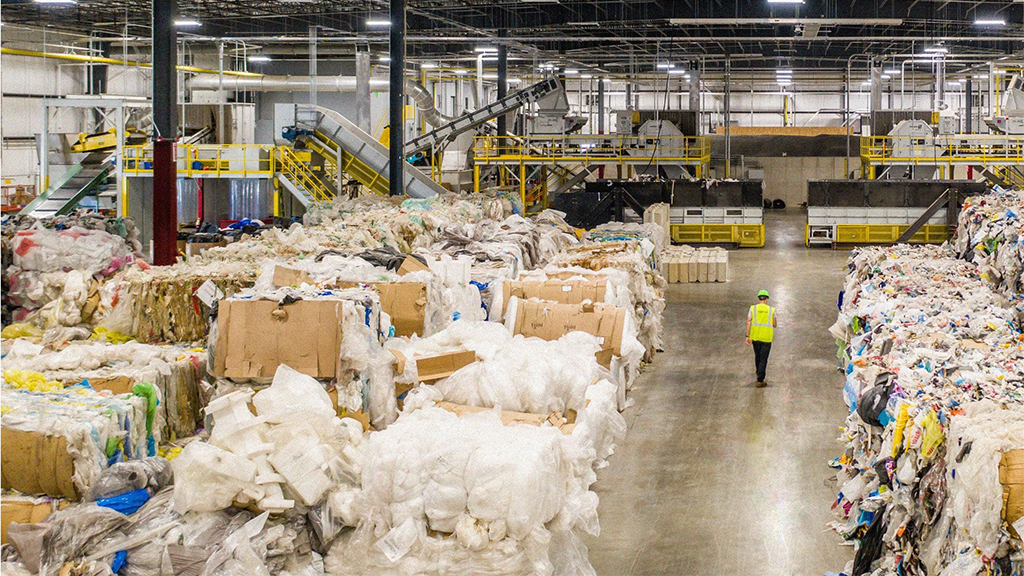
What started as one customer's problem grew into a specialized recycling niche that now defines a major part of Lewis Salvage's operations. The company recycles millions of pounds of material per month, including orthopedic scrap, paper, plastic, cardboard, and traditional ferrous and non-ferrous metals.
Cary Lewis grows capacity while staying true to family roots
Now Lewis Salvage is entering yet another stage of growth. Cary recently acquired his uncle's yard, Rochester Iron and Metal. This move includes the acquisition of an auto shredder and is expected to boost processing capacity to over 10 million pounds per month. The investment will not only increase throughput, but will also expand the company's ability to handle end-of-life vehicles and other mixed scrap more efficiently.
Though Lewis Salvage has adopted technology and new recycling systems over the years, its foundation remains rooted in family values and hard-earned experience. The company still operates with a lean team, emphasizing customer service and community connection.
"It's not a competition to me," he says. "It's about how I can make this work for my customers — how I can provide a service that's better than how they were doing it themselves."
The next chapter
Lewis Salvage today is a continuation of the vision set in motion more than a hundred years ago, and Cary often reflects on how deeply this work is tied to his family's identity. Now leading one of Indiana's most unique recycling operations, he carries forward the same drive to innovate that began with his great-grandfather's scrap business.
"I'd like to think that the perception of recycling is changing. I want to be part of that mindset change," says Cary. "I believe having good people in the industry who show what we truly do here is worth the time. I think telling our story on LinkedIn, going to trade shows, telling the people who are younger or maybe even older who are new to this industry . . . It's part of my responsibility as somebody who lives it, breathes it, to continue that message."
That combination of creativity, family, and pride continues to define Lewis Salvage. A century after its founding, the company continues to evolve, shaping what modern recycling looks like while staying true to the values that started it all.
This article originally appeared in the November/December issue of Recycling Product Guide.