
Compact recycling robots bring automation to tight MRF spaces
Plug-and-play sorting systems like SamurAI Optima help older facilities boost efficiency without costly retrofits or downtime
Modern recycling facilities are expected to process an ever-changing stream of packaging, meet stricter purity standards, and do it all with fewer workers on the floor. At the same time, incoming waste streams are more complex than ever, with flexible plastics, multi-layer packaging, and contamination testing the limits of traditional systems.
Adding more manual sorters to combat this has also become a less viable option. High turnover, safety risks, and escalating costs make it difficult to sustain a workforce capable of keeping pace with today's demands. All of these factors create an urgent need for solutions that can boost efficiency without the need to overhaul infrastructure.
Retrofitting without redesign
Rather than forcing facilities to redesign around new systems, the latest generation of equipment is being built to adapt to the realities on the ground. Plug-and-play robotics can be installed directly into existing lines, bringing automation to places where space, cost, or downtime once made it impossible. This makes advanced sorting accessible not only to state-of-the-art facilities, but to older plants that need efficiency gains the most.
For many MRFs, space is the most limiting factor when it comes to upgrading technology. Buildings designed decades ago often operate with narrow conveyor layouts and little room to add new equipment. Plus, traditional robotic systems often require larger footprints, higher ceilings, and longer installation times.
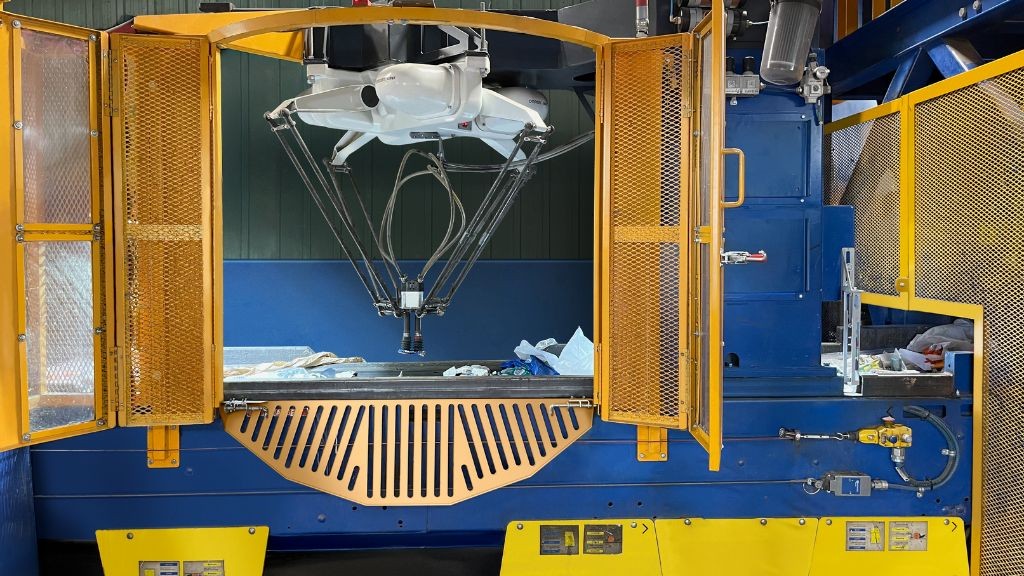
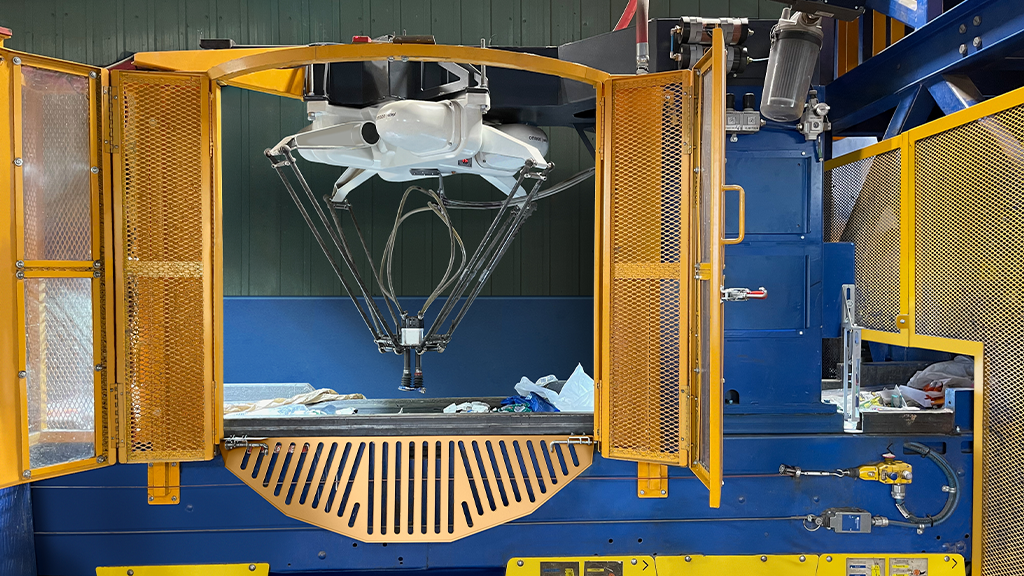
Technologies that can be integrated quickly and without disruptive installation are proving essential to maintaining performance while meeting the demands of modern recycling. Machinex's latest sorting robot, the SamurAI Optima, is engineered for facilities with ceiling heights as low as eight feet, removing one of the biggest barriers to introducing robotics in older facilities. Mounted directly onto a conveyor, it can be up and running within a day.
For facilities that can't afford weeks of downtime or lack the physical space for a full robotic system, this type of design is especially significant. Operators can add automated sorting in stages, addressing the most labour-intensive or contamination-prone areas first. The design flexibility gives facilities control over how and where automation enters their process.
For operators weighing the cost and complexity of robotics, these design choices lower the threshold for adoption. Instead of seeing robotics as an all-or-nothing investment, facilities can introduce automation incrementally, adding a robot where it makes the most sense and scaling up as operations evolve.
AI on the line
The appeal of plug-and-play robotics extends beyond quick installation — it lies in operational simplicity. The SamurAI Optima requires no daily maintenance, keeping uptime high and reducing dependence on specialized staff.
Despite its smaller footprint, the Optima retains the same AI-driven intelligence as the full-size SamurAI. It can achieve comparable pick rates, recognize materials in a wide range of conditions, and reduce reliance on manual labour, all while fitting into facilities where traditional robotic systems would never physically fit.
Continuous software updates through the MACH Cloud subscription allow it to adapt to new packaging and materials automatically, without the need for on-site interventions. In practice, that means that the robots can handle dirty, commingled, and unpredictable inputs, while continuing to recognize new packaging types through regular AI updates. For operators, it's not just about speed — it's about maintaining reliable recovery and quality control without constantly retraining staff.
Accessible, smarter sorting
Plug-and-play robotics like the SamurAI Optima show that even facilities with tight spaces, older layouts, or limited budgets can take advantage of advanced sorting technology. The real game-changer isn't just speed or pick rates; it's the ability to integrate seamlessly, adapt to changing material streams, and operate reliably with minimal intervention.
For MRFs, that means more consistent recovery, better quality control, and the flexibility to scale automation as needs evolve. The future of sorting isn't measured in square footage or ceiling height — it's measured in how effectively a facility can use the space it already has. And with compact, plug-and-play robotics, smarter sorting is more accessible than ever.