
How PGMs, EVs, and the circular economy are reshaping auto recycling
What's driving change in auto recycling, and what it means for end-of-life vehicle processing
Will auto recycling survive? The short answer is yes, but the headwinds and tailwinds reshaping end-of-life vehicle (ELV) processing are where the real story lies. The better question is: what do auto recyclers need to do to adapt?
Why ELV processing is essential infrastructure
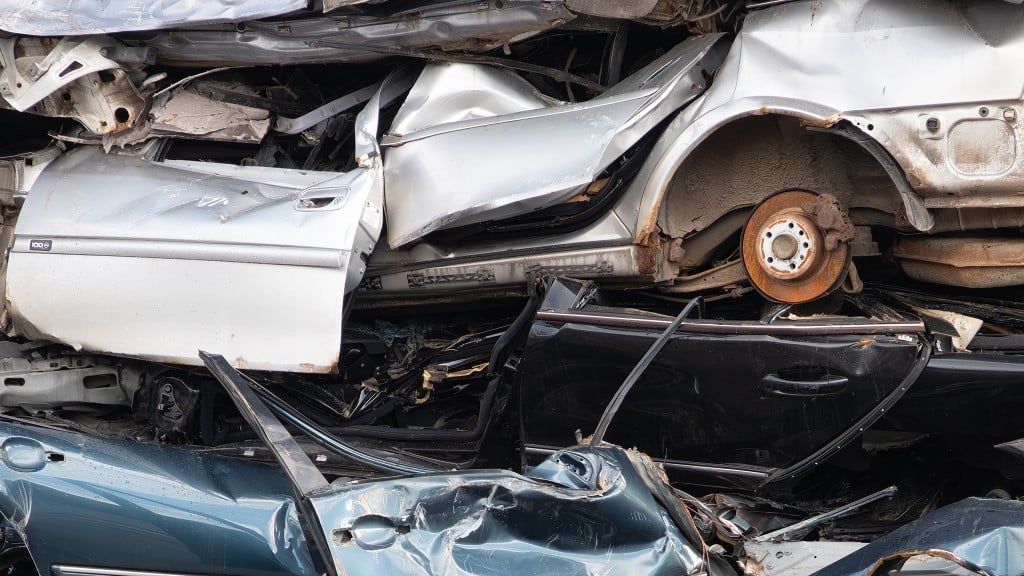
At its core, the question of whether the auto recycling sector survives is moot. ELV processing is a necessary — if often invisible — part of the Canadian economy. Without it, derelict vehicles would litter our landscape, and the cost of recycled metals would climb sharply.
That economic logic is straightforward: end-of-life vehicles retain significant value. Reusable parts can be harvested for resale, and metals still account for over 75% of a modern vehicle's composition.
That residual value helps offset the cost of vehicle acquisition, transport to processing facilities, and the environmental de-pollution required to prevent hazardous materials from entering the waste stream.
Headwinds facing the auto recycling sector
1. Labour shortages and workforce gaps
Like most trades, auto recyclers are dealing with serious staffing shortages. ELV dismantling — particularly operations focused on parts resale and higher-value metal recovery — is labour-intensive by nature.
Most facilities process all years, makes, and models, making standardization difficult. Every vehicle requires hands-on work for de-pollution, cataloguing, and parts removal.
Technology and automation improve throughput, but volume growth still requires people. The pipeline is thin: there are no formal apprenticeship programs, no relevant degrees, and very limited industry-specific training. Auto recycling is competing for workers in the same tight labour market as every other sector.
2. Regulatory gaps and industry recognition
The auto recycling industry emerged organically over the past century, and much of its regulatory framework reflects that unplanned growth — outdated, inconsistently enforced, and largely invisible to policymakers.
Modernization is underway, including through the Canadian Auto Recyclers Environmental Code, but enforcement remains weak. Recognition of auto recycling as a skilled profession — by the public, by government officials, and by the broader automotive sector — is still lacking.
3. Declining new vehicle sales reduce future ELV supply
A 10% drop in new car sales — driven by inventory shortages, rising cost of ownership, and broader economic uncertainty — has cascading effects on ELV supply. While the total vehicle fleet continues to grow as existing vehicles age, fewer new cars entering the system means fewer ELVs available for processing down the line.
That supply constraint forces recyclers to either pay more to acquire ELVs or expand their sourcing radius beyond their local trading zone. Both outcomes compress margins. When acquisition costs rise to the point where ELV processing is no longer profitable, inventory levels fall — and the cycle of underinvestment begins.
Tailwinds creating opportunity in ELV processing
1. Parts supply chain disruptions are driving demand for used parts
Supply chain disruptions across the automotive sector have made used auto parts significantly more attractive.
When new parts are unavailable or delivery timelines are unacceptable, a locally stocked used part becomes the obvious alternative. Auto dismantlers across Canada are reporting record-high parts requests — and record sales for those with the inventory and staff to meet demand.
2. An aging vehicle fleet sustains parts demand
The same new car sales slump that constrains future ELV supply is, in the near term, a tailwind. Drivers holding onto older vehicles longer need parts to keep those vehicles road-worthy — and used auto parts are frequently the most cost-effective and fastest option. An aging national fleet directly supports dismantler revenue.
3. ESG commitments are pushing insurers toward recycled parts
ESG reporting requirements are reshaping insurer behaviour. To meet net-zero and climate commitments, insurers are actively increasing their use of recycled parts in policyholder vehicle repairs. They're also working to reduce total-loss declarations where possible. Both trends represent a structural, policy-driven demand signal for the ELV processing sector — one that is likely to strengthen as ESG disclosure obligations tighten.
PGMs, EV recycling, and the future of auto recycling in Canada
Sometimes a single trend carries both opportunity and risk. The sustained rise in platinum group metals (PGM) prices — covering platinum, palladium, and rhodium, the core metals in catalytic converters — is a clear example of that duality for the auto recycling sector.
Catalytic converters: revenue source and theft target
Rising PGM prices have made catalytic converters a reliable revenue stream for end-of-life vehicle (ELV) processors. As specialist cat buyers partner with auto recyclers to deliver better valuation data and pricing technology, operators who pay close attention to catalytic converter recovery are seeing consistent returns.
But the same price surge that makes cats valuable to recyclers makes them a target for thieves. Catalytic converter theft has reached record levels across Canada, and ELVs are regularly arriving at recycling facilities stripped of their converters — representing a direct and significant revenue loss.
Compounding the problem, illicit ELV buyers operating in the underground economy are actively involved in fencing stolen catalytic converters. The overlap between these two buyer types is not subtle: a basic web search confirms they are frequently one and the same.
Electric vehicle recycling: a generational shift approaching fast
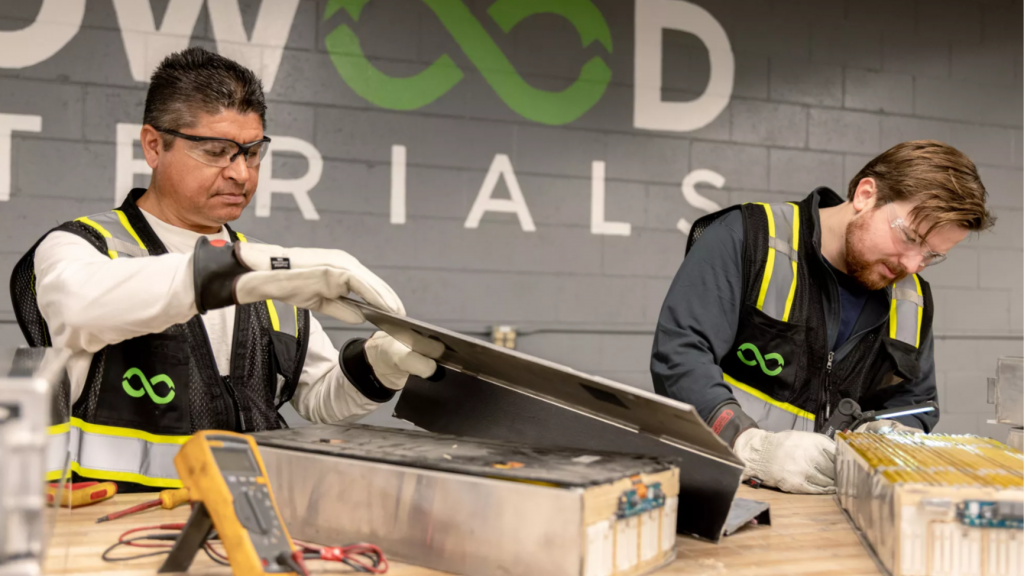
The coming wave of electric vehicles (EVs) reaching end-of-life represents a generational disruption for auto recyclers — and it is arriving head-on. The core challenge right now is uncertainty. The industry lacks the operational experience with EVs and their novel component types to fully assess which parts represent opportunity, which represent risk, and which represent entirely new categories of both.
The Automotive Recyclers of Canada (ARC), with support from Natural Resources Canada, has developed an EV Roadmap for the industry and is convening a multi-sectoral roundtable on the impacts of electrification on ELV processing.
These are early steps — they won't resolve the outstanding issues immediately — but they will bring the right stakeholders together and establish a foundation for coordinated action.
Why EV recycling is about more than the battery
One persistent challenge in EV recycling conversations is scope: the moment EVs come up, the discussion collapses into battery disposal. But auto recyclers deal in whole vehicles, not individual components.
Keeping the battery and the vehicle together in the processing and valuation model is critical — it preserves the economics of ELV processing and gives EVs a realistic chance of remaining financially viable to recycle.
The future of auto recycling in a circular economy
Auto recycling is unusual among industries in the resources it must dedicate simply to locating vehicles for recovery and processing. What it shares with every other sector is the pressure of rapid, structural change — new products, shifting consumer behaviour, and emerging channels are transforming the business environment.
Historically, auto recyclers have not had a seat at the table when decisions about the broader vehicle recovery sector are made. They are not policymakers. For over a century, the industry has operated reactively — responding to whatever vehicles automakers produced, and consumers needed to maintain.
But that posture is shifting. As momentum builds around the circular economy, auto recyclers are increasingly recognized as essential participants in end-of-life vehicle management — a domain where they hold deep, irreplaceable expertise.
The auto recycling sector will survive. Not every operator will successfully evolve, pivot, and adapt to new realities. But those who invest in their operations, train their people, pursue education, build collaborative relationships, and continuously find new ways to extract value from ELVs will not just survive — they will thrive.
Your end-of-life vehicle can contribute to a circular economy. But that outcome depends on choosing a professional auto recycler that is building for the future.
Steve Fletcher is the managing director of the Automotive Recyclers of Canada (ARC).