
VIDEO: STEINERT supports Australian e-waste processor with sensor-based sorting
Total Green Recycling processes roughly 5,000 tonnes of e-waste annually
At Total Green Recycling (TGR), CEO Ram Kalyanasundaram and his team are focused on responsibly processing discarded electrical and electronic equipment, preventing harmful materials from entering the environment while recovering valuable resources for productive reuse.
The company's partnership with STEINERT supports this ambition through process technology and technical expertise, helping TGR meet increasing requirements around recovery, compliance, and material quality while delivering solutions for councils, businesses, and the wider community.
"TGR is a specialist e-waste recycler. We collect and process end-of-life electrical and electronic equipment, recover reusable commodities such as metals and plastics, and manage the remaining materials through responsible downstream partners. Our objective is to maximize resource recovery and minimize environmental impact," Ram explains.
At its Western Australian facility, the team processes a broad range of products including televisions, computers, monitors, printers, and other electrical and electronic equipment. Current throughput is around 22 to 25 tonnes per operating day, equivalent to approximately 5,000 tonnes annually.
Easily processing complex waste streams
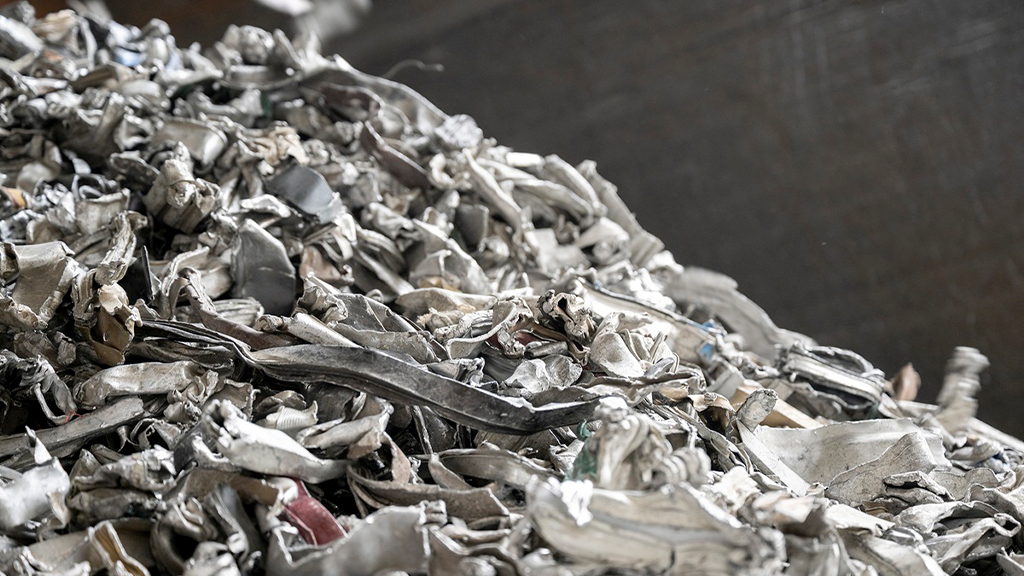
Target outputs include ferrous and non-ferrous metals, printed circuit boards, copper-rich and aluminium-rich fractions, as well as recoverable plastics. The objective is not only to recover these materials, but also to produce clean and consistent fractions that downstream processors can use effectively.
This need is becoming increasingly demanding. Product designs, material composition, and battery content continue to change, while customers and regulators expect improved traceability, higher recovery rates, and stronger environmental performance. "For us, that means investing in safe processes, capable people, and technology that can adapt to variable material," says Ram.
One of the most striking findings was how much valuable material could still be recovered from what initially appeared to be a mixed, low-value stream.
"The speed and precision of the detection process made this opportunity visible. It shows how much value can be lost without advanced sorting with the right processing equipment."
The result is higher recovery, cleaner products, and greater consistency, while creating a scalable platform that can continue to evolve with Australia's changing e-waste stream.
Evolving consumer goods means that recyclers must quickly adapt
Still a big operational challenge is the changing composition of incoming material. Each load can contain a different mix of products, metals, plastics, and contaminants.
Without accurate and consistent sorting, valuable material can be lost and final fractions may fail to meet buyer specifications. Product purity and repeatability are therefore critical, particularly as customers increasingly require evidence of where material goes, how it is processed, and what recovery outcome is achieved.
Requirements surrounding batteries, data security, downstream transparency, and verified environmental standards are also becoming more important. At the same time, commodity buyers expect cleaner and more consistent products. The market is moving beyond basic waste handling towards accountable resource recovery.
For TGR, achieving the required quality starts with effective material preparation, stable operating settings, and disciplined quality control. Introducing STEINERT sorting systems into the process has provided the detection and separation capabilities needed to recover targeted materials more precisely. This helps reduce contamination and valuable material losses while producing more consistent outputs for downstream customers.
How sensor-based sorting changes the outcome for e-waste
STEINERT has worked closely with TGR on its e-waste processing approach, with two systems playing key roles in the sorting line. The STEINERT KSS CLI combination sensor sorter combines colour, 3D and metal detection, while the STEINERT UniSort PR EVO 5.0 uses near-infrared detection to separate targeted material fractions, particularly printed circuit boards.
Following initial size reduction and mechanical separation, both systems help TGR identify and separate material fractions more precisely. Their accuracy, consistent performance, and adjustable sorting recipes are particularly valuable when processing highly variable feed material.
"Modern e-waste recycling is not simply about processing more tonnes. It is about recovering cleaner, higher-value materials consistently and returning them to the circular economy. STEINERT technology has helped us move closer to that goal," says Ram.
Automation simplifies the process while speeding up the outcome
Growth has increased both the volume and variety of material passing through the TGR facility just outside Perth. It has also raised expectations around throughput, product quality, and reliability.
Manual sorting alone could no longer provide the consistency and scalability required. Automating critical separation steps has helped improve recovery and establish a processing platform that can support the company's future development.
"We were looking for proven sorting technology, strong technical capability and a partner that understood the complexity of e-waste. STEINERT has extensive experience in sensor-based sorting and a strong presence in Australia. The ability to test, refine, and support the solution gave us confidence that the equipment would meet both our current needs and our longer-term ambitions."
Recovering more value through continuous improvement
As e-waste composition continues to change, particularly with more embedded batteries, the team will also review technologies and processes that can make recovery safer and more effective. The next step is to further optimize the existing line by refining sorting recipes, using operating data to improve quality and throughput, and developing markets for recovered plastics and higher-value metal fractions.
"I want Total Green Recycling to be recognised as a benchmark for safe, transparent and high-quality e-waste recycling in Australia," Ram says. "That means continuing to grow but growing responsibly by recovering more value from every tonne, hence returning more materials to productive use and maintaining the trust of our customers, employees, and regulators."
Achieving this outcome requires more than technology alone. Skilled people, disciplined operating practices, and close collaboration have been essential in adapting the sorting systems to TGR's highly variable feed stream. The process has involved reviewing results, adjusting settings, improving material preparation, and drawing on STEINERT's technical expertise.
"I appreciate the quality of the engineering, the flexibility of the systems, and the technical support behind them. STEINERT has worked with us as a solutions partner, helping us understand how to apply the technology to a challenging and variable e-waste stream," says Ram.