
STEMIN processes 180,000 tonnes of aluminum annually with STEINERT alloy sorting system
The PLASMAX LIBS-based sorting unit separates material based on alloy composition with 99% accuracy
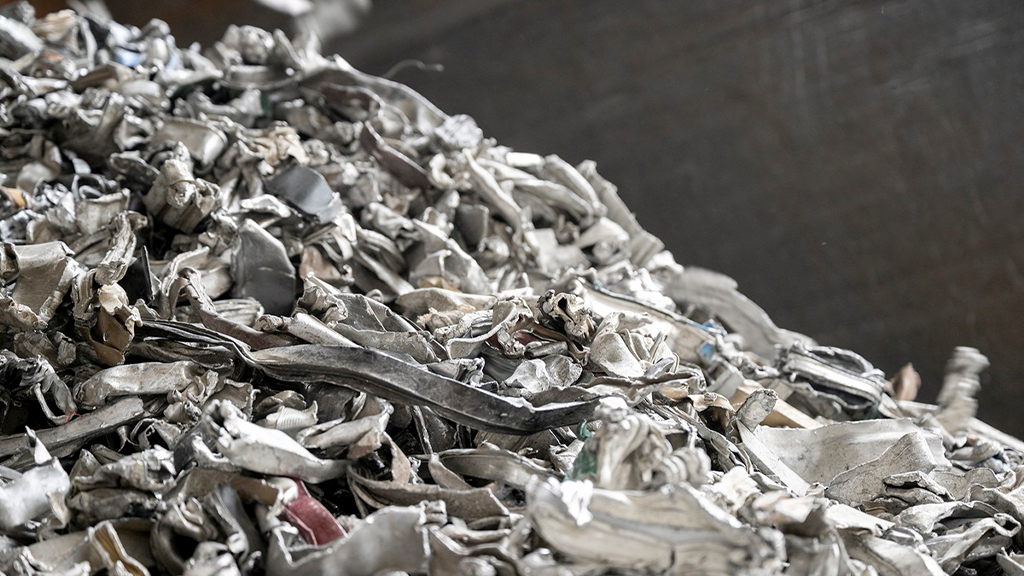
Secondary smelters demand consistent quality and supply. One company achieving these requirements is STEMIN S.p.A., an Italian aluminum recycler. At its site near Bergamo, STEMIN processes around 180,000 tonnes of aluminum annually, accounting for roughly 17 – 18 percent of the Italian secondary market. For more than ten years, the company has built a close partnership with sorting specialist STEINERT, steadily expanding its process chain with advanced sensor-based systems.
Today, the plant operates five STEINERT separation lines covering key processing steps, including eddy current separation, sensor-based light/heavy separation, and alloy sorting with STEINERT's PLASMAX LIBS-based sorting system. Together, they transform mixed aluminum scrap into precisely defined fractions suitable for secondary smelters.
For Olivo Foglieni, president of STEMIN, technology is essential to achieving both operational and environmental goals. "Technology is absolutely fundamental to achieving environmental objectives — this means lower energy consumption, significantly higher hourly throughput, and reduced production downtime." Since 2020, STEINERT has backed this robustness with a 20,000 operating hours warranty on its X-ray sources, a testament to the longevity of the components.
LIBS-based system reaches near-perfect alloy sorting rates
At STEMIN, mixed aluminum streams containing plastics, several light and heavy metals, and multiple alloy types undergo several pre-treatment stages before entering the STEINERT PLASMAX unit. The LIBS sensor analyses each particle and separates it into homogeneous fractions based on alloy composition.
The system distinguishes aluminum alloys from 1xxx to 8xxx series while maintaining throughput of up to 11 tonnes per hour. Up to three fractions can be produced simultaneously, enabling recyclers to supply alloy-specific feedstock directly to smelters.
According to STEMIN, the process achieves purity levels over 99 percent while maintaining stable throughput and plant availability. For Foglieni, the long-standing collaboration is a key success factor: "Two companies with different expertise and perspectives — united, they succeed across the board."
STEMIN relies on STEINERT to provide even finer Fractions
Beyond the application at STEMIN, STEINERT continues to further develop its technologies. A new upgrade for the STEINERT PLASMAX opens up new opportunities for processing even smaller grain sizes. Companies can evaluate performance through industrial-scale trials at the STEINERT Test Center before making investment decisions.
Digital connectivity and rapid-response machines transform possibilities for recyclers
Olivo Foglienis' choice to invest in STEINERT technology was driven by the need for a robust system where "downtime simply isn't an issue." His enthusiasm is rooted deeply in the "quality and professionalism" of the service department: "Today, all our systems are connected remotely. Within 30 to 40 minutes, even when it is not possible to have a technician on site, we are still able to resolve the issue. The most serious issue we have ever encountered was resolved within two hours. This level of expertise has been a decisive factor on many occasions in choosing to invest in STEINERT technology."
This rapid response ensures STEMIN is "never left on their own" and opens the capability to transform the relationship from a simple vendor-customer transaction into a collaborative partnership focused on maximising plant availability and operational goals.
STEINERT's testing centre turns data into clear results
Before a single machine is installed at the Bergamo site, the "proof of concept" happens at the STEINERT Test Center in Cologne. For Foglieni and his technical team, this facility is not just a showroom, but a critical tool for their risk management.
The ability to move beyond laboratory-scale samples is what sets the facility apart. Foglieni notes that his technicians returned "with tremendous appreciation".
"This is extremely important for us: being able to verify what can and cannot be recovered from our specific material — not in kilograms, but potentially in tonnes," Foglieni states. "The machines, the technicians, and the range of experimentation possibilities were impressive. That is precisely why, on many occasions before making a purchase, we carried out multiple tests at their Test Center in Germany."