
Bellemare makes the business case for electrification in recycling
How electric equipment cuts costs in C&D recycling operations
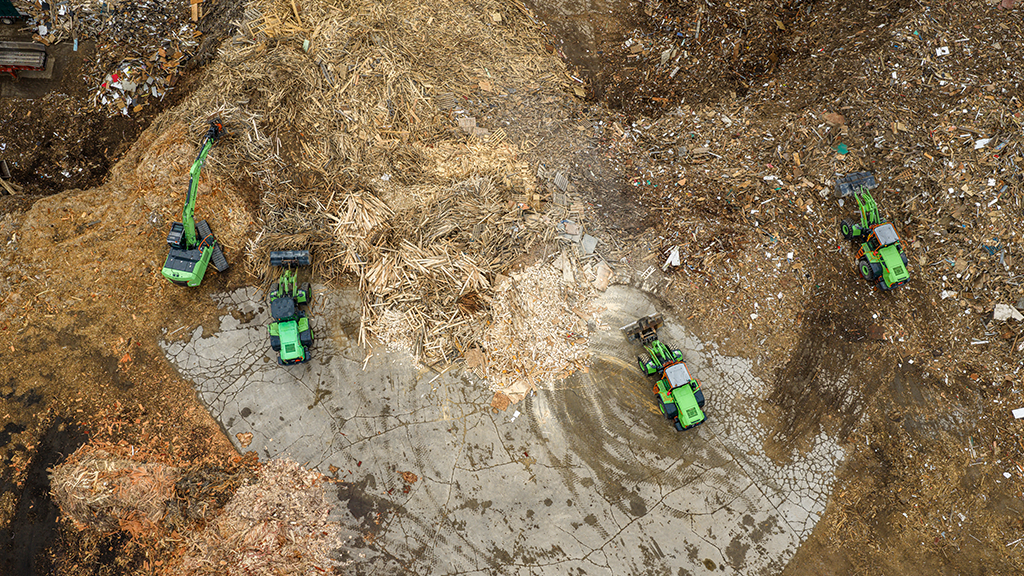
At Groupe Bellemare's Plan 1 facility in Trois-Rivières, Quebec, five mid-size electric machines are hard at work. This is not a pilot project or a test run — Groupe Bellemare has successfully integrated one of North America's first fleets of mid-size electric construction equipment into its daily operations.
Its equipment lineup includes four 46,297-pound LiuGong 856HE MAX electric wheel loaders and a recently added 58,422-pound 924FE electric excavator — among the first machines of their kind sold in North America.
For the family-owned company, founded in 1959, the transition spans its abrasives and minerals division and its C&D recycling operations. In these divisions, short travel distances, controlled work cycles, and indoor material handling define the work.
According to Jason Lagacé, operations manager with Groupe Bellemare, the electric loaders have matched or exceeded the output of comparable diesel machines while delivering responsive hydraulics, strong travel speed, and a quieter operating environment for crews working long shifts.
In Bellemare's abrasives and minerals and C&D recycling division, fulfilling orders and moving material efficiently and consistently over multiple shifts is critical. The company has proven that productivity doesn't slow when switching from diesel to electric. Instead, in the right application, and with support and collaboration from the right dealer and OEM partners, electrification delivers tremendous operational cost savings.
Finding the right electric equipment
Bellemare's introduction to electric loaders came unexpectedly. A company sales representative saw one operating during a business trip to India, recorded a video, and sent it back to the team. That sparked the internal discussion about whether electric machines were available in Quebec and whether they could handle Bellemare's workload at Plan 1.
At the time of Bellemare's evaluation, electric equipment options were limited. Lagacé says the company was looking for a machine that could meet its production requirements while remaining financially viable, but few manufacturers offered electric loaders that aligned with those needs.
That evaluation process ultimately led Bellemare to LiuGong's electric platform.
"We really wanted the best available," he says. "We looked around . . . and we found out that there weren't any other companies building something that even compared to LiuGong in terms of performance and reliability."
Bellemare worked with Groupe Gymdex, LiuGong's Quebec dealer, to review specifications, assess site suitability, and determine whether the loaders could realistically replace its diesel units. The evaluation process included multiple visits to the dealer, where supervisors and operators tested the equipment first-hand. The company also reviewed available government incentives, including provincial and federal subsidies tied to replacing diesel equipment with electric machines.
Because they had to replace a diesel machine with an electric one to qualify for subsidies, the loader was not a supplemental unit. Reliability quickly became one of the most critical considerations.
Jean-Nicolas Gonzalez, sales representative with Groupe Gymdex, says the evaluation centred on understanding how the equipment would perform in Bellemare's specific environment.
Hands-on testing and early support from the dealer helped build confidence in the machines and confirmed they could be integrated into Bellemare's production workflow.
Where electric equipment works best
The centralized layout and predictable material flow at Plan 1 were well-suited to evaluating electric equipment, particularly as an environment where machines operate within a defined area and access to power is readily available.
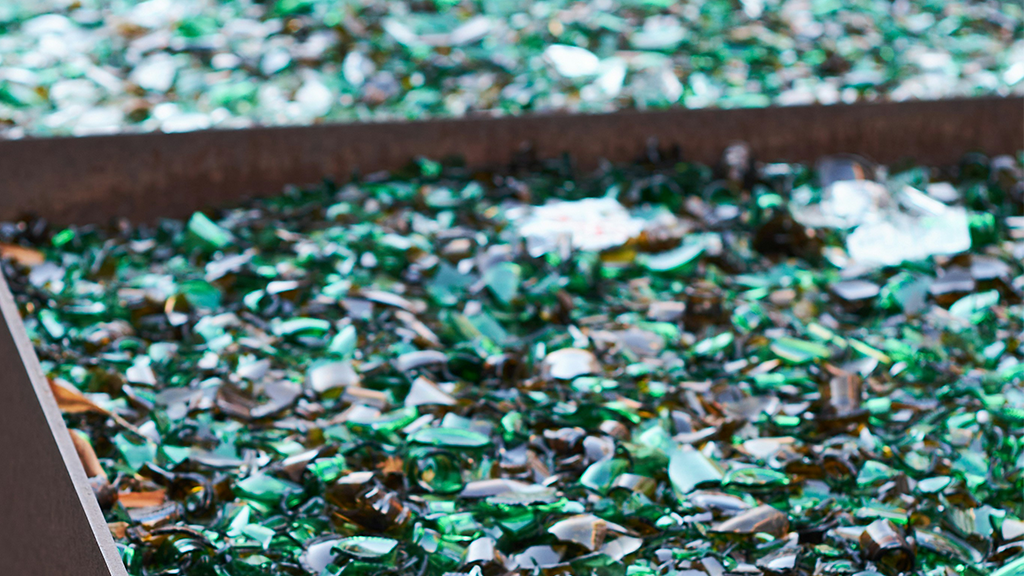
In both the abrasives and minerals and the recycling divisions, the work is relatively light duty. In the recycling division, applications primarily involve handling recycled glass, wood, and construction debris, with limited exposure to higher-load work that would place greater demand on battery systems.
The loaders work primarily feeding crushers, screens, and other processing equipment. The operating area is compact, and the machines spend most of their time within a defined indoor space rather than travelling long distances between stockpiles and production equipment.
That indoor environment also mattered. As Bellemare's operations grew, the prospect of running multiple diesel machines inside the building became more difficult to ignore from both a workplace and operational standpoint. Electrification offered a way to reduce those exhaust concerns.
Charging infrastructure supports fleet electrification
Charging was another early concern. Bellemare runs two eight-hour shifts, and the company needs its machines to operate through a full day without disrupting workflow to charge.
The company had upgraded its electrical service years earlier in anticipation of future business growth. While not originally intended for electric equipment, that investment has provided sufficient capacity to support charging infrastructure. As a result, Bellemare was able to install multiple chargers across its operations without major last-minute electrical upgrades.
To support future fleet expansion and Bellemare's growing mix of mobile electric assets, including loaders, trucks, and other vehicles, the company plans to install a centralized charging hub with nine stations. When it becomes fully operational in September 2026, the hub will allow equipment to return to a single location for charging, but smaller chargers will still remain in place for equipment with fixed operating patterns. For example, the electric excavator, which will be used to feed a mulcher, is expected to be charged in place to minimize unnecessary movement.
Electric equipment delivers measurable cost savings
While Bellemare's broader environmental goals played a role in the initial decision, Lagacé says that success has been determined by measurable operating data.
"The cost savings are miraculous," he says. Based on the company's internal tracking over the first 5,000 hours of operation, the electric loaders consume roughly 30 kWh per hour during operation. At an average electricity cost of $0.12 per kWh, that translates to significantly lower energy costs compared to a diesel machine consuming approximately 12 litres of fuel per hour.
Maintenance costs have remained similar to diesel machines, at roughly $8 per hour including tires, but Lagacé notes that diesel machines typically see those costs increase significantly after 5,000 hours due to engine wear and aftertreatment-related issues.
Bellemare also benefitted from provincial and federal financial support when purchasing the equipment and chargers, including Quebec's ÉcoPerformance program and Canada's Clean Technology Investment Tax Credit (ITC). In addition, the company has accumulated more than 300 carbon credits over the past year, adding another layer to the overall return on investment.
What's next for electric equipment in recycling
Bellemare's experience with the LiuGong equipment — and its measurable operational cost savings — has made the company more confident about continuing to electrify other parts of its fleet where the technology fits.
Within the abrasives and minerals and environmental operations, which include C&D recycling, sand pits, and quarries, Lagacé says Bellemare is working toward the goal of having about 80 percent of relevant machinery electrified over the next few years.
Electric equipment tends to be most effective in operations where work is centralized and access to power is reliable. Those are the same characteristics that define many recycling facilities, making them strong candidates for electrification.
At the same time, recycling operations are driven by production targets and customer commitments, leaving little room for unexpected downtime. For Bellemare, that reality shapes how it approaches fleet electrification.
Even within the divisions where Bellemare sees the most promise, the company expects to retain some diesel equipment as backup.
That pragmatic approach may be the clearest lesson from Bellemare's experience so far. The company is not treating electrification as an all-or-nothing proposition. It is evaluating where the equipment performs well, where it improves economics, and where it can be deployed with confidence. Bellemare's machines operating in Trois-Rivières prove that electric equipment delivers.
This article originally appeared in the July/August 2026 issue of Recycling Product News.