

CARI’s 85th annual convention marks record-breaking event for the Canadian recycling industry
New leadership, record member participation, and a growing presence are shaping the association's next era
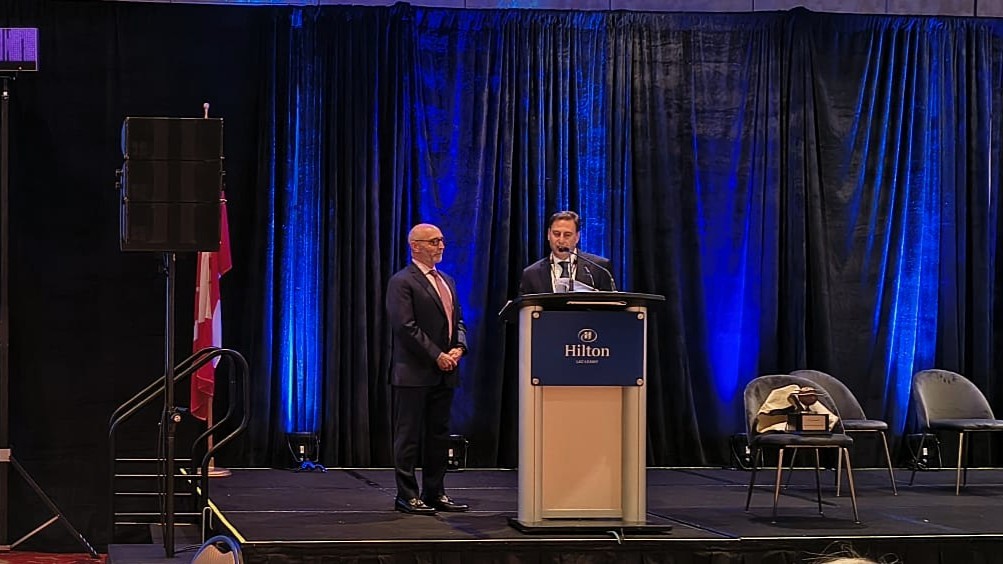
Over eight and a half decades, the Canadian Association of Recycling Industries (CARI) has weathered economic downturns, navigated shifting regulations, survived global market disruptions, and emerged from each challenge stronger than before.
At this year's 85th annual convention in Quebec — the largest in the association's history — members showed up to celebrate that legacy and watch a new chapter begin.
Outgoing chairman Brian Shine reflected on the weight of the moment as he delivered his final address. "When I think back to the founders of CARI in 1941, I imagine they felt the same mix of uncertainty and determination that we feel today," said Shine. "They didn't have all the answers, but they had a vision, and they acted upon it. Let us honour their legacy by continuing to innovate, to advocate, and to collaborate. Let us ensure that when CARI celebrates its hundredth anniversary, future members will look back at this time as a turning point when we chose to lead boldly into a sustainable future."
Jonathan Ross: incoming chairman
The convention marked several leadership transitions. Shine formally passed things over to incoming chairman Jonathan Ross, who arrives in the role as a fifth-generation recycler and vice president at John Ross & Sons.
"As I pass the gavel to Jonathan, I do so with confidence," said Shine. "The challenges ahead — from evolving environmental regulations, material theft issues, and a push for the circular economy — are real. But so are the opportunities."
As the outgoing chair of CARI's advocacy committee, Ross played a central role in hiring federal lobbying firm PAA Advisory and spearheading the association's first-ever Parliament Hill Day earlier this year.
Beyond advocacy, Ross outlined priorities for his tenure: growing the Next Gen program, reviving member visits across the country, and ensuring that CARI is delivering tangible value to members of every size.
"If you are a small operation in rural Canada, your membership counts. Any of these laws that get passed all affect you," said Ross. "I want you to know that CARI will be working for you as much as anybody else in this industry, and we are changing our industry's image in the process. We are no longer the junk business of the past. We are a sophisticated international essential industry that contributes far more than the public would ever realize."
Jacqueline Lotzkar on where CARI goes from here
CARI president and CEO Jacqueline Lotzkar also took the floor to lay out the association's priorities and to put into context just how much ground has been covered since she took the helm eighteen months ago.
"The past year and a half has shown us what's possible with CARI when we're engaged, focused, and willing to invest in the future," said Lotzkar. "We're no longer simply maintaining CARI, we're growing it, and I'm genuinely excited about where we're headed."
Advocacy sits at the top of the priority list. Lotzkar described a deliberate shift in how CARI engages with government, moving from reactive to proactive. The association's partnership with PAA Advisory, its participation in trade consultations, and its inaugural Parliament Hill Day earlier this year were all part of that effort.
"There's a saying in advocacy. If you're not at the table, you're on the plate. More than ever, in recent history, the Canadian recycling industry needed a seat at the table," continued Lotzkar. "In 2025, we participated in consultations on the steel and aluminum tariffs, counter tariffs, and broader trade issues. We also recognized that CARI was not well-known in Ottawa. Under Jonathan's leadership as the chair of advocacy, we researched and interviewed many firms until we ultimately engaged with PAA Advisory to help us elevate CARI federally."
Member growth and event programming were also of note. After the Winnipeg convention set a new attendance record last year, Quebec raised the bar again, drawing over 280 attendees, a sold-out exhibit hall, and a waiting list for next year. Lotzkar credited Communications and Events Committee Chair Kim Lucko and Director of Communications & Events Kari Veno for much of that momentum, but framed the growth as a signal of something larger: an association that is delivering value to its members.
Looking ahead, Lotzkar pointed to four clear priorities: strengthening CARI's voice in Ottawa, growing and engaging the membership, expanding opportunities for networking and professional development, and continuing to build on the momentum that this year's event has set. CARI's next event, the Toronto Blue Jays game and networking night, is scheduled for August 12th, followed by Consumers' Night on October 22nd.