
Gypsum recycling keeps drywall in the supply chain and out of the landfill
New West Gypsum Recycling is turning drywall waste into a reusable gypsum material stream
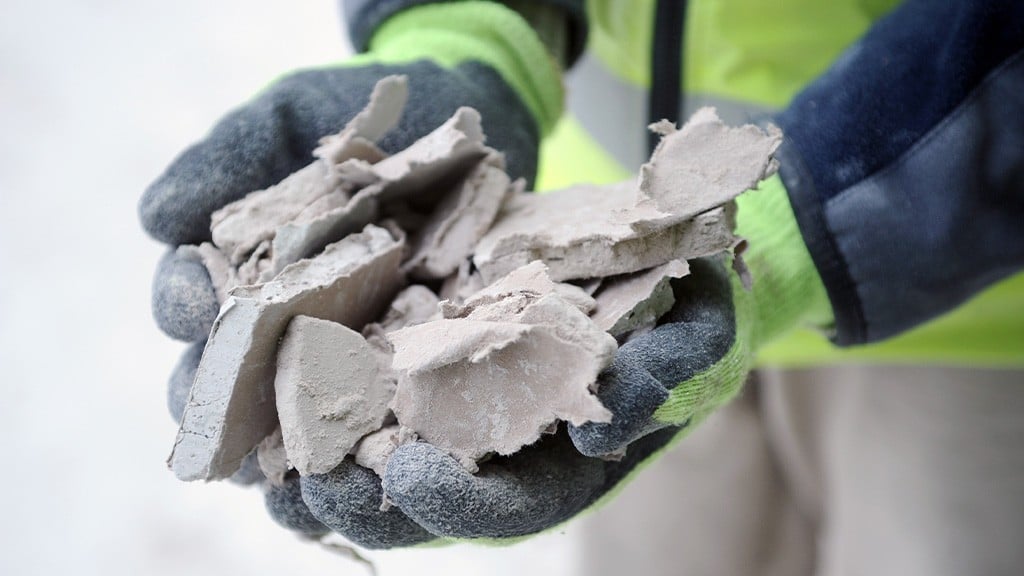
When Metro Vancouver banned drywall from landfills in the mid-1980s, it created a pressing issue for contractors and demolition companies in B.C.'s Lower Mainland: there was nowhere to dispose of the gypsum. At the time, drywall was considered disposable waste rather than a recoverable material, and there was no established system to manage it once it left the job site. The ban meant that contractors and demolition companies suddenly needed an alternative.
New West Gypsum Recycling (NWGR) evolved from a local response to that landfill ban into one of the earliest post-consumer gypsum recycling operations in North America. Founded in 1985, the company emerged at a time when no established recycling pathway for gypsum existed.
Gypsum wallboard is now recognized as one of the most widely used and most recyclable materials in construction, with its core able to be processed and reused repeatedly without degrading. Today, NWGR operates gypsum recycling facilities across Canada, the U.S., and Europe, supporting wallboard manufacturers with a consistent, high-quality recycled gypsum supply. The company has become a critical link in the drywall supply chain, helping keep gypsum in circulation rather than buried or exported as waste.
From landfill ban to recycling model
New West Gypsum's development was shaped less by long-term vision than by a series of practical responses to a problem no one else was ready to solve. With drywall barred from landfill and no recycling infrastructure in place, Tony and Gwen McCamley began adapting their demolition and construction disposal business to handle a material stream that suddenly had nowhere to go.
Recycling was not the original objective. The first solution was an alternate disposal system. "The federal government stepped in with an ocean dumping permit," explains Michael McCamley, vice president of global business development and second generation in the family business. "[My parents] used the permit to take gypsum waste to an ocean dump site 60 miles off the west coast of Vancouver Island."
That stopgap solution presented another challenge: volume.
Michael recalls a kitchen table meeting where his dad experimented with grinding drywall in a blender to condense the material. Processing the waste drywall this way would allow for more to be loaded onto the sea-bound barges. This operational workaround was pivotal in the evolution of the company.
As the processed product sat ready for disposal, the material caught the attention of a nearby wallboard manufacturer, who recognized that if the paper backing could be removed, the gypsum could be reused in production. That realization reframed drywall as a viable manufacturing input rather than a disposal problem and laid the groundwork for New West Gypsum's recycling process.
As manufacturers began accepting recycled gypsum, the model scaled. NWGR expanded first into Washington State and Ontario in the 1990s, then into Europe in the early 2000s, following markets where policy, manufacturing demand, and logistics aligned. What began as a local response to a landfill ban evolved into a recycling system designed to return gypsum to manufacturing, keeping the material in circulation rather than treating it as a one-time-use waste stream.
Why gypsum is uniquely recyclable
Gypsum has a key advantage over many other construction materials: it can be recycled repeatedly without degrading. Unlike many composite materials, the gypsum core does not chemically change during use or processing, allowing it to be separated from the paper facing, reprocessed, and remanufactured into new wallboard. That stability makes gypsum ideal for closed-loop recycling.
But that loop only works if the input material is clean.
"We only accept drywall," says McCamley. "If someone shows up at our gate with a mixed load or an unclean load, we reject them."
Drywall screws and corner bead, which can be handled during processing, are not the most common challenges in gypsum recycling. "A little bit of wallboard-related material is okay," McCamley says. "It's more like lunch bags, plastic, wood, and all the other construction materials on site."
Effective recycling depends on keeping drywall separated from mixed construction waste. Co-mingled loads are more difficult to process efficiently and can compromise material quality. Source separation is a critical part of NWGR's approach.
Managing risk in demolition drywall
While new construction drywall is typically clean, renovation and demolition material carries additional risk, particularly when older buildings are involved.
To manage that risk, New West Gypsum applies different acceptance rules based on material age. "If it's pre-1990, it needs to come with an analytical test saying it's asbestos-free," he explains. Material with unclear origins, such as loads from transfer stations, is isolated and tested before being processed or blended.
Even with those controls, McCamley believes the burden should not fall on recyclers alone.
"I would like a national standard when it comes to deconstruction and demolition because the recycler cannot be the police," he says.
Without consistent demolition and deconstruction upstream practices, recyclers are left managing risk at the end of the chain, limiting recovery potential and raising safety concerns.
A market-driven recycling model
Managing risk at the end of the material stream has also shaped how NWGR operates within the broader drywall supply chain. Because recycled gypsum must meet strict quality and safety requirements to re-enter manufacturing, the company's business model is closely informed by the wallboard-producing sector.
NWGR positions itself as a service provider embedded in manufacturing workflows, collaborating directly with producers to recover gypsum scrap and return it to the supply chain. That alignment also determines where the company operates. NWGR does not enter new regions unless there is a committed end-market outlet for recycled material. "If [we] don't have a wallboard manufacturer [on board], New West Gypsum will not go into that market," says McCamley.
In NWGR's view, this alignment positions recycling as complementary to gypsum mining rather than in competition with it. McCamley sees recycling as extending the lifespan of existing resources. "Gypsum recyclers prolong the life of gypsum mines," he says.
The model becomes particularly effective in regions where wallboard manufacturers must transport gypsum long distances or rely on imported material. In those markets, recycled gypsum provides a more stable, locally available input to support manufacturing continuity while reducing reliance on virgin extraction.
Where does recycled gypsum go?
While closed-loop recycling is New West Gypsum's priority, the company also supplies other end markets depending on location and material quality.
"There are typically three main end markets: wallboard manufacturers, cement plants, and [agriculture]," says McCamley.
Cement plants have a slightly higher tolerance for contamination, making them a secondary outlet for some demolition materials. Agricultural use is approached cautiously and only under controlled conditions, as improper application can create environmental and regulatory problems.
Recovery depends on landfill policy
Today, gypsum recycling in Canada remains variable, shaped less by the recycling technologies that exist and more by policy and economics. Despite gypsum's recyclability, recovery rates vary widely depending on how disposal is regulated and priced. Across Canada, gypsum recovery rates are closely tied to landfill policy and pricing. Where disposal is cheap and unrestricted, recycling struggles to compete.
"The biggest barrier to gypsum recycling is actually landfills," says McCamley.
The contrast is clear within Canada. In Metro Vancouver, where drywall has been banned from landfill for decades, New West Gypsum Recycling processes between 70,000 and 80,000 tonnes annually. Despite its larger population, the Greater Toronto Area's recovery is significantly lower due to easier access to landfills (approximately 30,000 tonnes annually).
For waste generators, recycling is driven by economics and project requirements. NWGR charges tipping fees, similar to a landfill. Recycling becomes an attractive solution when landfill disposal is more expensive, restricted, or incompatible with project sustainability goals or green building standards.
Europe's coordinated approach to Gypsum Recycling
Internationally, McCamley points to Europe as the most advanced market for gypsum recycling because of industry alignment.
"In Europe, the whole industry is on board," he says. "Europe is cohesive. In North America, the call for gypsum recycling is primarily led by the gypsum recyclers themselves. In Europe, it was led by the entire gypsum industry. "
European manufacturers, recyclers, and regulators work together to define recycling practices and address liability concerns. North American adoption varies widely by region and is often led by recyclers rather than coordinated industry initiatives.
Closing the loop starts on the job site
When asked what would most improve gypsum recycling outcomes, McCamley refers to fundamentals: source separation, clear demolition standards, and better job site systems.
"Gypsum scrap should never see a waste container," he says. "It's only wasted when it's disposed of in a landfill."
In mature markets like Metro Vancouver, separation is routine. In newer markets, it requires signage, training, and enforcement so that drywall bins are kept separate from general site waste.
Growth, capacity, and what comes next
NWGR's expansion follows manufacturing demand, but growth is ultimately shaped by how much clean material can be recovered. The company recently expanded into Montreal and is preparing to bring additional capacity online in Germany near Berlin. Even so, McCamley says capacity is not the limiting factor.
"We currently have a global capacity of one million metric tons. We are only at about half of that global capacity."
The challenge is not finding buyers, it's sourcing clean material. "If we had the sources to operate at 100 percent capacity, the wallboard manufacturers would consume recycled gypsum all day long," says McCamley.
For NWGR, the goal remains simple: keep gypsum in the supply chain, where it belongs. When drywall is treated as a material stream rather than a waste stream, recycling becomes practical, closing the loop on one of construction's most common materials.
This article originally appeared in the January/February 2026 edition of Recycling Product News.