

Closed Loop Partners' best practices guide aims to improve MRF performance
The guide establishes industry standards needed to improve U.S. recycling infrastructure amid growing EPR laws
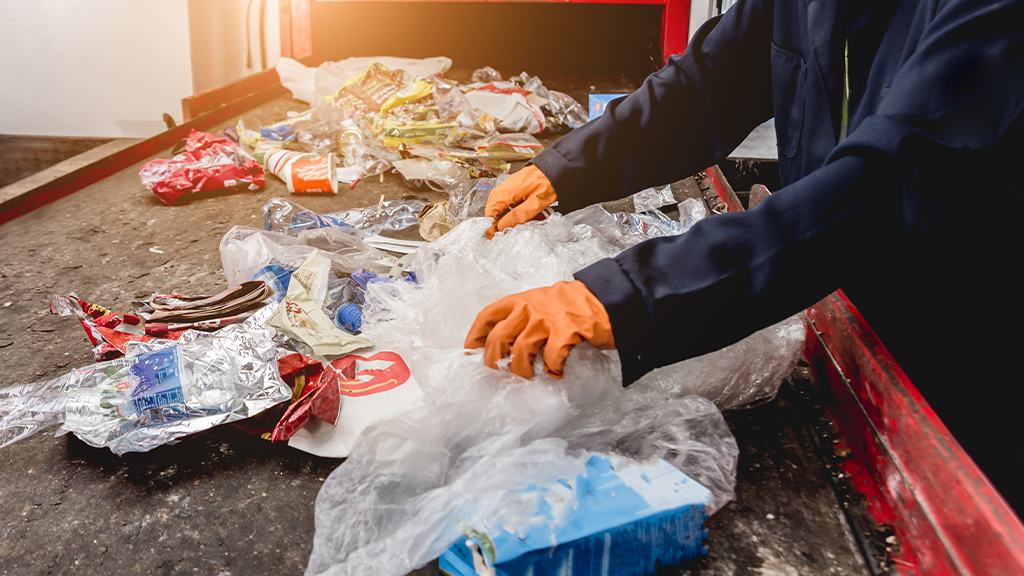
Closed Loop Partners' Center for the Circular Economy, in collaboration with American Beverage, released a new best practices guide for materials recovery facilities (MRFs) in the U.S. The guide supports MRFs in their work to optimize recovery rates, increase material quality, and foster resilient operations. The guide, Materials Recovery Facilities: Effective Operation, Design and Management in Theory and in Practice, draws on insights from leading public and private MRF operators, recycling equipment vendors, recycling industry experts, and others, establishing the industry standards needed to improve U.S. recycling infrastructure.
The guide is being released as Extended Producer Responsibility (EPR) laws gain momentum across the U.S. — with seven states already implementing them and more actively evaluating adoption. As these laws expand, there will be a growing need for transparency, performance-based metrics, and targeted education and funds to help MRFs adapt. This guide was created to aid MRF management personnel in identifying areas of improvement at their facilities and optimizing operations to maximize recovery of material streams and strengthen financial outcomes.
Key areas of guidance within the best practices
MRFs play a critical role in managing residential recyclables, and with the right operational strategies, their recovery rates can improve dramatically. The guide outlines proven approaches to material flow design, equipment configurations, maintenance routines, municipal contract updates, and staff training, among other areas. Developed through direct engagement with MRF operators — both public and private — as well as equipment manufacturers, the manual draws on site visits, real-world testing, and case studies to highlight what works. This guide delivers actionable insights to help MRFs increase material capture, reduce residuals, and enhance both environmental and financial performance.
In addition to the guide itself, a set of complementary templates is available for download and can be utilized by MRFs to establish best practices in their facilities, with key guidance on areas including:
- Metrics and Performance Optimization
- Equipment Maintenance and Spare Parts Management
- Facility Management and Staff Organization
- Industry Relations
The Closed Loop Center commissioned Resource Recycling Systems (RRS) to support this work. "Materials recovery facilities are at the center of how communities recycle, and this guide equips them with clear, tactical practices to optimize performance in today's evolving policy landscape," said RRS co-CEO Resa Dimino. "Through this collaboration with Closed Loop Partners and American Beverage, we're underscoring practical ways operators can increase material capture, reduce residuals, and strengthen both environmental and financial outcomes as EPR programs expand."
"One of America's beverage companies' highest priorities is creating a circular economy for our valuable, recyclable bottles and cans, and supporting the infrastructure that makes this possible," said Kevin Keane, CEO of American Beverage. "Through this new guide, we aim to support key players along the recycling value chain to be well-positioned for success."
Closed Loop Partners aims to innovate and streamline the circular economy
This report is part of Closed Loop Partners' broader work to support recycling and circular economy infrastructure in the U.S. across its platform. Closed Loop Partners' innovation firm, the Center for the Circular Economy, has partnered with several leading recycling facilities across the country to test the recovery of packaging materials. Closed Loop Partners' investment firm, Closed Loop Capital Management, has catalyzed millions of dollars to bolster regional recycling infrastructure, stabilize recycling businesses during volatile times, and support novel technologies and facility expansions. And Closed Loop Partners' operating group, Closed Loop Builders, launched Circular Services, one of the largest private recycling and circular economy infrastructure companies in the U.S., serving many of the fastest-growing markets and largest companies in the country.
"The U.S. recycling industry is at a critical point, with policy changes shifting the status quo and creating opportunities for materials recovery facilities to operate at their highest capacity," said Kate Daly, managing partner and CEO of the Center for the Circular Economy at Closed Loop Partners. "This guide's insights help lay the foundation for stronger infrastructure, positioning U.S. recyclers to accelerate their critical work building resilient material supply chains."
"Collaboration with MRF operators, commitment to high standards, innovation, and transparency are essential for Producer Responsibility Organizations to achieve EPR targets," said Jeffrey Fielkow, chief executive officer, Circular Action Alliance. "Circular Action Alliance supports this playbook by Closed Loop Partners' Center for the Circular Economy, as a practical guide for collaboration to maximize recovery and deliver program compliance and measurable results for a circular economy."