
STADLER commissions 8 tph plant in Italy to boost paper and cardboard recycling
The plant has the capacity to sort through six different types of paper products, including multilayer materials
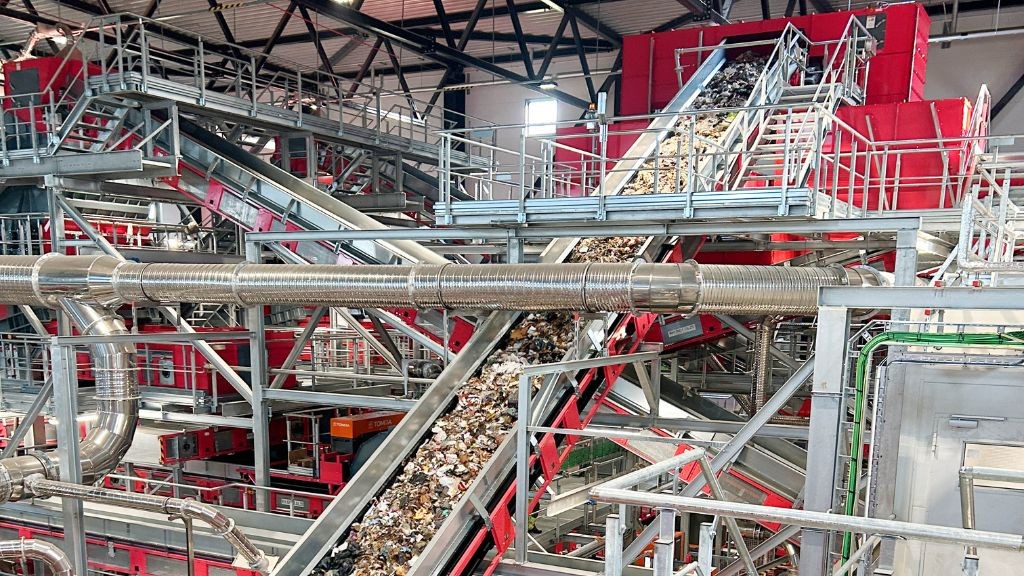
STADLER has recently completed a new high-performance paper and cardboard sorting facility for the Italian multi-utility company Iren in Collegno, located in the Turin area. Built in partnership with Pellenc ST, a designer of intelligent sorting equipment, the facility marks a major step forward in Turin's circular economy infrastructure.
The plant, which has a capacity of 8 tonnes per hour, is the first of its kind capable of sorting six different types of paper products, including multilayer materials. Its innovative layout, compact design, and advanced automation meet Iren's demand for operational flexibility, capacity, reliability, and quality output, delivering a solution adapted to both current and future requirements.
A new benchmark in paper sorting: six output streams and AI-driven performance
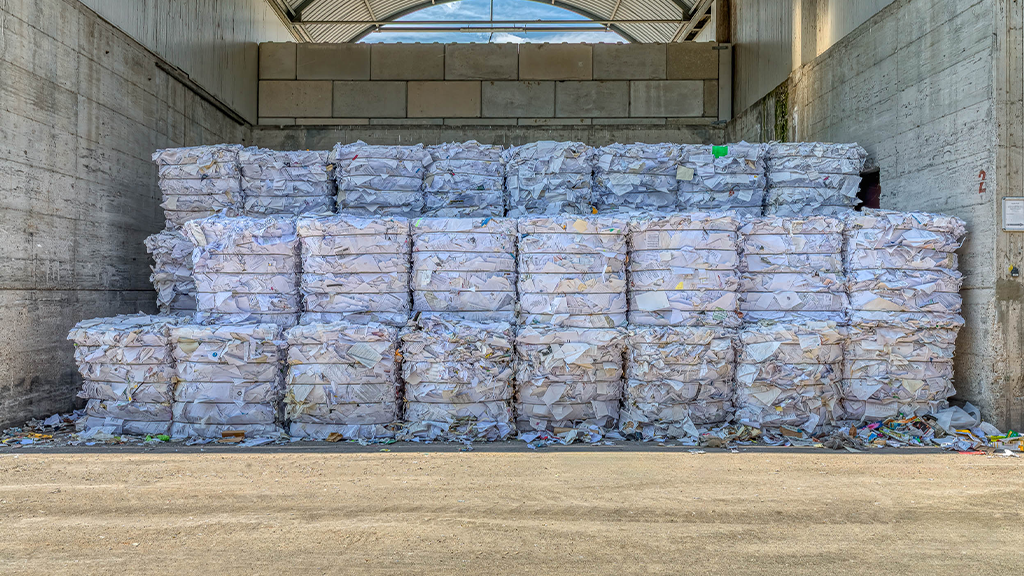
The Collegno plant stands out as a technological milestone in paper and cardboard recycling. It's one of the first facilities to separate six different types of paper-based output materials within a single sorting line: large cardboard, drinking paper, white paper, fine paper, multilayer material with aluminium, and multilayer without aluminium.
The process starts with dosing and mechanical separation using STADLER's double-deck PPK2000 and STT2000 ballistic separators, which sort out large cardboard and fine material, respectively. Medium-sized material, containing various types of paper, then progresses to six Pellenc ST COMPACT+ optical sorters that utilise Near Infrared (NIR) and visible spectroscopy and are equipped with CNS BRAIN, the company's latest AI-integrated software, to identify the different types of paper.
Each fraction undergoes a manual quality control and automatic composition analysis before being baled and stored. The system also includes direct bypasses and flexible feeding options to accommodate variations in input and demand, aligning the plant's design with the evolving dynamics of the recovered paper market.
Smart design and precise execution in a compact space
One of the major challenges of the Collegno project was to build the new plant within the confines of an existing building. STADLER completed the dismantling of the old facility in just three weeks, followed by a three-month mechanical assembly, two-month electrical installation, and one-month commissioning all delivered on schedule.
"Adapting the new plant to the pre-existing building layout and electrical infrastructure was a significant challenge," explains Paolo Cravedi, senior project manager at STADLER. "We had to rework the layout, particularly in the feeding area and the baler positioning, to optimise space use and ensure efficient material handling. The end result is a flexible, compact, and efficient plant that meets today's requirements and is ready for tomorrow's challenges."
A collaborative success, combining STADLER's engineering with Pellenc ST's advanced optical sorting for optimal results
"CNS BRAIN enables us to tackle new use cases in the sorting of fibrous materials, particularly in distinguishing between white paper and white cardboard, which are visually similar but differ in value," explains Matteo Loiacono, sales manager Italy at Pellenc ST. "This AI-powered system plugs directly into our optical sorters without additional infrastructure or energy consumption, offering a powerful, robust, and efficient solution."
"Worldwide, Pellenc ST has been working with STADLER for many years," notes Loiacono. "This has enabled us to establish a strong relationship based on trust and mutual understanding, resulting in shorter commissioning times. For Collegno, STADLER successfully optimised the integration of peripherals and the airflow dynamics system. Combined with our optical sorters, this partnership achieved the best sorting performance on the market while maintaining high throughputs, exceeding the customer's initial targets."