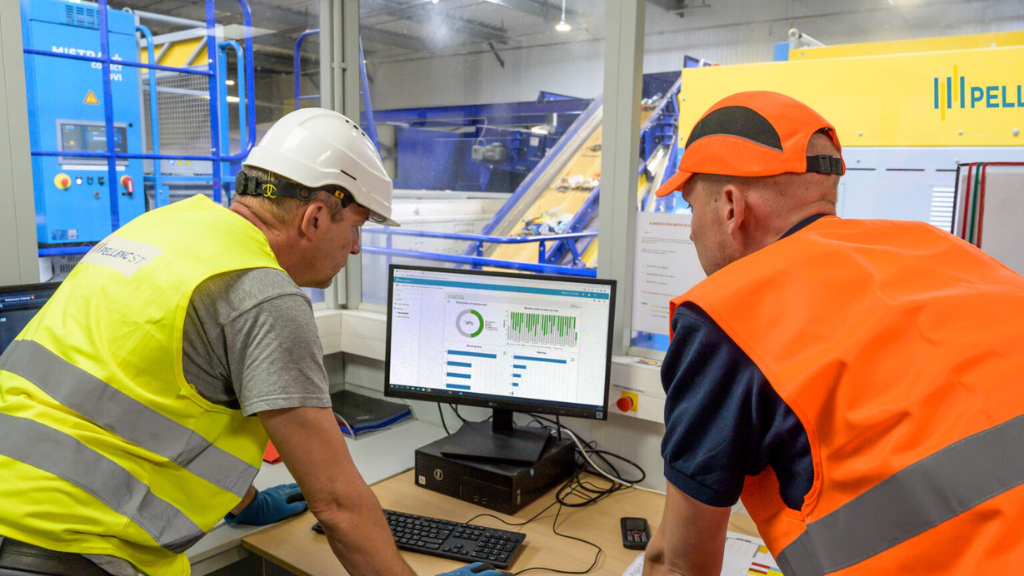

VIDEO: RES boosts plastics recovery by 10 percent with Pellenc ST advanced AI sorting system
Optical sorters and Deep Learning-based AI modules perform complex separation tasks inside the Italian facility
At its Pettoranello del Molise site, RES has developed an integrated platform combining advanced sorting and mechanical recycling. At the heart of this ambitious project, Pellenc ST's advanced sorting technologies play an essential role in maximizing material recovery and preparing high-quality streams for further recycling. Enhanced by artificial intelligence, these solutions help boost sorting performance and support RES's ambition to recover greater value from increasingly complex plastic waste streams.
Founded in 1989 in the province of Isernia, RES, Recupero Etico Sostenibile S.p.A., has over 30 years of experience in the circular economy. Listed on Euronext Growth Milan since 2023, the Group operates three industrial hubs in Molise, covering waste sorting, treatment, recovery and disposal. Its strategy combines technological innovation and research to maximize material recovery and transform waste into secondary raw materials.
The plastics recovery project relied on Pellenc ST to supply advanced technologies
RES started up its plastics sorting plant in Pettoranello del Molise in January 2024. Developed as part of a wider industrial program, the facility receives plastic waste from mono-material and multi-material municipal collections, as well as non-hazardous commercial and industrial streams.
The sorting facility can process up to 40,000 tonnes of plastic waste annually and is designed to meet COREPLA requirements for advanced sorting centres. In 2024, RES also brought its automated washing and granulation unit into operation. Together, the two installations represent a combined investment of EUR 13.5 million and establish a direct route from mixed post-consumer plastics to marketable recycled polymers.
The process relies on AI-powered sorting procedures integrated into optical sorters
Integrated by COPARM, the Molise plant processes up to 40,000 tonnes of plastic waste annually in compliance with COREPLA standards. To achieve its performance objectives, RES selected Pellenc ST as its optical sorting technology partner.
At the heart of the process, ten COMPACT+ optical sorters designed by Pellenc ST separate plastics by polymer type and colour to recover valuable fractions: Plasmix (residual mix plastics including PET trays), HDPE, PP, PS, PE Film; and for PET: light-blue, transparent, coloured, opaque + sleeved. What sets this installation apart is the deployment of the Pellenc ST's latest innovation in artificial intelligence.
Complementing NIR/VIS spectroscopy, CNS BRAIN is a Deep Learning-based AI module that pushes sorting and performs complex separations that conventional optical sorters could not previously address. For example, sleeves can conceal the underlying polymer, leading to the loss of valuable PET. A total of 5 CNS BRAIN modules have been installed across the sorting line: one on the PET/non-PET sorter, and one on each of the CTA (light-blue PET), CTL (clear PET), CTC (coloured PET) and MCPL (opaque and full-sleeve PET) sorters.
CNS BRAIN overcomes this limitation by recognizing these complex objects and significantly reducing the loss of good product. Following the installation of the CNS BRAIN modules across the sorting line, RES increased its processing capacity by 10 percent.
"Following the installation of CNS BRAIN PET and the four-month training period required for all the models, we achieved a 10 percent increase in capacity and a significant improvement in sorting performance," shared Antonio Lucio Valerio, CEO, RES S.p.A.
Closing the loop on plastics
After sorting, PET, HDPE, and PP are washed and converted into flakes, with an annual capacity of 8,200 tonnes, for applications such as textile fibres. RES is also developing a 20,000-tonne pyrolysis plant with BlueAlp to convert residual plastics into oil for new polymers, which will be supplied to Shell Chemicals Europe.
Pettoranello demonstrates how complementary recycling technologies can address complex plastic waste streams. Advanced sorting identifies and separates valuable materials, mechanical recycling converts suitable polymers into reusable flakes, and the selection in mechanical recycling allows the preparation of the feed stock for chemical recycling. At the heart of this integrated model, Pellenc ST's optical sorters create precise and consistent material streams, supporting downstream processes and maximizing the amount of plastic returned to productive use.
Through advanced technology and long-term partnerships, RES is building a circular plastics platform that demonstrates how high-quality sorting can support a more comprehensive approach to recycling and the circular economy.