
BIR warns trade restrictions could fracture non-ferrous metals chain
BIR’s World Recycling Convention heard about how the growing trend of restrictions on recovered materials can hamper growth
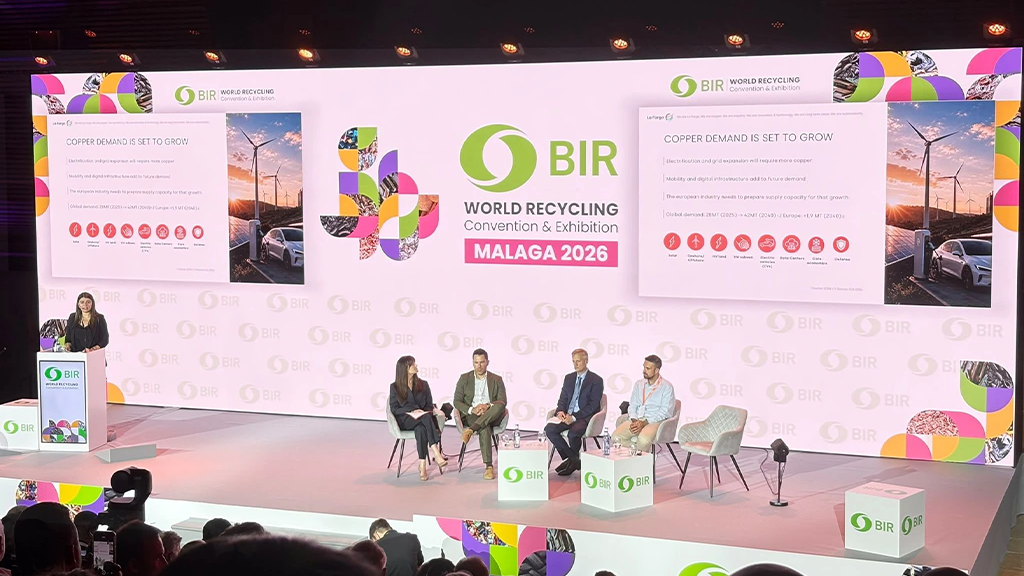
The growing trend for restrictions on the export of recovered metals is likely to hamper the expansion of the recycling industry, the Bureau of International Recycling's World Recycling Convention has been told.
The current challenge to global free trade was explored during the Non-Ferrous Metals Division session in Malaga, Spain. Professor Dr. Frank Pothen of the University of Applied Sciences in Jena, Germany, spoke about a recent report he had published on the effects of trade barriers on recovered copper for the Circular Metal Association in Germany.
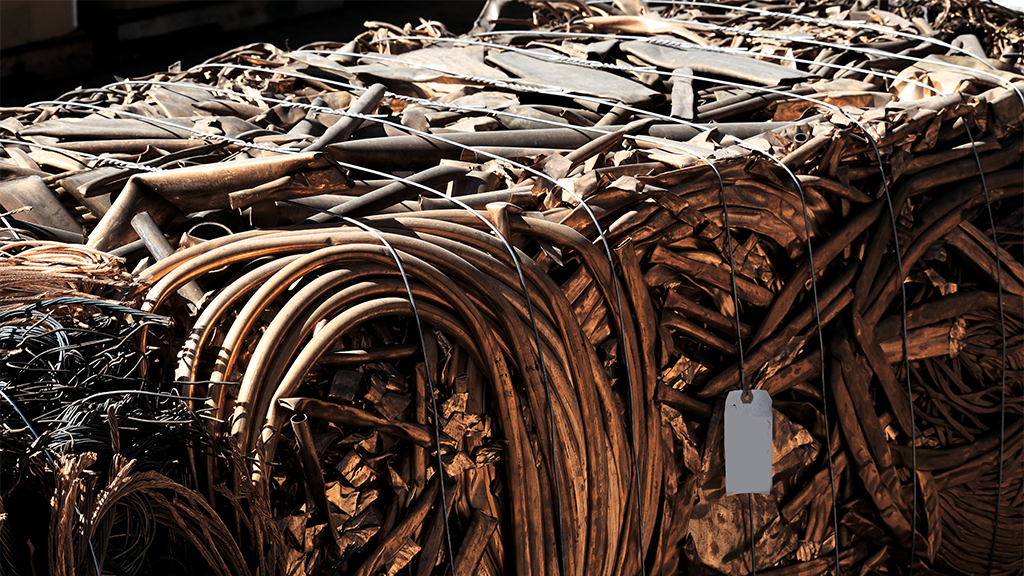
The message from Dr. Pothen and research colleagues at the Fraunhofer Institute was that recycling is a fundamental part of the copper value chain. About a third of the raw material used in global copper production in 2024 came from recycled copper. And recycling stood to benefit from the anticipated growth in demand for copper: by 2040 world demand is expected to reach 42 million tonnes, 50 percent more than today.
"The point of our work was to look at trade barriers and think about both the effects that we might expect once barriers are implemented, but also the side-effects, the sort of things that typically might get left out in the discussion of these issues," he said.
Dr. Pothen set out four possible consequences:
- Fewer export outlets – can domestic capacity take up the slack?
- Lower domestic scrap prices – while processors could gain cheaper input, recyclers face lower revenues and margins
- Weaker collection and sorting – costly recovery of complex scrap becomes less attractive
- Reduced liquidity – less money for investment in recycling capacity
Regulatory systems must take the recycling industry into account
Dr. Pothen argued that if export restrictions on recovered metal were introduced, attention had to turn to the competitiveness of European industries using copper, aluminium, or steel. Energy costs, regulatory burdens, and other practices that hamper competitiveness would have to be addressed.
"What we hope for the future is that we will think about regulatory systems and incentives that improve the conditions for recycling, that get incentives to invest in more sorting and refining and processing capacities, combining environmental issues with workable trade rules."
Another issue for Dr. Pothen was that secondary copper is not a homogeneous material stream. Pre-consumer recovered copper is typically suitable for direct melting and has low processing costs. Complex secondary raw materials, on the other hand, must be collected, separated, and often refined — all of which impact margins. Alloys, notably brass, which accounted for 41.7 percent of all copper scrap exports from the EU in 2025, have strong downstream demand in China and India, which bought in 80 percent of the exported alloy.
"Are there actually other companies that can use the scrap metals to make something out of it?" he asked. "If not, you will just have a surplus of the material. If you want more scrap metal being used within Europe, you must generate the incentives for investment in capacity."
The challenge of brass was raised by Joan Campmajó, chief executive officer of ACIN (ESP), a family-owned metal recycler founded in Girona in 2014, who stressed the importance of processing lower-value metals. "I encourage all the people of this convention to invest, to convert this waste into raw material because I think that it's going to be the next steps we have to make in this industry."
Campmajó added that it is easy to sell "clean" material into the European market, but trading lower quality grades is a problem. "What we are mainly focused on is to invest, to clean these materials, to be ready to sell in the European Union. It is the reason we are making all our investments."
Copper use isn't going anywhere
Fellow speaker Georgeta Postas, raw materials purchasing director for La Farga (ESP), works only a short drive from Campmajó, where her company manufactures semi-finished copper products. In 2025, 60 percent of the company's copper production of 200,000 tonnes came from recycled copper. This year, more than 70 percent was collected from within Europe. The company's goal was to increase that figure, but it depended on both the availability of material and the reliability of the value chain.
"The Europe Urban Mine is a strategic resource that needs a viable value chain. Ensuring access to raw material must definitely go hand in hand with maintaining industrial capabilities that can transform these materials into usable ones."
Non-Ferrous Metals Division Board member Natallia Zholud (TRM Metals, POL) pointed out that much of the recent increase in recycling capacity in Europe was for processing copper wire rods. She asked Campmajó what would happen to the market if recovered brass could no longer be exported.
"First of all, we don't have enough time to get ready to process it [all]. We have bought a couple of machines to segregate zinc from copper because when you have the copper segregated, then it's easy to sell in the European market.
"We are going to have a huge problem. We are going to have mountains of brass in our yards."
He said it was already difficult to sell brass and there were few takers for it inside the EU.
In response to a question from the floor about export controls, Postas said it was more important to meet the predicted growing demand for copper rather than getting nervous about the supply.
"What we need to do is meet this demand via partnerships, collaboration, innovation, and strengthening the industrial competitiveness of Europe."
The need for a collective approach was echoed by Murat Bayram, European Metal Recycling (DEU), and recipient of the Non-Ferrous Legend Award from BIR at the previous Gothenburg Convention. Speaking from the floor, he maintained: "We need to understand we are sitting in the same boat: the recyclers, the smelters, the collectors, the traders, the brokers. We need to avoid any more regulation because we are building a labyrinth from regulation to regulation and [then] wonder why the investments are not going through. Let's remind us again and again: we are one community."
At the beginning of the session, Divisional President Paul Coyte (Hayes Metals, NZL) celebrated the dynamic and changing nature of the non-ferrous recycling industry. Even so, he said, there were many constants for BIR members, regardless of which part of the supply chain or world they were in.
"For example, energy costs, whether that be fuel, electricity, or gas. Or regulatory issues. And then there's issues that are a bit more specific: security of supply, security of demand."
But Coyte believed the most important fact was that the recycling industry is intertwined. "We all listen to each other; we want to improve it. That's because there's a common goal, which is recycling. And that's quite exciting."