

BIR’s opening keynote session addresses attracting young talent to the recycling industry
BIR’s World Recycling Convention kicked off with functional advice on how to recruit and retain a younger workforce
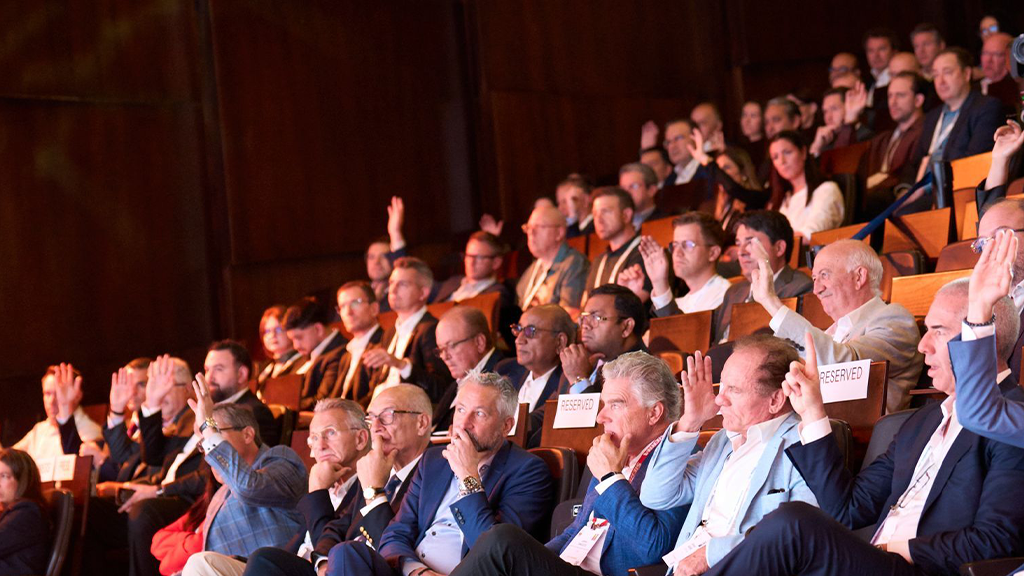
Determined to recruit and retain young people to become talented, committed industry leaders was at the top of the agenda for the Bureau of International Recycling at its World Recycling Convention in Malaga, Spain.
During the Opening Session chaired by BIR President Susie Burrage OBE, delegates were urged to consider the future leaders of their vital industry. Burrage wondered how the industry could increase its appeal for the next generation; how it could be seen as a sector with purpose, innovation, and genuine global impact; how it could compete for talent; and — crucially — how to persuade young people to stay within it.
"These are not simply HR questions," she said. "They are strategic questions. Our industry's long-term success depends on attracting and retaining talented people. That matters just as much as access to materials, markets, and technology.
"Without talented, committed people, none of it works. Attracting those people is becoming a real challenge."
Reinforcing her message was the keynote speaker, Simon Schnetzer, a leadership coach who specializes in the attitudes and views of young people, turning their insights into practical approaches for organizations and employers.
To attract a younger workforce, recyclers must understand the Gen Z mindset
He began by miming the role of the conductor in front of an absent orchestra: "You cannot run a successful business if there's no one playing with you." He described a gap in understanding between young people and the recycling industry. The industry needs to understand younger people — the so-called Gen Z, aged 15 to 30 — to bridge the divide.
Young people are fearless, enthusiastic, eager to learn, and bring fresh perspectives, Schnetzer said. However, they also suffer from losing focus, being frequently absent, having high expectations, and wanting instant results.
"This is a leadership thing. It's not just about attracting these young people but also asking: ‘How do we manage a team with diverse backgrounds, not just of age but also of gender?'"
The speaker, who started his research by cycling 3,000 km across Europe and talking to young people on his journey, added: "The mission I'm on is to build bridges between generations, companies and regions so that we can co-create this future because it will be way more sustainable when we do it together."
Schnetzer added that today's business leaders had to understand the motivations driving Gen Zers. Drawing on his own work in Germany and research published by Deloitte this year, he highlighted three areas: money, mental health, and the impact of artificial intelligence.
In the workplace, he said, more than 50 percent of Gen Z people said having fun was most important, with money around 25 percent. He argued that while money is not considered a great motivator, the Gen Z figure was as high as it was because the generation does not feel secure, and that affects their mental health.
How to deal with work stressors and the rise of AI
Young people, he pointed out, tended to feel more stressed than their seniors and reported higher levels of exhaustion, self-doubt, and a lack of drive. His message to delegates remains that recyclers and industry leaders cannot expect young people to learn how to reduce mental stress. An appropriate environment had to be created to help them. "Sometimes that can be simple rules. Like when we are at work, we do it this way or that way. Ideally, you make these rules together."
Schnetzer's research suggested more than 50 percent of Gen Z believed their thinking ability would diminish because of AI. They saw the danger of using AI for a task having implications for the workplace. Leaders had to acknowledge the AI challenge and choose how to deal with it, and he recommended initially working with young people in an analogue way.
"If you are not thinking through the problem first, you will not be able to challenge the result.
Thinking is like a muscle. If you train it, it will stay strong..."
Youthful perceptions of the recycling industry were reinforced when the speaker invited onto the stage three young BIR members: Matthis Breugelmans (Aurubis, BEL); Deyvid Gavazov (Scrapad, ESP), and Lucy Elan Thomas (Norsk Hydro, GBR). After commenting on how little they knew about the industry before joining it, all three spoke of friends and acquaintances misunderstanding their work and confusing "recycling" with "waste". But they also talked warmly about the "recycling family."
Their recommendations for making the industry appeal to Gen Zers included promoting it as a fun, modern place to work, covering a range of technologies and skills, offering mentorship opportunities, and a rewarding career — not just a job.
BIR takes recruitment seriously with new initiative
Immediately after Schnetzer's presentation, President Susie Burrage announced the launch of Future Recyclists, a global campaign to attract and retain the next generation of talent in the recycling sector. A Future Recyclists website, to be unveiled early next year, will provide inspirational content including testimonies from young recyclers, myth-busting facts, insights into the sector's role in the circular economy, and a comprehensive database explaining potential job roles.
Burrage insisted: "I want young people to look at this industry and think, ‘I could belong there. I could build something there. I could make a difference there'. Nobody is too bright for recycling. Let's show young people how they can shine in our industry."
When welcoming delegates at the start of the session, Burrage said the Malaga event was the biggest October Convention in BIR's history, with more than 1,500 registered participants representing more than 660 companies across 58 countries.
She emphasised the key BIR belief that free trade without barriers was at the core of the recycling industry and crucial for the desired goal of circularity.
"But today, we face unprecedented trade restrictions," she said. "Regulatory complexity is increasing. The economy is uncertain. Trade flows are changing, and customer demands are evolving rapidly. But at the same time, recycling has never been more important."
During the session, there was a moment of silence for Fadi Shahrour, who died in September. The Lebanese businessman served BIR for more than three decades, most recently as Chairman of its Membership Committee and as a member of the Advisory Council.