
Green Machine's Green Eye Ai brings AI-powered object recognition to optical sorting
Visual recognition helps recyclers target specific products, separate contaminants, and adapt to changing material streams
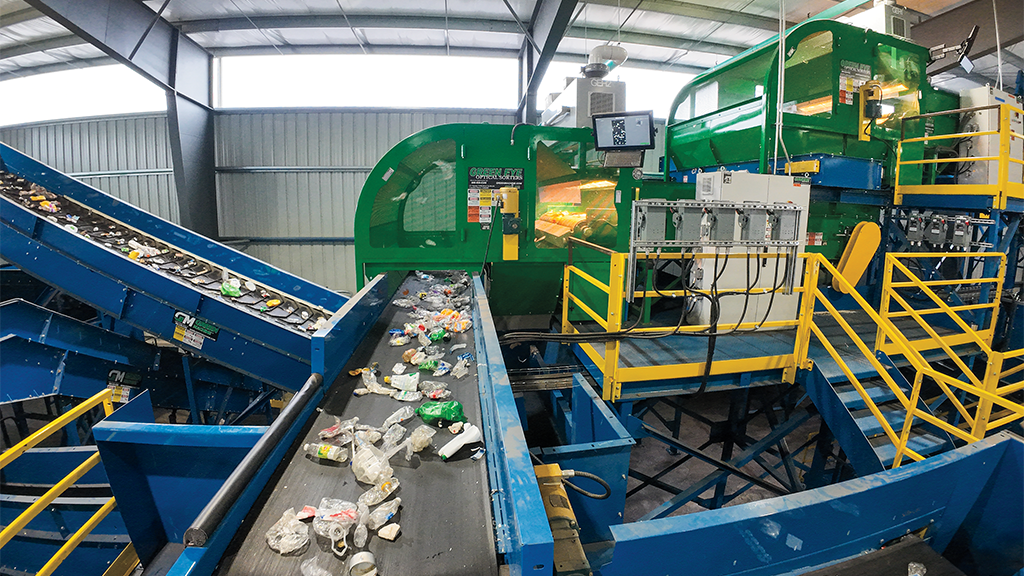
A person standing beside a conveyor in a recycling operation doesn't need to know the chemical composition of an item to recognize it as a bottle. Shape, size, colour, and other visual characteristics provide enough information to make the distinction. Green Machine is applying that principle to optical sorting with Green Eye Ai, a camera-based vision system designed to recognize objects moving across the belt.
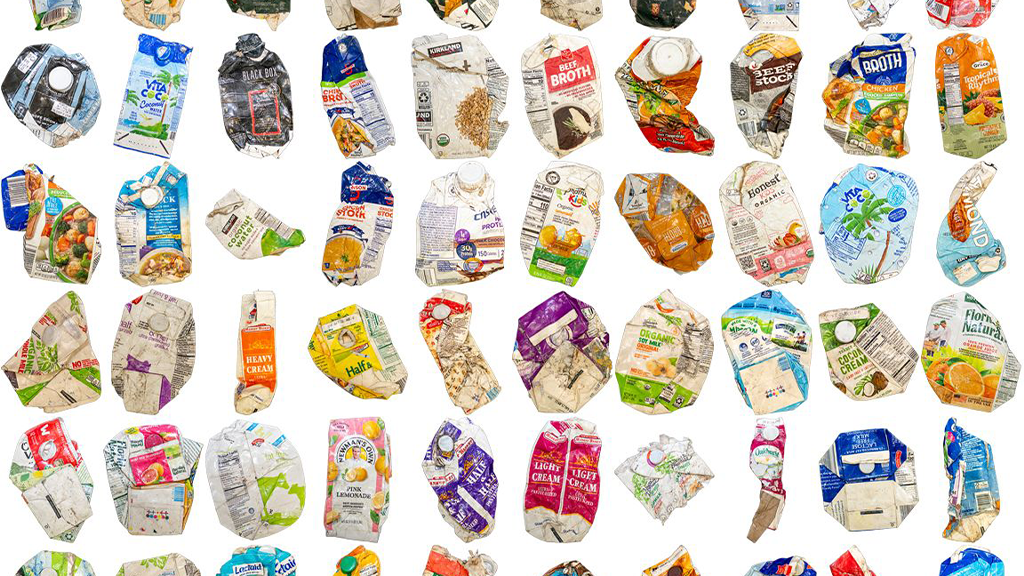
For a recycler, the ability to identify an object can matter just as much as identifying its material composition. A PET bottle and PET thermoform may share the same polymer, for example, but a recycler's end market may require those products to be separated. By recognizing those visual differences, Green Eye Ai can automate sorting decisions based on the same visual cues an experienced human sorter would use.
"It sees the material in the same manner that a human mind would when it's analyzing the material before it on the belt," says John Green, President of Green Machine. "Anything that you can teach a human to see, the AI system can see better and faster."
How AI object recognition differs from hyperspectral sorting
Green Machine initially developed its object-recognition AI for robotic sorting before applying the technology to optical sorting. The company's Green Eye HYP hyperspectral system also uses AI, but it works with a different source of information to make sorting decisions.
"Both of Green Machine's hyperspectral and AI sorters process information using AI because relying solely on NIR or hyperspectral methods has several drawbacks. AI can overcome many of these limitations and provide more effective sorting across a wide range of recyclable materials," says Peter Mendre, Chief Technology Officer at Green Machine.
What separates the two, then, isn't AI itself. It is the information the AI is being asked to interpret. Green Eye HYP uses hyperspectral data to identify a material by its spectral signature. Green Eye Ai uses visual information to recognize an object by characteristics such as its shape, size, and colour. In effect, Green Eye HYP asks, "What is this object made of?" and Green Eye Ai asks, "What is this object?"
Object recognition is particularly effective for whole, recognizable items such as containers with unique visual characteristics. It can also be used to identify unwanted items within a fibre stream. At one facility, the amount of paper in the material stream was reduced to the point that it made more sense to identify and eject contaminants than to positively sort the paper itself. AI was trained to recognize foreign objects including forks, syringes, coat hangers, bottle caps, toothpicks, and Popsicle sticks.
There are limits. If an object has been shredded to the point that its original form is no longer recognizable, it loses the visual cues Green Eye Ai needs to identify it. When the sorting decision instead depends on the material's chemical signature, hyperspectral technology with AI assistance may be required.
Why Green Eye Ai uses controlled AI training instead of continuous learning
Green Eye Ai does not continuously retrain itself on everything passing beneath its camera. Instead, Green Machine pre-trains the system before deployment and provides customers with a library of recognized objects.
Green says the decision not to use a continuously learning model is deliberate. Green Machine found through its own experimentation that continually adding data could overtrain the model, reducing the certainty with which it recognized previously learned objects. Mendre says keeping the operating model static gives Green Machine more control over what is added to the training set and when. This delivers predictability to Green Machine's customers.
"We give a static program that it starts to run with, and then we can improve on it from there based on the customer's direct needs. Then we can improve the software again based on overall industry requirements as things change," Green says.
Because the system arrives pre-trained, a new installation does not need to learn the local material stream before it can begin sorting. Mendre says Green Machine's current dataset contains millions of images.
When an object that isn't part of the existing training set appears, adding it can be relatively quick. Mendre points to a recent customer that encountered three container types outside the training set. The customer sent Green Machine 30 samples of each. They included HDPE containers without caps and a colour that had not been included in the original training.
"It took about an hour and a half to retrain the AI, and then we did a remote update on the customer's machine," Mendre says.
Once trained, that recognition can be added to the library and deployed to other systems where the same object appears.
"We don't have to spend days or weeks retraining for something new," he says. "We can just add it to our existing library."
Retrofitting MRF optical sorters with Green Eye Ai
For recyclers already operating a Green Eye HYP optical sorter, moving into AI-based object recognition does not require replacing the entire machine. Green Machine can reuse much of the existing processing system and air bars while changing the vision system components.
"If it's an existing Green Machine customer that has a Green Eye, we can integrate the AI technology and either remove or lay dormant the hyperspectral technology on that optical sorter," Green says. Retaining the hyperspectral technology allows the customer to toggle between technologies. The transition is reasonably short from an operating standpoint because the AI arrives pre-trained.
"It's an instantaneous, robust system that can be changed if needed," Green says. "We turn it on, it's all there."
Green Machine remains involved for several days after startup to identify anomalies and confirm that the system is meeting the facility's requirements. For operators, Mendre says the interaction is largely limited to starting and stopping the system and adjusting parameters such as recognition thresholds.
"If you can run a PC, you can run one of our AI systems," he says.
The case for converting a HYP sorter depends on the job it is being asked to perform. Green points to cardboard sorting as one application where he would choose AI object recognition, citing improved collection, cleaner picks, faster sorting, and the ability to recognize material even as material conditions vary.
"If I had a fibre sorter and wanted [to sort] cardboard, I'd upgrade it to AI," Green says. "When the material comes in wet, it doesn't care. When the material comes in with paint on it . . . it doesn't care. It'll still pick it."
From AI object recognition to material separation
Recognizing the right object is only part of optical sorting. The machine still needs to track that object across the belt and physically send it to the correct destination.
Mendre says both Green Eye Ai and HYP track identified material and trigger air jets for separation, but object recognition gives the AI system a more defined outline of the target.
"The AI does a better job at recognizing the actual shape of the object, and it'll actually draw a better impact zone," Mendre says.
That allows the system to consider the true shape of the object when targeting. Green Machine's individually actuated air jets are positioned on quarter-inch centres, which Green says also enables the system to target small-format material.
That precision becomes particularly important with Green Eye's dual-sort capability. A single machine can simultaneously send two selected commodities along different trajectories while a third, untargeted fraction follows another path.
"The same machine can separate two different types of material using a single air bar with two rows of ejector jets, rather than two separate air bars, to avoid cross-firings," Mendre says.
For example, he says a Green Eye sorter could separate office paper and cardboard simultaneously, directing each to a different location while undesired material follows a third path.
Turning optical sorting data into insights for MRF operators
The same vision system used to identify objects for separation can also record what is travelling across the belt.
Green Eye Ai can track quantities in real time, allowing a recycler to see, for example, the number of PET bottles identified during an eight-hour shift and break that information down hour by hour or minute by minute. Historical information, downtime events, alarms, and quantities can also be stored and exported to other databases and business systems. That data extends beyond the objects the system actively sorts.
"We collect data on what we sort and what we see, and we see everything that comes across the belt," Mendre says.
That can reveal discrepancies between what a facility expects to be processing and what actually appears on the conveyor, while showing how material composition changes across shifts or loads.
What's next for AI optical sorting and material identification?
Green Machine is also applying its camera-based technology to another longstanding optical-sorting challenge: black plastics. Green says the company has developed systems capable of identifying and sorting black plastics by polymer at production speeds, addressing a material stream that has traditionally presented a challenge for optical sorting.
Beyond recovering new material, increasingly specific object recognition could also make the information collected by the system more granular. Green sees potential for AI to identify packaging by manufacturer, creating the possibility of counting materials from individual brands as extended producer responsibility programs evolve.
Green believes the industry isn't at the point of requiring such specific sorting and says the market has not yet demanded it. But it points to a broader evolution in optical sorting: from identifying what a material is made of, to recognizing what the object is and, eventually, identifying who made it.
_________________________________________________________________________________________
This article originally appeared in the 2026 Recycling Technologies special issue of Recycling Product News.