
Automated bale dewiring cuts shredder blade maintenance in half
Blue Mountain Plastics turns to Cross Wrap to protect its shredder and reduce downtime
In Ontario, bales of used beverage bottles arrive at Blue Mountain Plastics by the truckload, compressed into dense blocks and bound with steel wire. The facility runs a closed-loop recycling operation: plastic bottles go in, and 100 percent recycled PET for new bottles comes out.
Blue Mountain Plastics processes millions of pounds of material a year. At that scale, small inefficiencies add up fast. Manually dewiring bales was slowing things down, so the company turned to automation.
The cost of manual wire removal
Before automation, operators fed PET bales directly into the shredder with a clamp truck. Wires that reached the shredder caused problems. They made the infeed unpredictable, wore down the shredder blades, and required manual intervention.
Cutting the wires by hand was also slow and dangerous. Each wire had to be cut individually, and a compressed bale can expand suddenly once the tension is released. Workers had to pull the loose wires from the bale by hand, gather them, and carry them to a container.
Staffing made the problem harder. Labour was becoming increasingly scarce, while manual wire cutting created safety risks and slowed the process.
Automating the first step
Blue Mountain Plastics turned to Finnish technology company Cross Wrap, which develops automated systems for removing wire from bales. The company supplied two fully automatic Bale Dewiring machines, along with feeding conveyors, adapted for the heavier, denser North American bale format.
The machines remove the wires in a single automated pass before the material reaches the shredder. Cross Wrap's horizontal system works from both sides of the bale, with grippers securing the wires on one side while cutters on the other slice through them. The system then coils the removed wire into compact bundles. The cutters can be configured for different materials and bale types, helping ensure consistent performance.
What changed on the line
The results at Blue Mountain Plastics were measurable. Shredder-blade maintenance hours dropped by roughly 50 percent, cutting both the time and the money spent keeping the shredder running. The infeed also became more predictable — without wires snagging and tangling, the facility could process heavy-duty bales more consistently.
Automating the process meant workers no longer had to manually cut and pull wire from the bales, eliminating a potentially hazardous job while reducing the facility's reliance on labour for a task that was becoming increasingly difficult to staff.
Turning an inconvenience into a commodity
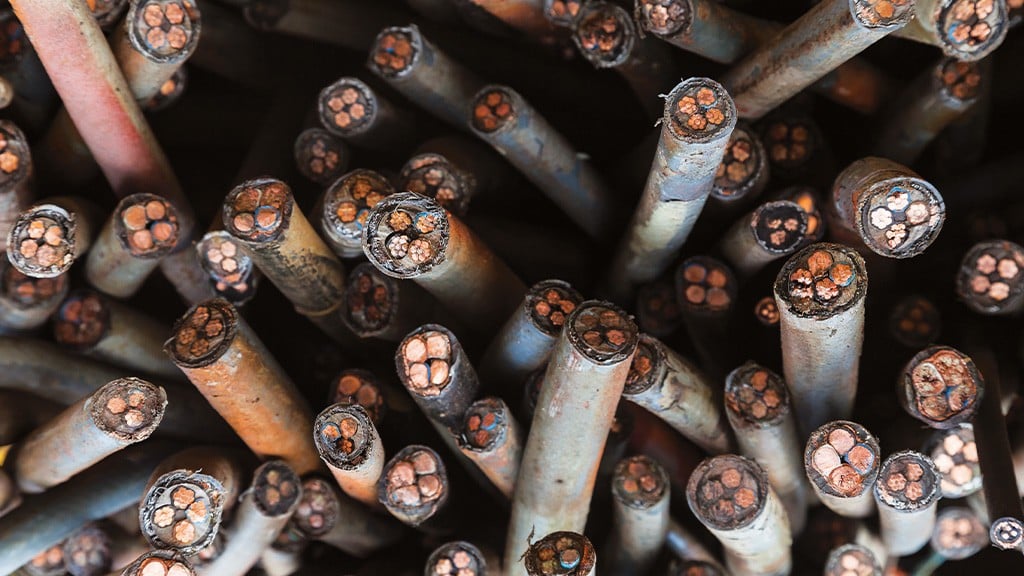
There is value in what the system pulls off the bales, too. Instead of leaving loose strands of steel wire to deal with, the system coils them into compact bundles that take up less space and are easier to store and transport. The recovered steel can then be recycled, turning what had been a disposal headache into another recyclable material stream.
A typical bale holds about two to four kilograms of wire, roughly 30 metres. Recovery depends on how many bales a facility processes, but every bale carries multiple wires. For a busy facility, that adds up to a substantial stream of scrap metal.
Facilities that want a cleaner product can go a step further. Coiled wire can be run through a coil shredder and a magnetic separator to produce a more compact, cleaner metal fraction for recycling.
Finding the right place to automate
Blue Mountain Plastics' experience points to a broader role for automation in recycling facilities. Technology does not have to overhaul an entire operation to make a difference. Targeting a repetitive, labour-intensive, or problematic step can remove a bottleneck and improve everything that follows.
As recyclers look to get more from their existing equipment while dealing with labour constraints and pressure to limit downtime, those targeted applications of technology become increasingly valuable. Sometimes improving an entire process starts with fixing one problem in the right place.
________________________________________________________________________________________
This article originally appeared in the 2026 Recycling Technologies special issue of Recycling Product News.