

What does the EU’s end-of-life vehicles regulation mean for global recyclers?
The regulation focuses on a closed-loop requirement to boost the amount of recycled materials used in the construction of new cars
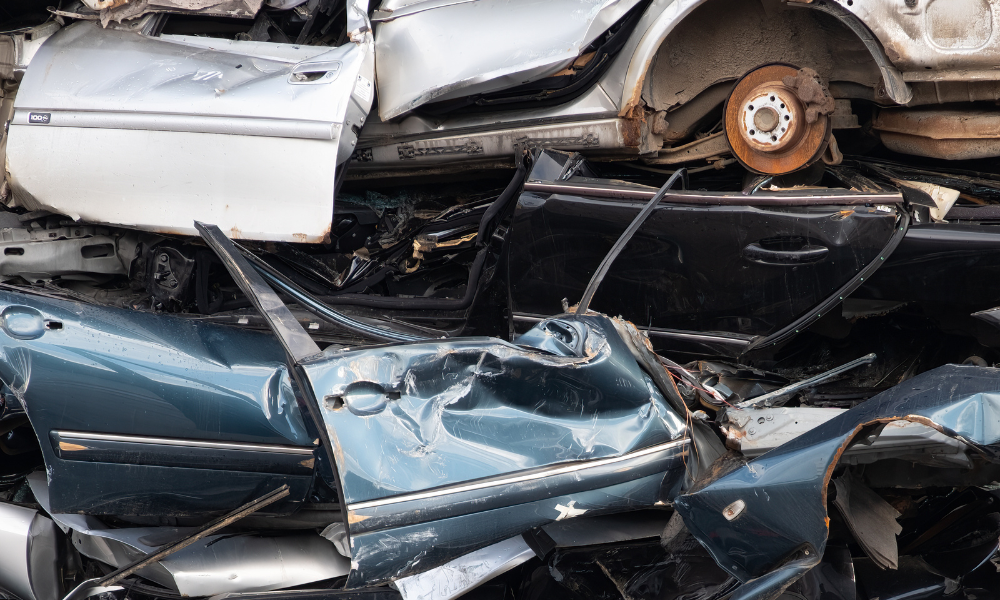
The most recent BIR International Environmental Council (IEC) unpacked the EU's end-of-life vehicles regulation and the potential effects looming for global recyclers.
Julia Ettinger, secretary general of Recycling Europe, confirmed that a final agreement has been put forward and that, pending formal adoption by the European Parliament and Council, the new regulation is likely to become active during the fourth quarter of 2026.
What the ELV Regulation could change about the current market
A key element of the regulation is recycled content targets for plastics — 15 percent within six years and 25 percent within 10 years, with a closed-loop requirement stipulating that 20 percent of this material must come from ELVs.
Another clause in the ELV Regulation calls for the European Commission to assess the feasibility of recycled content targets for steel, aluminum, and critical raw materials. Simultaneously, producers are asked to make declarations on the recycled content in their vehicles.
A mirror clause will require recycled plastics from countries outside the EU to have been treated in an equivalent way to the European level, based on an independent audit of facilities every five years.
Having noted that the new regulation asks for some parts of an ELV to be removed manually for placement on the remanufacturing or reuse market, Ettinger welcomed a clause nullifying this removal requirement if costs are disproportionate.
To underline the importance placed on reuse, the regulation also calls on vehicles to be designed for easy removal of parts. Meanwhile, some treatment requirements enshrined in the regulation — including sorting aluminum into four grades — will require investment from recyclers, according to Ettinger.
Recyclers need to be included in creating relevant legislation
"We always believe that recyclers, because we are the ones supposedly benefiting from an EPR scheme, should have a say in the administration and the governance, so this is really a good step forward and allows us also to give our perspective in terms of the setting-up and the running of the EPR scheme," Ettinger said.
BIR Director General Arnaud Brunet added that the world recycling organization's global position paper on extended producer responsibility and compliance schemes "made it very clear that we wanted recyclers to be associated with the governance of the EPR".
Forces in the EU will have global impacts
Robin Wiener, president of the Recycled Materials Association (ReMA), identified "a fundamental shift occurring within the automotive sector and the automotive supply chain" around issues of circularity, recycled content, disassembly and dismantling, traceability, and materials recovery. "This is being driven in large part by the EU regulation," she said, due to the global nature of supply chains.
Effects have already been felt in the U.S., where, historically, the plastics within automotive shredder residue have been landfilled because recycling the material has been deemed technologically and economically unviable.
"We believe that there will now be that demand," Wiener stated. "Because what we're hearing from the EU automakers is that they see a problem with getting enough supply of the quantity and the quality that they need from just the EU market. So there's going to be a growing demand for plastics from multiple sources."
There has been an acceleration, she added, in the pace of government and company research in the U.S. into plastics recovery from ASR involving chemical as well as mechanical recycling.
The regulation could upend the current method for shredding ELVs
Regarding the ELV Regulation's requirement to remove certain parts before recycling, Wiener said this raised the question of whether, in doing so, it makes it easier for dismantlers to take out parts containing valuable materials and thus change the economics of shredding. "We don't know, but it's something we have to think about," she said.
Having pointed to the new regulation's verification requirements as a "huge challenge", Wiener also said she was "nervous" about other countries following the EU's lead, particularly in Mexico, where there is talk of a law involving traceability and recycled content requirements for vehicles.
"We need deeper collaboration with the automakers — that is incredibly important," concluded Wiener. "We need it on a global level because these are global vehicle platforms. And so through BIR's leadership, I'm hoping that we could have that kind of discussion."
A focus on the sliding-scale methodology for green steel
Leaders of the meeting switched to discuss the implications of a sliding-scale methodology for green steel, a topic that BIR has historically challenged. Having affirmed BIR's position that recycled steel maximization across all production methods offers the most immediate, commercially viable, and scalable solution for producing green steel, Trade and Environment Policy Officer Alexandra Vartan expressed the "very considerable concern" that the sliding scale creates "a very uneven playing field" which "penalises recycled steel-based production".
This approach opens up the possibility that an electric arc furnace inputting approximately 80 percent recycled steel and a blast furnace using 20 percent recycled steel could receive equal benefit under the green steel classification despite the former's substantially lower emissions. This could "very much undermine the credibility of the green steel labelling", she argued.
The ongoing aluminum scrap debate
Earlier in the meeting, IEC Chairman and Recycling Europe's President, Olivier François, expanded on the European aluminum scrap export debate at the BIR Non-Ferrous Metals Division meeting in Gothenburg. He noted that in December last year, European Commission Vice President Stéphane Séjourné told a Brussels press conference that he wanted recycled aluminum to stay in Europe so as to reduce the price. Such a statement is "short-term", said François, and fails to recognize that lower prices impact whether the recycling industry conducts its environmentally important work.
He pointed to evidence from the plastics sector of the potentially negative consequences of regulation based on emotion: a recently imposed export ban has impacted prices for recycled plastics at a time when they should be "skyrocketing" given the elevated costs of oil.