
AI as the MRF nerve centre
From visibility to action in data-driven recycling operations
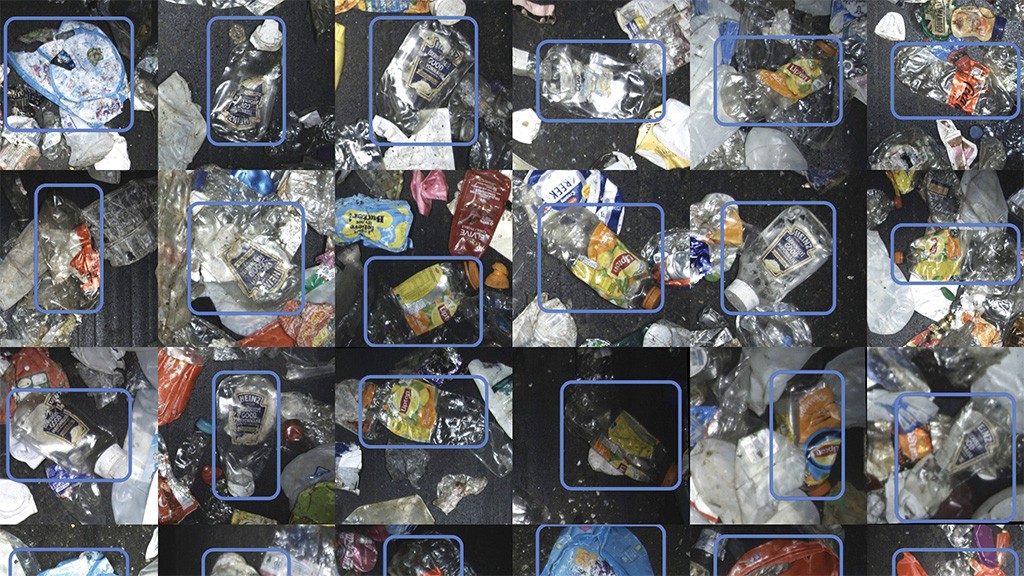
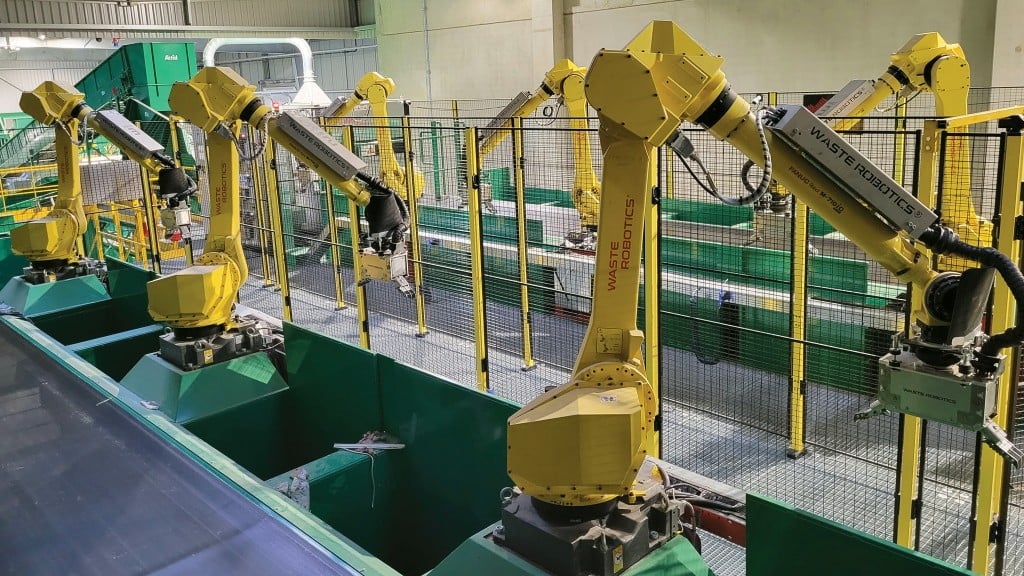
Across material recovery facilities (MRFs) and plastics recycling operations, artificial intelligence is evolving beyond its early role in material identification. From incoming material composition to downstream residue losses, AI is being used to create a real-time, facility-wide picture of what is happening across the plant and to support more informed operational decisions.
As Matthew Steventon, head of business development at Greyparrot, explains, these systems are designed to track material at multiple points in the process, converting visual data into a running mass balance that establishes a central source of truth for the facility.
For operators managing variable feedstock and tight quality requirements, that visibility is becoming critical. But beyond delivering a snapshot of what is happening, AI is reshaping how that information is used.
Creating a plant-wide view of performance
In some MRFs, AI systems are now installed at multiple points across the process, capturing data on inbound material, sorted streams, and residue. The result is a system-wide view of performance that allows teams to track how material moves through the plant and where value is lost.
At Murphy Road Recycling, which processes up to 250,000 tons of recyclables annually throughout Connecticut and western Massachusetts, that visibility has reshaped how performance is monitored. The facility partnered with Greyparrot and Van Dyk Recycling Solutions to deploy multiple AI units throughout its system, establishing a centralized control environment.
"We installed 15 Greyparrot units throughout our facility, effectively transforming it into a real-time control centre," says Brian Popovich, senior financial analyst for operations at Murphy Road Recycling.
That shift reduces reliance on delayed feedback loops. Instead of waiting for feedback from downstream customers, plant operators can identify changes in purity or capture rates as they occur and respond immediately.
"If purity begins to swing, what we've built are dashboards and automated alerts that allow site management to intervene immediately," Popovich says. "We're not waiting three weeks, four weeks to get that feedback from a customer downstream."
From monitoring to decision-making
The ability to monitor performance in real time is only the first step. The more significant change is how facilities leverage that information to guide decisions across operations, maintenance, and capital planning.
At the KSI Recycling Facility in northern Holland, AI data has been used to identify subtle trends that would be difficult to detect through manual sampling. One example is the impact of equipment condition on recovery rates.
Using AI-generated data, operators identified a gradual increase in material entering the residue stream, which was ultimately linked to contamination buildup on optical equipment. By tracking that trend, they were able to refine their maintenance approach.
"When we clean this window, we see a jump in this line, and then we see an improvement of the quality and of the recovery," says KSI plant manager Foppe-Jan de Meer. "Now we know how much this line can decline before we have problems with our quality. So we have now adapted our cleaning scheme."
This shift from reactive to proactive maintenance illustrates how AI is used to anticipate issues rather than respond to them after performance has already declined.
In addition to the immediate feedback loop, historical data also supports longer-term planning. At Murphy Road Recycling, sustained trends in material volumes are used to inform investment decisions, helping ensure that capital is deployed where it will have the greatest impact.
"When we see sustained volumes of specific materials, it strengthens the business case for targeted upgrades, ensuring that when we are deploying capital, it delivers the strongest ROI," Popovich says.
Linking data to process adjustments
As operators become more comfortable working with AI-generated data, the next step is connecting insight to action on the plant floor.
In some MRFs, this informed decision-making is already happening at the operator level. Teams are using live dashboards to adjust settings, respond to changing material streams, and fine-tune performance throughout the day.
At GreenTech Recycling, with plastics recycling facilities in Lithuania, Slovakia, and Romania, operations span multiple processing goals. Here, AI data is being used to optimize processing parameters in real time as input conditions shift.
"The operators can optimize those recipes live," says Alan Smith, chief technical and operations officer at GreenTech. Previously, he adds, fixed settings meant facilities would start to see losses due to variation in the input.
The ability to adjust processing parameters in real time is important in operations that rely on blending different grades of material. Variability in incoming bales can quickly affect output quality, but with better visibility into input composition, operators can adjust settings to maintain specifications and improve recovery.
AI data is also being used to evaluate supplier performance, providing a clearer picture of whether incoming material meets expected quality standards over time. That information can influence purchasing decisions and strengthen accountability across the supply chain.
Toward more automated control
While most facilities are still in the phase of using AI to inform human decision-making, there are early signs of a shift toward more automated responses.
At KSI, operators are exploring how AI insights could eventually be used to directly influence equipment settings. One pilot project involves adjusting a windshifter based on real-time material composition.
"In the really near future, we want to steer at least one windshifter . . . to change revs according to what the Greyparrot sees," de Meer says.
The goal is not to remove operators from the process, but to support them with more responsive systems that can adapt to changing conditions. In practice, that means combining AI data with existing sensor inputs, such as motor load or vibration, to build a more complete picture of plant performance.
"We want to combine the Greyparrot data with other data," de Meer says. "And that improves the way of working for the operators. It's really, for us, . . . next level."
Environmental factors can also be accounted for with this approach. At KSI, for example, operators have observed that moisture content increases during wet conditions, affecting how materials behave in the system and requiring adjustments to equipment settings. Integrating these variables alongside AI data opens the door to more adaptive operations.
The role of the operator
Despite the increasing capabilities of AI systems, operators remain key to how these tools are used.
Across KSI, Murphy Road Recycling, and GreenTech, there is a consistent view that AI functions as a support system rather than a replacement for human expertise. It can identify trends, generate alerts, and provide analysis, but it still depends on operators to interpret the information and act on it.
"AI definitely is a great tool. It's a great partner," Popovich says. "But at the end of the day, it can trigger alerts and identify trends, but it still requires operators to act on the information quickly and correctly."
This dynamic has implications for how teams are trained and how roles are evolving within the plant. Operators are increasingly expected to engage with data, understand system performance, and make informed adjustments in real time.
At the same time, adoption requires a shift in mindset. Initial skepticism is common, particularly when new systems challenge established assumptions about how the plant is performing.
At GreenTech Recycling, data challenged long-held assumptions about the source of performance issues.
"Ultimately, any issue that we had on our process was always blamed on the input material," says Smith. "But once we installed the unit, it actually identified that 90 percent of our problems were process issues."
That shift in understanding helped build trust in the data and encouraged broader adoption across the team.
From insight to impact
For many operators, the value of AI is about making existing processes more transparent and controllable.
In some cases, the benefits are difficult to quantify directly. Rather than driving immediate revenue gains, AI systems often help prevent losses by maintaining quality, reducing downtime, and avoiding penalties. At KSI, de Meer says the financial impact is not always easy to isolate, but the improved control over plant performance is clear.
As facilities continue to integrate AI into their operations, that control is likely to become more important.
With increasing pressure to deliver higher-purity materials and operate more efficiently, the ability to see and respond to changes in real time is becoming a core capability.
The shift from monitoring to action is still underway. But for many MRFs, AI is already playing a more central role, connecting data, decisions, and performance across the plant.
This article originally appeared in the May/June 2026 issue of Recycling Product News.