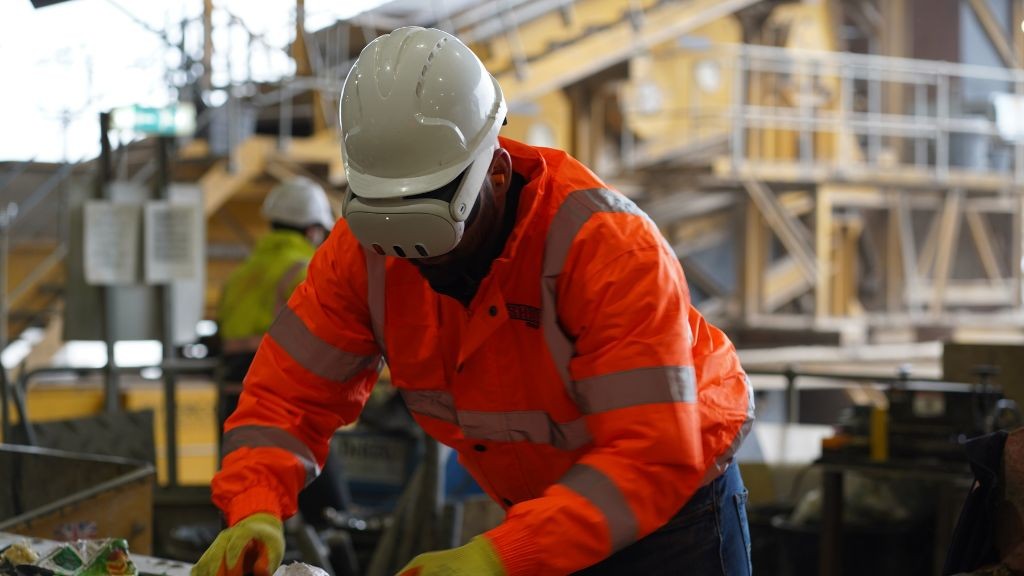

Customized modular robotics and AI enable smarter sorting
Waste Robotics and Greyparrot deliver more adaptable sorting technology to meet today’s recovery challenges
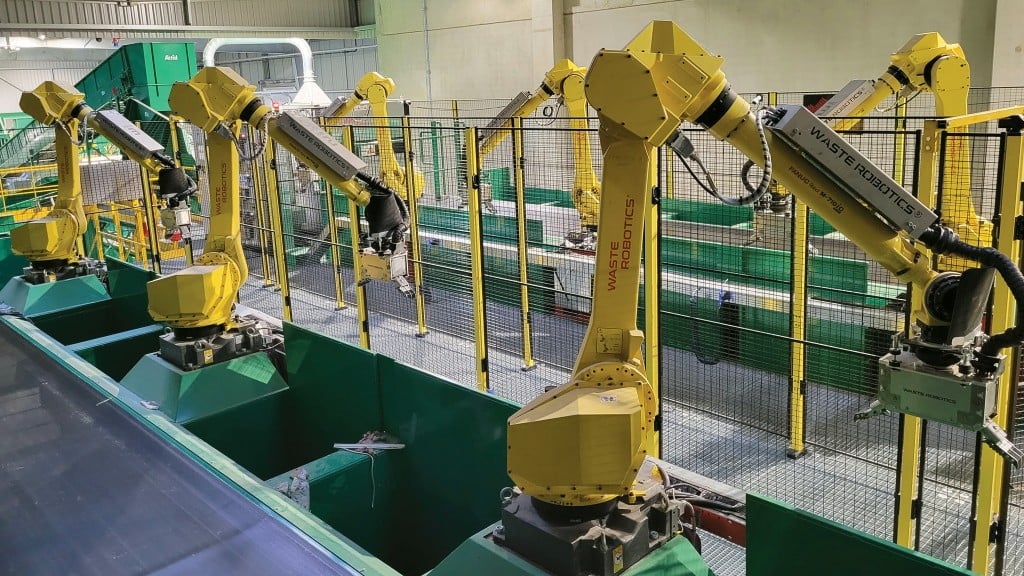
In today's recycling landscape, flexibility is no longer a luxury. It's a necessity. From fluctuating feedstock to shifting regulatory demands, facilities must process increasingly diverse materials with greater accuracy, efficiency, and speed. Waste Robotics and Greyparrot aim to meet that challenge through AI-powered robotics and intelligent customization.
By focusing on adaptable technology and data-driven solutions, these two companies are helping material recovery facilities (MRFs) transition from fixed-function machinery to an era of dynamic, scalable automation — one where robots do more than just sort. They learn. They evolve. And they provide operators with real-time insight into every aspect of the process.
A leap from garage to growth
Like many successful tech startups, Waste Robotics began in a modest setting: a garage where the company could only produce one or two robots at a time. Engineering and assembly teams worked in tight quarters, and capacity was limited.
That changed with a recent expansion into a purpose-built facility. The new space accommodates multiple production lines, includes crane systems for easier robot handling, and gives the team room to grow. "Now we can build four to six modular robot lines at the same time," says Eric Camirand, founder and CEO of Waste Robotics. The move reflects the growing global demand for robotic systems that solve one of the industry's most persistent issues: labour.
"We see demand that comes from several industries," explains Camirand. "We're replacing a labourer that you don't have or [that] costs too much, and you're sorting with greater efficiency."
Today, this Canadian company has doubled in size and now has a team of 40 supporting installations in North America, Europe, and beyond. To support its growing global client base, Waste Robotics has launched a 24/7 support line and is establishing regional parts hubs, starting with France and expanding to Asia and the Middle East. All systems are network-connected, allowing for remote diagnostics and proactive troubleshooting
"We continue selling in Europe — Italy, Iceland, France — and we will install a system in Luxembourg beginning in 2026," says Camirand.
Custom engineering, not cookie-cutter
While many robotics suppliers aim for standardized products, Waste Robotics takes a different approach — one rooted in customization.
At first, the company considered developing a single, replicable robot model to keep costs low, but it quickly became clear that no two waste streams or facility configurations were alike. The better solution was to build a flexible platform configured to each customer's needs.
This customization extends to selecting between suction or gripper tools and configuring multiple arm types within a single robotic line. By designing software that supports modular control and tailored functionality, Waste Robotics delivers systems optimized for specific challenges like picking out rigid plastic, sorting C&D debris, or recovering metals.
The gripper advantage
Much of Waste Robotics' differentiation lies in its use of advanced gripping systems over traditional suction cups. While suction-based sorters work well on flat, lightweight items by targeting the material's centre of mass, they struggle with irregular, three-dimensional, or heavy objects. Grippers, by contrast, can handle more complex shapes and weights, but they also demand more sophisticated collision avoidance, especially when reaching into a cluttered pile.
"A lot of AI [is needed] to figure out how to position the hand to go through a pile of something to grab what you want," says Camirand. "From a computational standpoint, it's way more involved than having the suction cup."
The company's early work in bag sorting laid the foundation for its move into C&D applications, plastics, and now, scrap metal. Most recently, Waste Robotics entered the scrap metal sector with a system designed to extract copper windings, commonly referred to as "meatballs," from the ferrous stream.
"It's not only the tool at the end of the robot that changed, but it's also this . . . ‘gripper AI,'" Camirand explains.
While the attachment varies, the system's core platform remains unchanged. Some lines even deploy both grippers and suction cups, with the software system dynamically dispatching to the right tool based on object properties. Items like circuit boards can be picked with suction, while bulky or non-uniform objects are routed to the gripper, allowing for more dynamic and accurate sorting across varied streams.
Adapting in real time
Waste Robotics' systems are not only tailored to each client, they're also flexible in day-to-day operation. Operators can program robots for either positive or negative sorting based on incoming materials.
"Most of these [traditional] machines will do the same thing day one and 10 years down the road," says Camirand. But with Waste Robotics, AI helps the machines evolve over time. They can be programmed to switch between tasks with ease, and also to learn and grow as a client's needs and operations evolve. "You basically have a captive workforce that you can deploy to do whatever you want it to do."
This versatility is particularly valuable in smaller or medium-sized facilities where feedstock composition changes frequently. A load of mostly clean wood in the morning might require negative sorting; a mixed-material pile that arrives later could call for targeted positive recovery. Unlike legacy machinery, Waste Robotics' systems can respond to these changes without physical retrofitting, just reprogramming.
Gripper AI must evaluate hundreds of possible grip points in real time, balancing object shape, surrounding materials, and collision risk. This level of precision demands advanced computing power to ensure safe, accurate, and efficient picking.
That same adaptability applies to long-term upgrades. AI models improve over time. Grippers can be swapped or refined. Entire recipes for sorting logic can be reconfigured to accommodate changing materials or customer priorities.
Making data actionable with Greyparrot
Waste Robotics' partnership with Greyparrot brings even more intelligence to the table. Greyparrot's AI-powered analyzers provide real-time visibility into material streams, capturing detailed data for waste composition, volume, and flow.
This information helps eliminate the guesswork from system design. Instead of estimating robot performance based on a short observation window, Waste Robotics can now simulate months of plant activity using actual data.
By combining Greyparrot's analytics with its own robotic simulation platform, internally referred to as the "robot validator," Waste Robotics can test different configurations, product targets, and ROI scenarios before anything is built.
"When we design a robotic solution, we [can] tell the client, ‘It's going to be 32.5 picks [per minute] based on six months of data,'" says Camirand. "Now we [can] have an intelligent conversation." It's a shift from generalized performance claims to data-backed precision.
And it's not just about optimizing robots. The integration of visual AI also allows for continuous plant feedback. With the right infrastructure, operators could one day adjust conveyors, screens, or robotic parameters in real time based on automated observations.
"This is not a fad," says Camirand. "We can mine this data to get knowledge and do better jobs. Now we have the tools to actually build the MRF of the future."
Retrofitting legacy systems and rebuilding trust
Despite promising results, the industry has not fully embraced robotics. Camirand acknowledges there's skepticism, particularly in older MRFs. The perception still persists in some areas that robots just don't work.
In Camirand's opinion, that perception comes from early solutions that were rushed to market, delivering underwhelming performance. Now, however, many operators have enough experience to distinguish between marketing claims and effective applications.
"Some of us, maybe, have been trying to go too fast," Camirand says. "But nobody's giving up on robots . . . They keep coming back, and now they know what they want."
Camirand notes that the tone of industry dialogue is shifting. "People are more educated now. They know what works, they know what doesn't, and they don't get excited about the flash in the pan anymore." He sees a more discerning customer base that still wants automation, but demands the right solution, not just any robotic fix. Many of Waste Robotics' clients are willing to engage in an iterative process, adjusting operations and working collaboratively through early-stage challenges to build a system that fits.
By designing solutions based on verified plant data and building in remote monitoring, Waste Robotics is helping facilities overcome their reluctance. The systems are designed for global uptime with remote diagnostics, off-site support, and self-monitoring capabilities.
A 24/7 vision for the future
The ultimate goal, Camirand believes, is full automation — systems that don't just supplement human labour but replace it entirely. Most MRFs were designed around human workflows: shift-based operation, high-speed daytime processing, and manual oversight. But with the combined power of robotics and AI, that legacy model could soon be obsolete.
Waste Robotics is also working to minimize installation disruptions. "We're trying to really minimize the footprint and the impact on operation for deploying the robots," Camirand explains. Through simplified integration, Waste Robotics hopes to make automation accessible even to space-constrained or legacy facilities.
Reducing the need for human labour and maintenance downtime, Waste Robotics systems could allow operators to run smaller, more efficient plants around the clock to deliver better pricing, higher purity, and lower emissions. Camirand sees a future where the entire line operations of MRFs can be automated.
"These machines are doing human jobs," Camirand says. "They can work 100,000 hours."
Once the human link is removed, he believes the opportunities for optimization will be revolutionary, from 24/7 uptime to reduced maintenance cycles and precision-tuned material flow across the line. Full automation, in his view, unlocks a level of efficiency that traditional systems simply can't match.
"One day you'll have a tiny plant, optimized like hell, and it's going to win jobs over the big guys," he predicts. "And then everybody's gonna start converting."
A smarter path to circularity
Waste Robotics and Greyparrot are proving that the future of recycling doesn't rely on building bigger plants or faster conveyors. It's about building smarter ones.
By combining robotics, AI, and data science into customizable, continuously improving systems, they're helping the recycling industry solve its most pressing challenges. From labour shortages to inconsistent feedstock, the path forward lies in adaptability.
"Everything is measured," says Camirand. "We can have very meaningful conversations with our clients . . . because now we have the data to back it up."
That's not just automation. It's transformation.
Company info
11410 Louis-Loranger Blvd.
Trois-Rivieres, QC
CA, G9B 0T8
Website:
wasterobotic.com
Phone number:
+1 (819)-201-3021