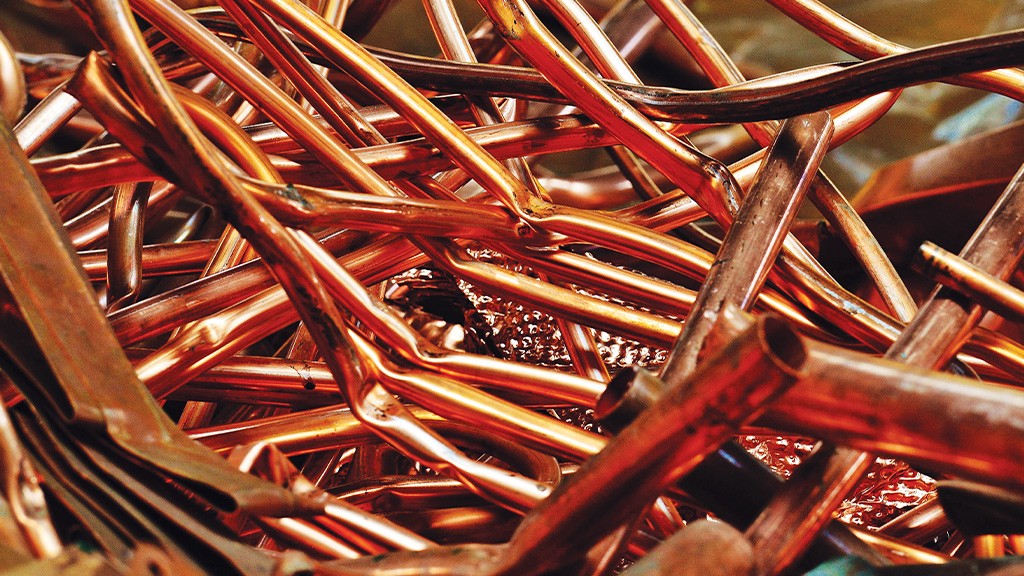

Adapting to the new demands of copper recycling
Specialization positions Manitoba Corporation at the centre of copper’s evolving supply chain
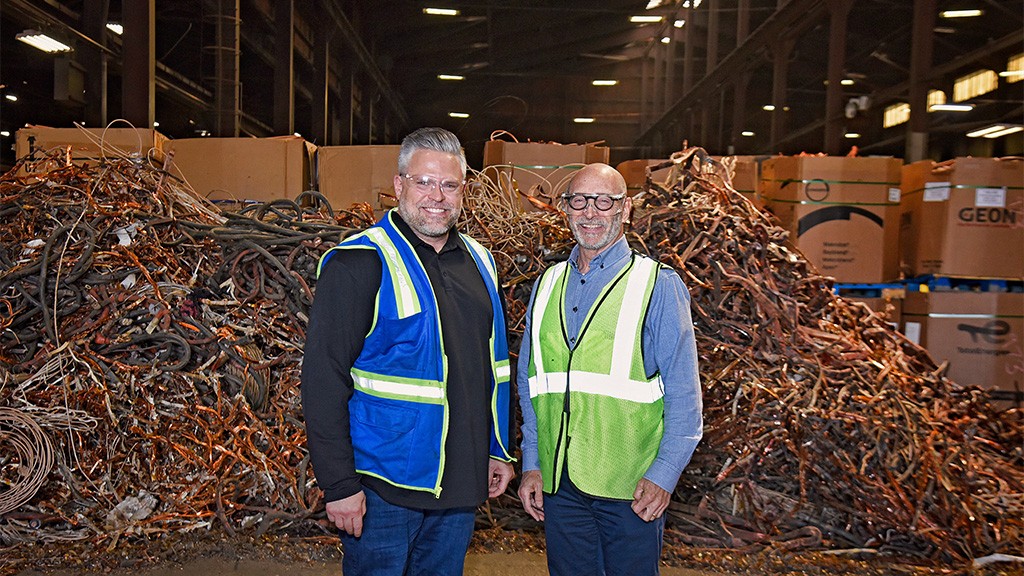
Data centres, electrification, grid upgrades, and the wiring behind almost every new build have put copper supply under the microscope. For recyclers, the spike in demand brings opportunity, but it also brings a new level of responsibility: tighter specs, more documentation, faster turnaround expectations, and rising pressure to quantify recycling's environmental benefits.
"There's a shortfall predicted in copper because so much copper is going to be [in demand for] AI and data centres," says Brian Shine, CEO of Manitoba Corporation. "Recycling has the chance to make up some of that gap."
Manitoba Corporation occupies a distinct role in the industry. Operating for over a century, the family-owned company has spent decades specializing almost exclusively in copper, processing copper-containing scrap into consistent, melt-ready material for downstream mills and manufacturers.
A century-old origin story
Manitoba Corporation's story began in 1916, when it was founded by Shine's great-grandfather, who built a livelihood collecting what others discarded.
"He couldn't speak English and couldn't get a job in the local factory," says Shine. "So he started with the push cart . . . walking the city streets and collecting anything anybody wanted to get rid of."
In the early decades, the business evolved from small-scale collecting to rag recycling and, in Shine's words, eventually became the largest rag recycler in New York state. But the mid-century arrival of synthetic materials changed the economics of that trade. After World War II, he says, "They invented synthetic rags . . . and that took the economics of rag recycling off the table."
That forced a strategic turn. In a region dominated by heavy industry and steelmaking, Manitoba Corp shifted into non-ferrous metals, first building an aluminum business from industrial scrap before ultimately specializing in copper as local manufacturing declined and the company moved toward a higher-value material suited to a North American market.
That decision to specialize would become a defining trait. It also shaped the company's footprint and sourcing model. In 1991, Manitoba Corporation's Buffalo-area operations moved to their current Lancaster, New York, site near the airport, a strategic location for a business built on North American supply chains. A second plant in St. Louis, Missouri, has been part of the business since 1981, supporting service across the Northeast and Midwest for both inbound supply and outbound sales.
Manitoba Corporation's role in the copper chain
Manitoba Corporation does not melt copper into new metal. Instead, it buys copper-containing materials from two primary streams — industrial generators and other recyclers — and processes that material into forms and chemistries that can go directly to melt.
"We're not melting," Shine says. "We . . . process it and get it ready to melt." The material is then delivered to downstream customers for melting into new products.
That distinction matters because it explains why Manitoba Corp's work increasingly resembles manufacturing. In copper, small yield errors can be expensive. And as downstream customers tighten their specifications, processors like Manitoba Corporation become the link that turns mixed, variable scrap into something a melt customer can feed reliably.
Shine describes Manitoba Corp as a wholesaler in the chain. Upstream yards aggregate scrap from retail traffic, trades, smaller dealers, and local generators. Manitoba Corporation focuses on the copper fraction: buying from those yards and from industrial sources, then doing the conversion work needed to meet melt-ready specifications.
In practice, Manitoba Corporation is not simply grading and shipping; it's producing a defined product for a defined customer requirement. Shine calls it a job-shop approach: repeat business from long-term customers, but with end products tailored to individual customers and their melting operations.
Where recycling becomes manufacturing
At the Lancaster site, Manitoba Corporation uses a truck scale, but not in the way a ferrous yard might. In ferrous recycling, being off by a small amount rarely changes the outcome. In copper, it can. Manitoba Corp uses scale data as a verification step for inbound receipts and outbound shipments, ensuring a load matches the bill of lading and preventing costly errors.
From there, material is unloaded, weighed in smaller batches, and routed into processing based on its characteristics and the requirements of the customer it's ultimately intended to serve. Much of the incoming stream is copper-containing (insulated wire, coils, and mixed materials that require separation) rather than clean copper.
Insulated copper wire is a good example of why Manitoba Corporation's processing focus matters. Wire's copper content is not visually obvious, and pricing is sensitive to yield. "If you're five percent off in a $6 copper market, that's huge money," Shine says.
Manitoba Corporation's facility includes chopping lines that mechanically separate insulation from copper. It also has furnaces for cases where insulation cannot be effectively removed by chopping, like tar-based insulation that adheres to copper. In those situations, burning is part of determining copper content and producing clean output.
Speed matters as much as accuracy
According to Shine, what has changed most in copper processing over the last few decades is the expectations.
There was a time when non-ferrous quality was often determined visually, supported by magnets and experience. Shine notes that when his father wanted analysis, he preferred to send samples to an outside lab, believing third-party testing strengthened credibility. But the tempo of modern supply chains has changed. Customers want answers quickly, and many require documented chemistry.
"The only way that we could do it was bring [in] the lab equipment and be able to, in 10 minutes, know if the load passes chemistry or not," Shine says. "It's amazing because things are measured in parts per million, so it's very technically precise."
Manitoba Corporation's approach involves creating a test sample and using optical emission spectrometer-based analysis. The operational payoff is speed and control: the company can confirm whether a load meets a customer's chemistry window before it ships, preventing downstream issues that can be costly and damaging in melt operations.
Manitoba Corp's experience reflects a broader industry trend. As copper demand rises and melt customers become more selective, recyclers and processors are moving toward tighter internal quality systems and are investing in capabilities once less common outside primary metal or specialized alloy operations.
Sustainability and the pressure to quantify
Sustainability is one of Manitoba Corporation's stated core principles, but Shine is careful about how he talks about it. The company's position reflects a broader industry tension: recyclers know their work reduces the need for virgin extraction and diverts materials from landfill, but quantifying those benefits with credible, standardized metrics is a different skill set.
"What we don't want to do is not be credible," Shine says. "We know we're doing good things, but in terms of quantifying that, that's where we need trade associations [like] the Canadian Association of Recycling Industries (CARI), the Recycled Materials Association (ReMA), and others to help."
Shine describes sustainability reporting as customer-driven. End-users face their own reporting demands and are asking suppliers, including recyclers, to provide verified inputs to support corporate disclosures. Manitoba Corporation's approach has been pragmatic: build capability where possible, lean on external expertise when needed, and avoid overstating claims.
To get started, the company used a student program to bring in a University of Michigan environmental master's candidate who helped it structure data collection and reporting processes. The project helped Manitoba Corporation translate sustainability from principle into practice, establishing a foundation for future reporting as customer expectations continue to evolve.
Industry challenges
Shine's industry perspective extends beyond Manitoba Corporation's operations. In addition to leading the company, he has spent years in trade association leadership, including serving as chair of the Institute of Scrap Recycling Industries — now ReMA — from 2018 to 2020 and, most recently, as chair of CARI. That experience gives Shine insight into how the non-ferrous recycling sector is changing both on the ground and at the policy level across North America.
His role with CARI brings a wider set of pressures into the conversation: pressures that are shaping operational decisions across the sector.
Trade policy is one. Shine describes the importance of keeping recyclable commodities moving across the Canada-U.S. border, noting that recyclers on both sides depend on cross-border trade and that disruptions can ripple quickly through pricing, logistics, and supply.
He also points to a risk that is increasingly shaping business decisions in recycling: insurance.
"A real huge [issue] that not as many people are talking about is insurance," he says. "Because of fires throughout the industry, it is a targeted industry from an insurance perspective, and it's getting more and more difficult to get coverage."
That pressure, he adds, is increasingly influencing day-to-day business decisions.
For recyclers, insurance is not an abstract overhead item. It affects deductibles, operating practices, the feasibility of certain processing activities, and even whether a company can continue operating. Shine says CARI is engaging insurers and promoting risk mitigation efforts to help keep coverage available to members. The discussion underscores how fire risk is increasingly influencing strategic business decisions across the recycling sector, not just day-to-day safety practices.
What comes next?
When Shine looks ahead, he returns to a theme that ties Manitoba Corporation's internal evolution to the industry's broader arc: the recycling sector is still physical and hands-on, but it is becoming more technologically dependent. And this will only become more important as the industry strives to meet rising demand and rising expectations.
"We are still a blue-collar, hardworking [industry], but it's starting to transition to be more technologically sensitive and focused," says Shine. He points to improved post-processing separation, optical sorting, and the gradual entry of AI and robotic sorting into recycling. This shift, he says, will accelerate as labour availability tightens, labour costs rise, and automation costs come down. "I think these [technologies] are starting to come at us and we need to embrace that."
The barrier, he argues, is economic. The solution is an economic value proposition. Recycling is "high volume, small margin," which makes capital investment decisions conservative by necessity. But the direction is set: more automation, more analytics, and more process discipline.
For Manitoba Corporation, the growth strategy mirrors the company's long-term philosophy. The core copper business is mature but still focused on gaining share through customer and supplier growth. The company is open to acquisition in principle, but only if it aligns with Manitoba Corporation's niche. Shine resists diversification for diversification's sake, understanding that chasing multiple commodities risks losing the specialization that defines the business.
At the same time, Manitoba Corp has expanded through joint ventures adjacent to its core business, including a water, gas, and electric meter-recycling venture with a Canadian partner and an electronics recycling operation connected through a consulting relationship. Shine describes these initiatives as complementary growth paths that allow the company to develop new business opportunities while maintaining its focus on copper processing.
A legacy built on reputation and room for change
Manitoba Corporation's story is undeniably shaped by family legacy, but Shine describes its future focus as a responsibility to uphold market trust.
"We all have tremendous appreciation of what sacrifices were made by family members earlier to get us to this point," he says. And the priority, he adds, is not nostalgia; it is integrity and forward motion.
In an industry that is being pulled toward tighter specs, faster verification, deeper documentation, and more transparent sustainability reporting, Manitoba Corporation's evolution shows what stepping up your game can look like in practice. It is recycling, but it is also quality control, product design, and supply-chain reliability.
And for non-ferrous recyclers watching copper demand climb, that may be the most industry-relevant takeaway: the winners won't just be the companies that can secure material. They will be the companies that can consistently convert that material into what melt customers actually need quickly, verifiably, and with precision.
This article originally appeared in the May/June 2026 issue of Recycling Product News.