
Apple reports 30 percent recycled material used in all products
Recycled sources now account for 100% of cobalt used in batteries and rare earths elements used in magnets
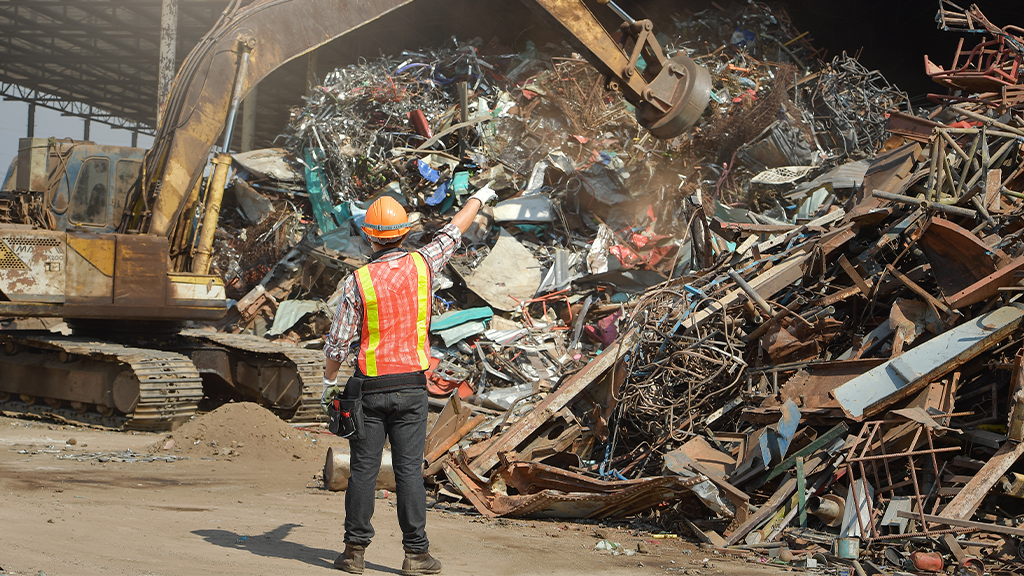
Apple has hit a record 30 percent of material across all of its products shipped in 2025 came from recycled content. The achievement, along with other key progress milestones, is the result of innovation by teams across Apple and collaboration with its global supply chain. As part of this work, Apple now uses 100 percent recycled cobalt in all batteries it designs and 100 percent recycled rare earth elements in all magnets. The company also accomplished its goal of removing plastic from packaging, with Apple products now shipping in fibre-based packaging that can be easily recycled at home.
In its annual Environmental Progress Report, Apple marked progress toward Apple 2030, the company's goal to be carbon neutral across its entire footprint by the end of this decade. Apple's greenhouse gas emissions in 2025 lowered by 60 percent compared to 2015 levels, holding constant from 2024. The report highlights additional progress in renewable energy, materials innovation and recycling, water stewardship, and zero waste.
Reaching ambitious goals in recycled content across all commercial products
In addition to hitting 30 percent recycled content across all products shipped in 2025, Apple also met several targets for recycled content in select components last year. Today, all batteries designed by Apple are made with 100 percent recycled cobalt, and all magnets are made with 100 percent recycled rare earth elements. Additionally, all Apple-designed printed circuit boards are made with 100 percent recycled gold plating and tin soldering. Whether materials are recycled or primary, Apple is committed to sourcing all materials responsibly, and drives high standards for human rights and the environment across its supply chain.
Removing plastic from packaging
Apple completed the transition to 100 percent fibre-based packaging last year, fulfilling its pledge to remove plastic from packaging by 2025. Over the past 10 years, Apple engineers and designers have developed alternatives to common packaging components, replacing plastic screen protectors and trays with versions made with recycled or responsibly sourced paper. They also innovated to make packaging more recyclable, designing the largest boxes, like for the new Studio Display XDR, to collapse into smaller pieces that fit into a home recycling bin. Apple avoided more than 15,000 metric tons of plastic in the past five years alone — the equivalent of about 500 million plastic water bottles.
"At Apple, we believe deeply in leaving the world better than we found it, and that commitment runs across everything we do," said Tim Cook, Apple's CEO. "These milestones in our work to protect the planet show that ambitious goals can also be powerful engines of innovation. And as always, we'll keep pushing to build on this progress even more."
"Across every part of our business, we're showing how innovation and collaboration can turn big ideas and bold ambitions into measurable progress," said Sabih Khan, Apple's chief operating officer. "From expanding recycled material to removing plastic from our packaging, we're setting new benchmarks that inspire us to reach further and work even harder for the good of people and planet."
Next-generation recycling technology brought in-house
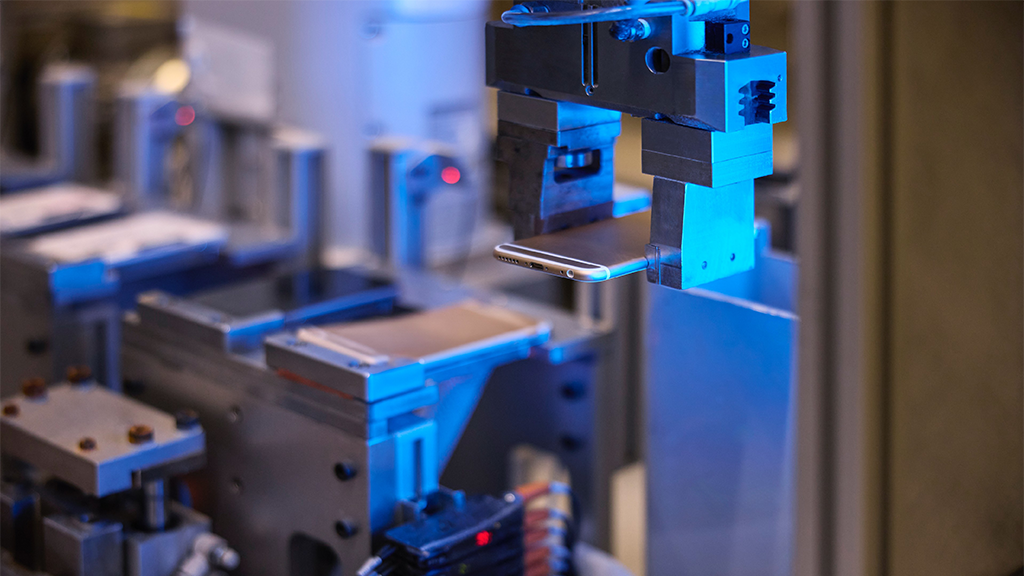
As the company expands the use of recycled material in its products, Apple is also developing new technology to help maximize the material recovered from devices at the end of their life. Apple launched Cora, a new electronics-recycling line located at the Advanced Recovery Center in California. Cora uses precision shredding and advanced sensor technology to achieve material recovery rates that are significantly higher than industry baselines. Apple also developed A.R.I.S., a new detection system powered by machine learning, to help recyclers efficiently classify and sort electronic scrap.
Conserving fresh water through responsible initiatives
Last year, Apple and its suppliers saved 17 billion gallons of fresh water — enough to fill more than 25,000 Olympic-size swimming pools. The company is also driving water conservation efforts across its corporate operations, and by 2030, is working to replenish all of the fresh water withdrawn to support Apple's facilities worldwide through innovative, long-term partnerships designed to save, restore, and secure water at the watershed level. In 2025, Apple's contracted projects replenished more than half the water it withdrew to support its global offices, data centres, and retail stores. Additionally, all eight Apple-owned data centres have now been certified to the Alliance for Water Stewardship standard.
Improving trusted products with lower-carbon versions
Earlier this year, Apple launched MacBook Neo, which was built to be the company's lowest-carbon MacBook. Featuring 60 percent recycled content overall, MacBook Neo has the most recycled content of any Apple device yet, including 100 percent recycled cobalt in the battery and 100 percent recycled rare earth elements in all magnets. Its enclosure is manufactured with a forming process that uses half the raw material compared to traditional machining methods. And to conserve water in its production, Apple and its suppliers developed a new anodization process that achieved a 70 percent water-reuse rate — transforming a traditionally water-intensive process into a closed-loop system that continuously recycles and recirculates water, preserving fresh water for only the most critical uses. Apple is working to expand this anodization process to additional production lines in the coming years.
Investing in renewable energy sources to power businesses
Apple's direct suppliers procured more than 20 gigawatts of renewable energy last year as part of the Supplier Clean Energy Program, generating more than 38 million megawatt-hours of electricity. That's enough clean electricity to power more than 3.4 million U.S. households for a year. Apple procured an additional 1.8 gigawatts of renewable energy to power its offices, retail stores, and data centres with 100 percent renewable electricity. And the company is advancing toward its Apple 2030 goal by enabling new renewable energy projects around the world to help match the energy customers use to charge and power their Apple products with 100 percent clean electricity.
Focusing operations on Waste to Zero
Through recycling, composting, and waste reduction efforts across all of its global facilities, Apple reached a waste diversion rate of 75 percent last year. Earlier this year, Apple Fifth Avenue became the company's first-ever retail store to achieve TRUE Zero Waste Certification, which recognizes facilities that divert more than 90 percent of their waste from landfills. Apple Fifth Avenue joins five data centres and four corporate campuses that have already earned the certification at the platinum level. Across the supply chain, Apple and its suppliers redirected more than 600,000 metric tons of waste from landfills in 2025, with 400 supplier facilities actively participating in the company's Zero Waste Program. All Apple products continue to ship from final assembly sites that maintain zero-waste-to-landfill operations.