

An essential guide to mobile shear maintenance
The productivity, safety, and service life of shears for demolition and recycling depend on proper operation and maintenance
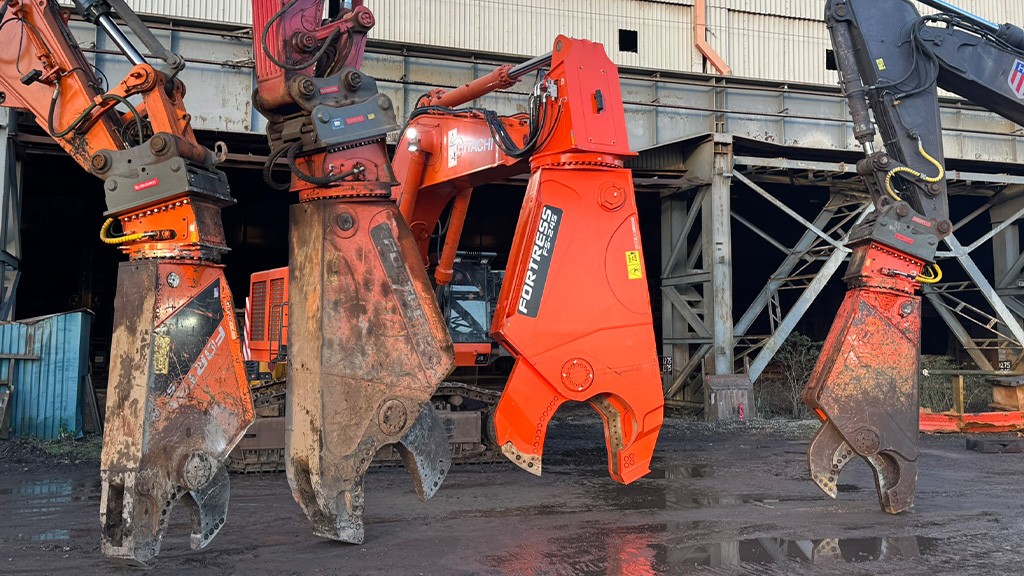
Mobile shears are essential tools in demolition and recycling operations. Their productivity, safety, and long-term performance depend heavily on proper operation and proper maintenance. When maintained correctly, a shear will not only perform through the most demanding jobs, but will also provide years of reliable service.
The role of mobile shears in demolition
In demolition, a shear is more than an attachment; it is often the central production tool on the job. The shear dictates the pace, efficiency, and safety of the entire project. A well-maintained shear is a high-performing shear.
Proper maintenance ensures:
- Maximized cutting performance
- Reduced downtime
- Lower long-term operating costs
- Extended structural life
- Safe operation for operators and ground crews
Shear design considerations
All mobile shears rely on the same fundamental engineering principles: cutting geometry, hydraulic force, pivot design, blade metallurgy, and structural durability. However, the execution of these principles determines ease of service, wear patterns, and long-term reliability.
Key areas of focus while engineering the Fortress line of shears included a new pivot system, reduced reliance on lamination by utilizing 6-inch solid steel, significantly fewer welds through increased machining and milling, and improved weld design. These updates allowed us to increase the shear's cutting power, knowing the structure and critical components could reliably handle the additional load.
Five critical daily checks to reduce downtime
Performing these checks daily, or multiple times daily in severe applications, dramatically extends shear life and prevents costly failures.
1. Guide blade shimming
Proper guide blade gaps ensure:
- Jaw alignment
- Reduced pivot stress and extends the life of wear parts
- Cutting without jamming
Guide shimming is often required more frequently than blade shimming.
2. Grease all zerks
Lubricate all pivot points every 8 hours and ideally twice daily on pivot groups, to prevent:
- Premature bearing wear
- Increased friction and heat
- Structural fatigue in high-load areas
Greasing is one of the most effective steps to extend shear life.
3. Understand traction force
Operators must avoid pulling, twisting, or prying with the shear. Excessive traction force:
- Misaligns jaws
- Add extreme force on the slewing ring
- Accelerates wear on pivot and guide systems
A shear is a cutting tool, not a pry bar.
4. Torque blade bolts
Blade bolts loosen due to:
- Extreme force during the open cycle
- Heat cycles during operation
The torque schedule should be every 8 hours, or every 4 hours in extreme conditions. Proper tools include:
- Torque Multiplier (4:1 or 16.5:1)
- HyTorque or TorcUP systems
Never rely on an impact gun or breaker bar. Under-torquing leads to loosening; over-torquing causes stretching or bolt failure.
5. Rotate and shim blades
Rotating blades improves cut quality and reduces jamming. Shim blades as necessary to maintain cutting geometry and prevent jamming.
Walkaround Inspections
Early identification prevents failures. Walkaround inspections must be conducted before and immediately after every use.
Inspect for:
- Oil leaks or signs of hydraulic contamination
- Hose wear, abrasions, cracking, or rubbing
- Missing hardware, especially blades, guides, pins, and wear components
- Wear guard and hard surfacing conditions
End-of-day and end-of-project maintenance
The the end-of-day perform:
- Blade wear checks and shimming
- Minor repairs
- Leak inspection
- Greasing
Deeper service at the end-of-project:
- Structural inspection
- Guide alignment assessment
- Blade and bolt replacement
- Hard surfacing repair
- Hydraulic system evaluation
Planning these maintenance events prevents catastrophic failures mid-project.
Adjustment plates: a critical wear component
Adjustment plates are precision-milled components, designed specifically for each shear's serial number. Their function is to keep the blade gap consistent across the full cutting length.
Key rules for adjustment plates
- They are not thick shims.
- Never grind, modify, or flip them.
- Never weld plates into pockets.
- Install shims between the blades and the adjustment plates.
- If plates bend or wear, always replace them, never fabricate.
Blade gap management
Proper blade gap is essential for:
- Optimal cutting performance
- Reduced jamming
- Maximum cutting force
- Blade life extension
Typical shear gaps
- 0.010-0.035 inches, depending on model and material
Material-specific gap adjustments
- Aluminum or stainless steel: open the gap
- White goods or thin material: reduce the gap
Fortress and its dealers can provide a blade shimming video and hands-on training to ensure operators set gaps correctly.
Leveraging OEM and dealer support
Successful demolition companies don't maintain shears alone. They leverage:
- Service training
- Field inspections
- Troubleshooting assistance
- Help with bidding jobs and selecting the right tool
Brian Hawn is the VP of service for Exodus Global. Fortress shears by ShearCore are engineered and manufactured in Superior, Wisconsin. Fortress backs its engineering with a U.S.-based service team positioned throughout the country, same-day parts shipping, and real technicians who answer the phone rather than a call centre.