
Packaging design meets the sorting line
Greyparrot's Deepnest is helping brands optimize for detection, not just recyclability
Designing for recyclability means little if the packaging doesn't survive recycling systems. Brands have had very limited visibility into how their products are sorted, recovered, or lost at recycling facilities. The missing piece? Real-world data demonstrating how packaging performs once it enters the waste stream.
Greyparrot, best known for its AI-driven material recognition tools for optimizing sorting operations, has launched a new platform called Deepnest to help provide that insight.
A new audience for waste intelligence
Unlike Greyparrot's Analyzer hardware and Sync platform, which deliver data and operational insights directly to waste managers and facility operators, Deepnest is designed for a different audience: brands and packaging producers. It leverages the same data collected by Analyzers at MRFs but reframes and repackages it for those making upstream packaging decisions.
"Deepnest is the world's first waste intelligence platform built for brands and packaging producers," says Gaspard Duthilleul, COO of Greyparrot. "We've been working for six years with waste managers . . . and realized that some of the most critical decisions affecting recycling outcomes are made far upstream by brands, by packaging producers."
"[We also] realized we have the data, we have the means to tell the brands what happens to their packaging and to help them understand how to optimize [design]," explains Duthilleul. "We built Deepnest to give visibility to brands, to help them understand the end of life of the packaging. [Deepnest can show brands] how design decisions might impact the sorting of this packaging in real life and how to benchmark themselves against other [anonymized] brands to really understand the impact."
Real data on real-world performance
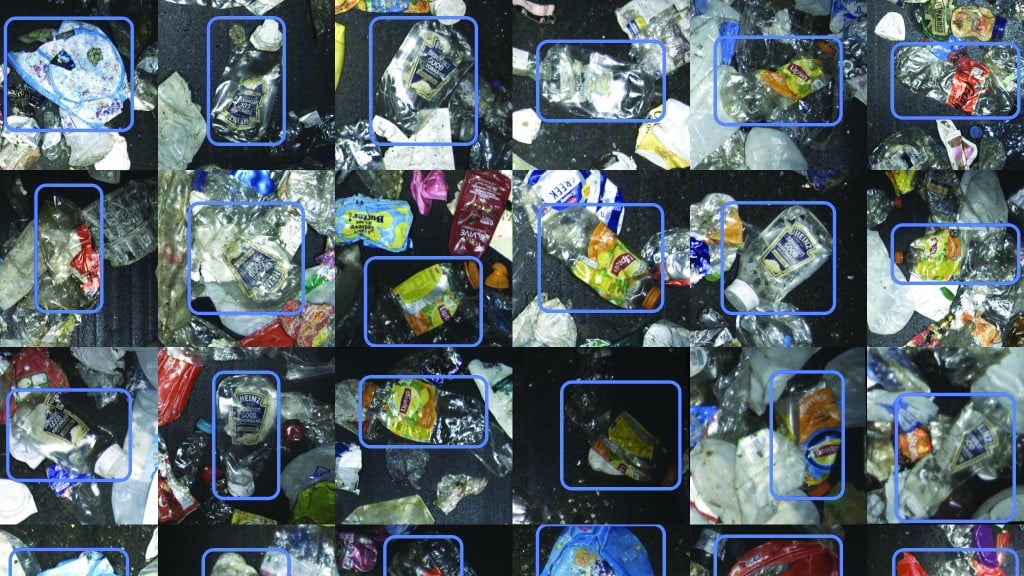
Through Analyzers installed in facilities across more than 20 countries, Greyparrot now detects over 40 billion waste items each year. By mapping each stage of the recovery process, Deepnest gives brands a clear view of their packaging's journey through the recovery system, highlighting where it's captured, where it's missed, and why.
Instead of relying on assumptions or lab-based recyclability tests, Deepnest offers brands a product-level view of how their specific packaging formats perform in real-world recycling systems. It can identify what packaging is captured consistently, what fails due to material choices or label interference, and how performance varies by region.
For example, packaging that uses full-body plastic sleeves often isn't recognized by optical sorters, especially if the sleeve is made from a different polymer than the container itself. Dark plastics, long known to be problematic, continue to elude detection by infrared-based sorters. Deepnest brings these issues into focus with tangible data.
Packaging that performs well in one country may fail in another due to differences in infrastructure, policies, or sorting technology. According to Duthilleul, gaining visibility into those regional realities allows brands to design packaging that works at scale, not just in theory, but in practice.
"As a brand, if you're going to launch a product, how do you make sure that it'll work in your target market?" says Duthilleul. "And should you do different versions based on how the ecosystem is set up?"
For MRFs, more detectable packaging translates to lower residue rates, fewer sorting errors, and cleaner bales; these benefits support both operational efficiency and downstream market value.
From recyclable to detectable
This shift from "designing for recyclability" to "designing for detection" is a major theme behind Deepnest's development. As Duthilleul puts it, packaging that technically meets recyclability criteria may still be effectively unrecyclable if it can't be accurately sorted at scale. Size, weight, material composition, and even how an item falls on a conveyor belt can all impact recovery outcomes.
"We've seen brands shift materials, adjust label coverage, or change form factors based on this kind of insight," says Duthilleul. "It's the kind of thing you can't fully simulate in a lab."
How Deepnest works
The Deepnest platform is built around a dashboard that displays data specific to a brand's products, including packaging type, volume, geographic performance, and sortability scores. Brands can filter by product lines, compare different packaging formats, and benchmark against anonymized industry norms.
Deepnest does not disclose competitor data or identify specific waste facilities. "We want each stakeholder to benefit from this data and use it to improve," explains Duthilleul. "A Coca-Cola user will see their own product-level data and how it compares to industry benchmarks like all PET bottles or aluminum cans, but not to another brand's performance."
Greyparrot retains ownership of the data, since it is collected via its installed systems, but allows brand partners to access tailored views that support actionable insights. Unlike traditional packaging audits, which can be slow and expensive, Deepnest offers near real-time feedback at scale.
Enabling cross-sector collaboration
While Deepnest is built for brands, it also supports deeper collaboration between recyclers and packaging producers. With shared visibility into packaging performance, stakeholders across the value chain can move from blame-shifting to co-design.
Brands often argue that they've improved their packaging designs, while waste managers point to infrastructure limitations that still prevent effective sorting. According to Duthilleul, Deepnest introduces objective data into these conversations, helping both sides move past blame and toward collaborative solutions.
In some cases, Greyparrot facilitates direct conversations between brands and MRFs to test new packaging or identify regional sorting limitations together. The company is already seeing interest in pilot projects that connect waste managers and brand owners around specific packaging redesigns.
A new tool for EPR and circular economy goals
Deepnest launches at a moment when brands are facing increasing pressure to comply with Extended Producer Responsibility (EPR) laws and circular economy targets. As financial and regulatory accountability grows, companies need to ensure that their packaging choices translate into measurable recovery.
"We don't want them to try one thing and then try another one and then try another one without [getting] data fast enough to drive these changes," says Duthilleul. "AI is enabling us to move faster . . . so [brands are] able to make a decision, see the impact quite quickly after, at scale. That's really the power of Deepnest."
Brands can also submit new product designs to Greyparrot in advance, allowing those products to be added to the recognition database before they reach the recycling stream. This proactive approach speeds up detection and enables targeted testing in specific geographies.
What's next for Deepnest?
Currently, Deepnest is being used by major brands such as Unilever, Amcor, and Asahi Beverages. Greyparrot's largest footprint is in the U.S., the U.K., and Europe, and the company is actively expanding in Canada and other global markets.
While Deepnest opens the door to smarter packaging design, widespread adoption will require more brands to commit to transparency and recyclers to engage with standardized data models. Making Deepnest insights actionable across regions will require close alignment between technology providers, policymakers, and local recovery systems.
The long-term goal is to create a unified layer of packaging intelligence that supports both circular design and operational efficiency. As Greyparrot's Analyzer network continues to grow, so too will the data powering Deepnest. And with that data, the opportunity to turn waste insights into packaging progress.
"We have a global system, and each one of our Analyzers benefits the others," says Duthilleul. "In the same way, the model we use for Deepnest is global, so anything that happens in one place helps improve the system everywhere."
This article originally appeared in the 2025 Special Edition issue of Recycling Product News.