
Grant supports Debrand’s efforts to improve recycling of plastic-based textiles
The grant will fund automated sorting of plastic-based textiles and prepare them for the appropriate recycling pathways
Debrand, a Metro Vancouver-based dealer in textile sustainability and circularity logistics for apparel and retail brands across North America, has received over $325,000 in funding from CleanBC Plastics Action Fund, administered by the Province of British Columbia and Alacrity Canada through the Ministry of Environment and Climate Change Strategy.
The grant will support Debrand's new research and development initiative focused on diverting plastic-based apparel and textiles that are currently deemed non-reusable—keeping them out of landfill and integrating them into the region's growing ecosystem of circular material solutions.
Pushing textile sustainability with new processes
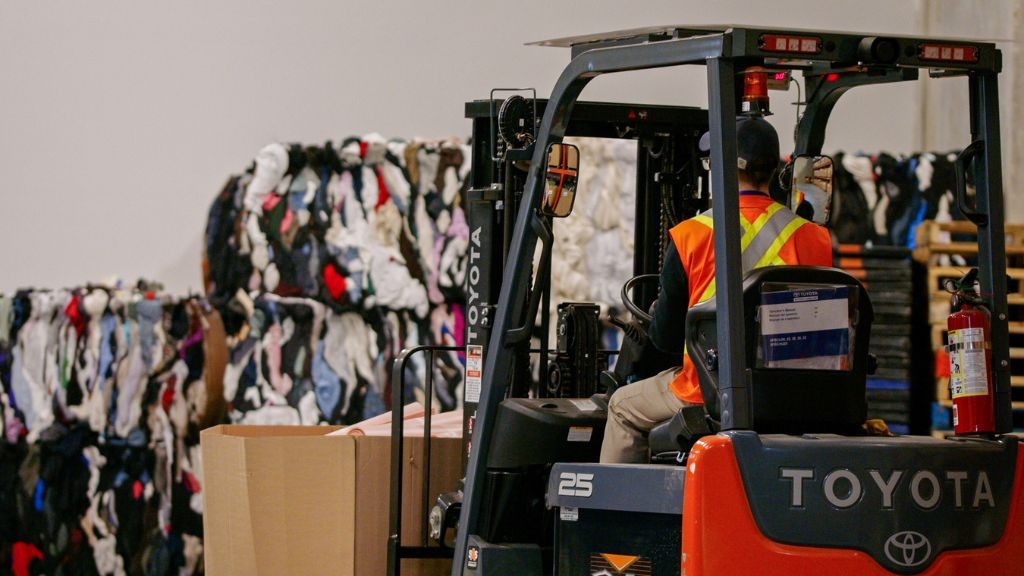
Debrand's initiative will leverage its automated sortation machinery and proprietary software to analyze plastic-based apparel and textiles currently in circulation. By sorting these garments with precision and identifying their material composition, the project aims to better understand the operational and economic requirements needed to prepare these items for appropriate reuse and recycling pathways.
As a pioneer in textile sustainability and next-life logistics, Debrand is addressing a major gap in North America's fashion industry: the lack of scalable infrastructure to manage end-of-life textiles. Despite growing consumer and regulatory pressure, most apparel today remains designed for disposability. At the current pace, the world discards a truckload of textiles every second—a figure that underscores the urgent need for systems-level solutions.
With support from the CleanBC Plastics Action Fund, Debrand is helping to bridge this infrastructure gap by generating insights that can accelerate the development of regional and global circular economies, ultimately diverting plastic-derived textiles from landfills and positioning them as feedstock for tomorrow's innovations.
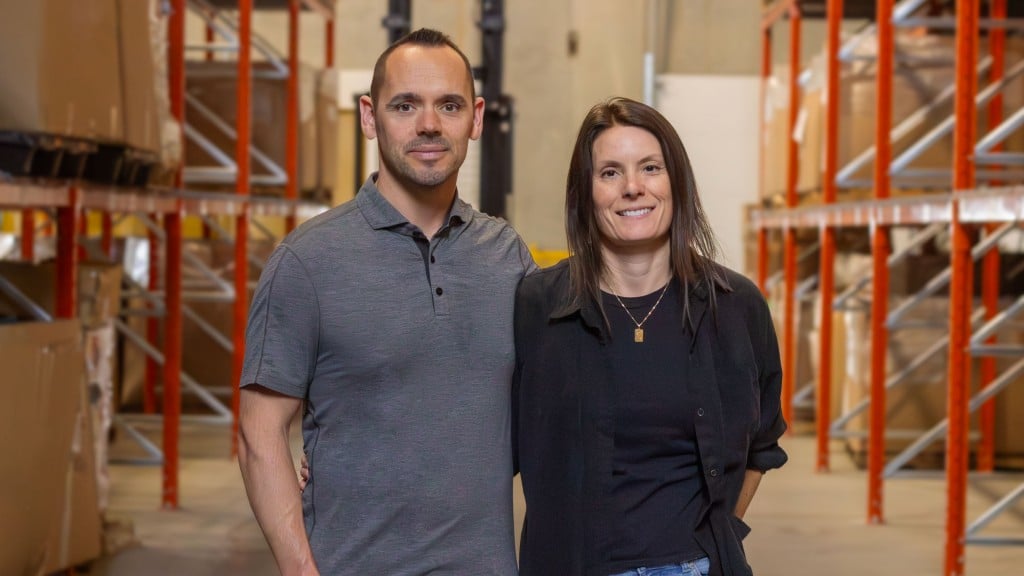
"Plastic-derived textiles contribute to a significant portion of today's fashion system, making up about 60 percent of the world's clothing. The industry has a responsibility to reduce its impact by extending the life of the materials that have already been extracted," said Amelia Eleiter, co-founder and CEO of Debrand. "This funding allows us to go deeper into understanding apparel's plastic waste stream here in B.C. and apply advanced sortation technology to better understand what's possible, so we can design smarter circular systems that valorize these materials, not waste them."
"Textiles are one of the leading sources of waste, with plastic-based materials such as polyester being more difficult to recycle than regular plastics," said Alacrity Canada. "Between this and the growing trend of 'fast-fashion', we are facing an issue that is not easily solved. Luckily, Debrand is tackling this issue head-on. They've implemented sustainable recycling practices and innovative initiatives to divert textiles from ending up in landfills, transforming how we think. Alacrity Canada is proud to support this project as it's creating a foundation for how we recycle textiles in a sustainable and environmentally focused approach."