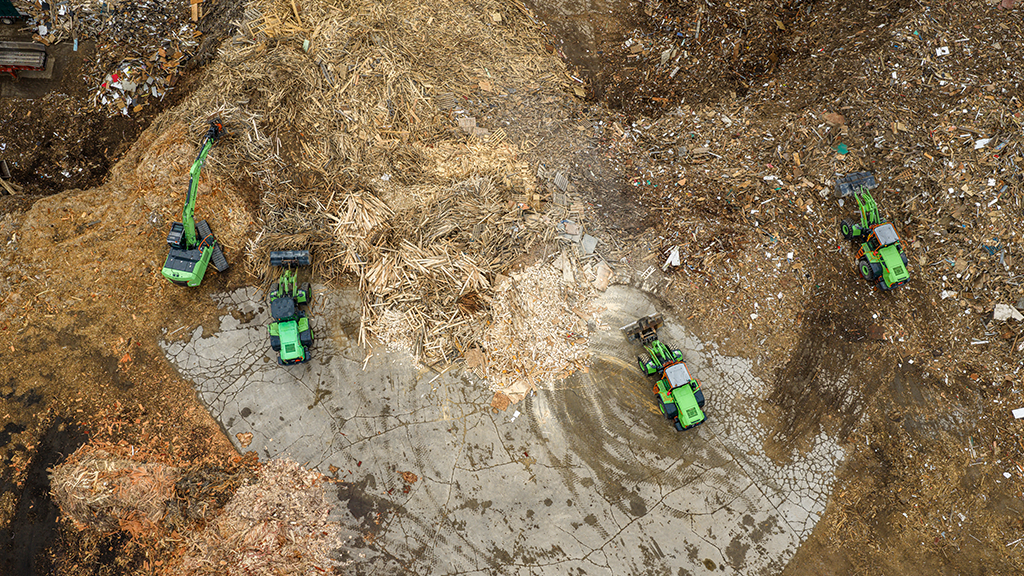

Each year 6 billion pounds of carpet waste is sent to landfills across North America.* If properly recycled, carpet can be reused into composite lumber, roofing shingles, automotive parts, railroad ties and stepping stones. Chevrolet is one major manufacturer who is leading the way in recycling initiatives, whether it be carpet recycled from the trade shows they attend, or the use of reclaimed plastic from used oil booms in their manufacturing process.
Recently, the company donated 80,000 square feet of auto show carpet to Habitat for Humanity. According to Chevrolet, thousands of square feet of carpet are used in their displays during auto shows across Canada. Design themes can change from year to year and the carpet quite often cannot be reused. Instead of sending the carpet to the landfills, this year it will be donated to Habitat for Humanity ReStores in Ontario for a second life.
“We’re grateful that Chevrolet is making efforts to reduce waste that would have otherwise ended up in a landfill,” said Rob Voisin, director, ReStore Services. “This tremendous contribution will not only help families renovate their homes on a budget but also help us raise money for Habitat for Humanity Canada initiatives.”
Recently, Chevrolet offered up some practical suggestions about what citizens and companies can do with end of life carpet, even before recycling or donating to organizations such as Habitat for Humanity. The company says it can be re-used for applications such as: preventing car doors from getting scratched by using carpet on garage walls; muffling the sound from washers and dryers; insulating a compost pile; or for cleaning window screens.
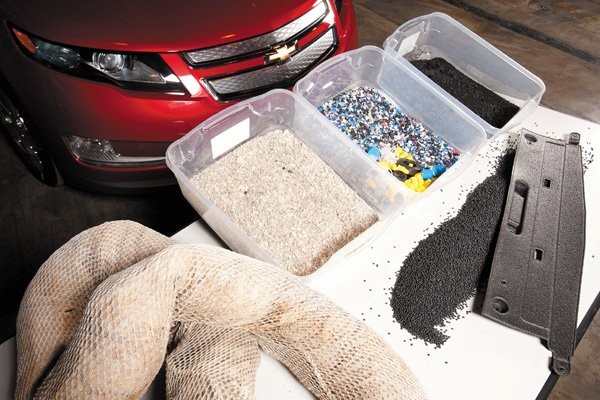
As Canada’s largest automotive manufacturer and a self-proclaimed responsible corporate citizen, Chevrolet works to reduce emissions from its vehicles, manufacturing operations and find new, innovative and green solutions for automotive parts. In 2010, the all-new Chevrolet Volt, which goes on sale in Canada this summer and which is a recipient of the 2011 North American Car of the Year, uses parts developed through an innovative process that recycled an estimated 140 kilometers of oil-soaked plastic boom used in the clean-up efforts following the 2010 Horizon oil spill in the Gulf of Mexico.
General Motors says it has developed a method to convert an estimated 100 miles of the material off the Alabama and Louisiana coasts and keep it out of landfills. The ongoing project is expected to create enough plastic underhood parts to supply the first year production of the extended-range electric vehicle.
“Creative recycling is one extension of GM’s overall strategy to reduce its environmental impact,” said Mike Robinson, GM vice president of Environment, Energy and Safety policy. “We reuse and recycle material by-products at our 76 landfill-free facilities every day. This is a good example of using this expertise and applying it to a greater magnitude.”
Recycling the booms from the Horizon oil spill will result in the production of more than 100,000 pounds of plastic resin for vehicle components, and eliminate an equal amount of waste that would otherwise have been incinerated or sent to landfills. The parts for which the recycled material is being used, which deflect air around the vehicle’s radiator, are comprised of 25 percent boom material and 25 percent recycled tires from GM’s Milford Proving Ground vehicle test facility in Michigan. The remaining is a mixture of post-consumer recycled plastics and other polymers.
GM says they worked with several partners throughout the recovery and development processes on the project which recovered and re-used the oil booms from the Gulf of Mexico. Heritage Environmental managed the collection of boom material along the Louisiana coast and Mobile Fluid Recovery was in charge of using a massive high-speed drum that spun the booms until dry, eliminating all the absorbed oil and wastewater. Lucent Polymers used its process to then manipulate the material into the physical state necessary for plastic die-mold production. Tier-one supplier GDC Inc. subsequently used its patented Enduraprene material process to combine the resin with other plastic compounds to produce the components.
The work in the Gulf has lasted through February and GM will continue to assist suppliers in collecting booms until the need no longer exists. GM anticipates enough material will be gathered to expand beyond Volt to other Chevrolet models.
“This was purely a matter of helping out,” says John Bradburn, manager of GM’s waste-reduction efforts. “If sent to a landfill, these materials would have taken hundreds of years to begin to break down and we didn’t want to see the spill further impact the environment. We knew we could identify a beneficial reuse of this material, given our experience.”
The world’s first electric vehicle with extended range, the Chevy Volt, was recently awarded “Green Car of the Year” by Green Car Journal. The recycled boom material in its makeup is another example of its environmentally friendly features. According to GM, the company is dedicated to reducing its waste and pollutants, and recycles materials at every stage of the product lifecycle. It uses recycled and renewable materials in its cars and trucks, which are at least 85 percent recyclable themselves. Used tires, old plastic bottles, denim and nylon carpet are all redirected from landfills and reused in select GM vehicles. In total, GM facilities worldwide recycle 90 percent of the waste they generate. The automaker recently announced more than half of its global facilities are now landfill-free – meaning all manufacturing waste is recycled or used to create energy.
* 6 billion pounds of carpet material is sent to landfills across N.A., according to 2E Reclamation Solutions (www.2ereclamation.com).