

New horizontal grinder provides 1,050 horsepower
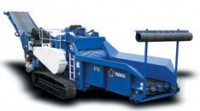
The 5710C is Peterson’s latest generation of high production track grinders. Powered by the Caterpillar C27 engine at 1,050 horsepower, this grinder provides the highest power to weight ratio of any Peterson model. At 82,330 pounds (37,331 kg) the 5710C was designed for operations requiring high production and frequent moves between jobs. With a feed opening of 60 by 44 inches. (1,524- by 1,118 mm) combined with Peterson’s high lift feed roll, the 5710C can readily reduce a wide range of material, including stumps.
The 5710C utilizes Peterson’s new generation of Impact Release System that can be set in the detent mode to provide consistent product sizing, or switched to the floating anvil mode for primary reduction where accurate sizing is less critical. The floating anvil mode provides high production primary reduction with more protection from contaminated feedstocks and reduced fuel consumption. The 5710C’s new generation of controls includes a high production Adaptive Control System and a fully adjustable feed system that can be optimized for a wide range of materials. A new control panel provides self-diagnostics for faulty sensors and open circuits, and fault indicators make trouble shooting easy. Plus, an optional on-board modem permits remote diagnostics and monitoring of many machine parameters. Additionally, the 5710C control panel features a large LCD display that provides the operator with the information needed to efficiently operate the unit, and system pressure transducers and remote monitoring capability simplify set up and provide complete engine and system parameters.
The 5710C features a square-shaft rotor and large grate area that enables the production of materials to exact specifications. A quick-change multiple grate system makes it easy to customize grate configurations to produce a wide variety of finished materials, and grates are removed through an access door on the side wall of the unit.
Another major innovation included on the 5710C is Peterson’s Impact Cushion System Urethane cushions allow movement of the compression roll/anvil housing pivot shaft, cushioning impacts due to contaminants in the feed material. Plus, shear pins above the cushion and a sensing circuit that stop the engine help protect the shaft from catastrophic damage in the event of a severe impact.
The 5710C utilizes Peterson’s new generation of Impact Release System that can be set in the detent mode to provide consistent product sizing, or switched to the floating anvil mode for primary reduction where accurate sizing is less critical. The floating anvil mode provides high production primary reduction with more protection from contaminated feedstocks and reduced fuel consumption. The 5710C’s new generation of controls includes a high production Adaptive Control System and a fully adjustable feed system that can be optimized for a wide range of materials. A new control panel provides self-diagnostics for faulty sensors and open circuits, and fault indicators make trouble shooting easy. Plus, an optional on-board modem permits remote diagnostics and monitoring of many machine parameters. Additionally, the 5710C control panel features a large LCD display that provides the operator with the information needed to efficiently operate the unit, and system pressure transducers and remote monitoring capability simplify set up and provide complete engine and system parameters.
The 5710C features a square-shaft rotor and large grate area that enables the production of materials to exact specifications. A quick-change multiple grate system makes it easy to customize grate configurations to produce a wide variety of finished materials, and grates are removed through an access door on the side wall of the unit.
Another major innovation included on the 5710C is Peterson’s Impact Cushion System Urethane cushions allow movement of the compression roll/anvil housing pivot shaft, cushioning impacts due to contaminants in the feed material. Plus, shear pins above the cushion and a sensing circuit that stop the engine help protect the shaft from catastrophic damage in the event of a severe impact.