
Choosing the right shredder for ferrous scrap recycling
Shredder selection influences material quality, processing efficiency, and operating costs
Ferrous scrap arrives at recycling facilities in all shapes, sizes, and conditions. Some materials need only an initial size reduction before moving to the next stage of processing, and others must be reduced to a more uniform particle size to meet downstream requirements. The type of shredder used and how it fits into the processing line can impact productivity, material quality, and operating costs.
For Brian Bonham, Industrial Sales Specialist at SSI Shredding Systems, one of the key considerations is whether an operation needs to process large volumes of scrap or produce material within a more tightly controlled size range. That distinction can determine which shredding configuration is best suited to the job and how effectively it supports the rest of the processing line.
Choosing between two-shaft and four-shaft shredders
In ferrous scrap recycling operations, the required output is a key factor in choosing between a two-shaft and four-shaft shredder. Both use high-torque shearing action to reduce material, but they serve different processing requirements.
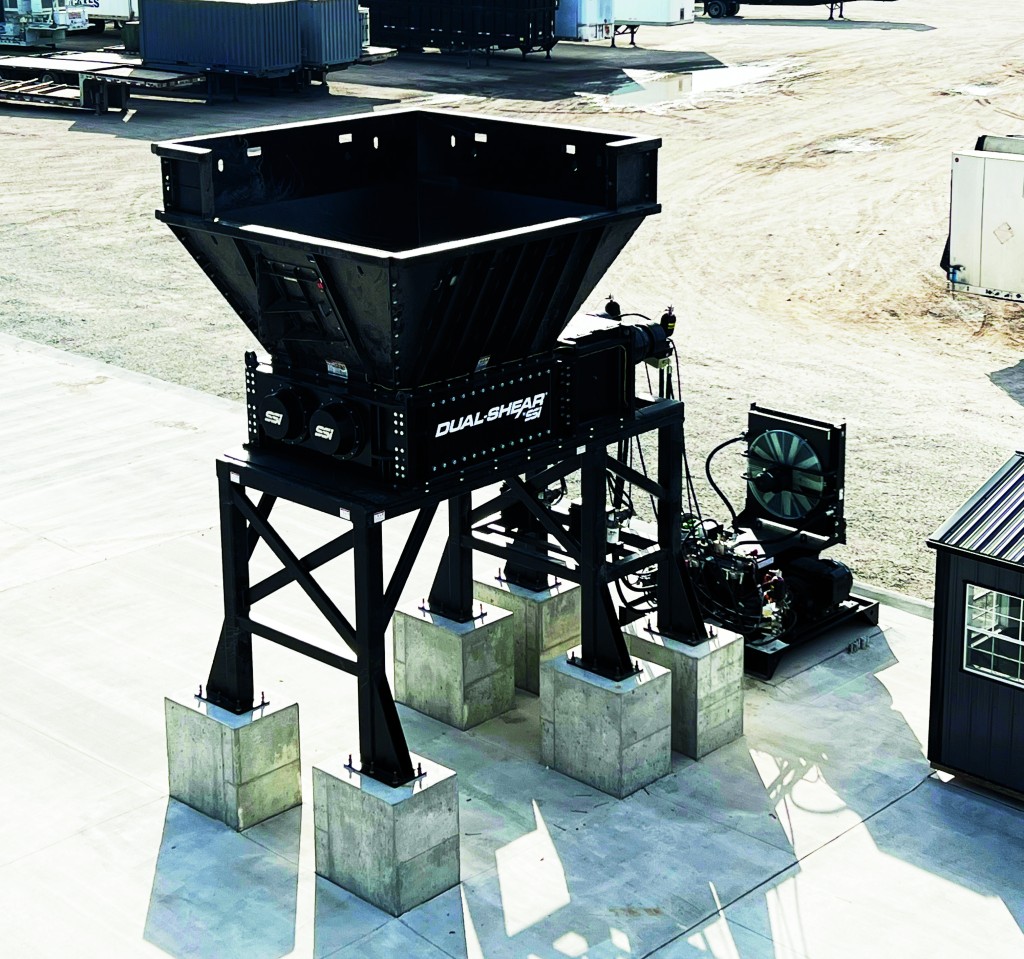
Two-shaft shredders are typically suited to high-volume applications where precise particle sizing isn't a priority. Their opposing cutter shafts grip and shear heavy, bulky, and inconsistent materials, reducing them to more manageable pieces for handling or further processing.
"Our Dual-Shear (two-shaft) shredders are generally selected when the primary objective is to process high volumes of material reliably rather than achieve a specific, tightly controlled particle size," says Bonham.
Four-shaft shredders, such as SSI's Quad series, provide greater control over the final particle size. A sizing screen beneath the cutters holds material in the shredding chamber until it is small enough to pass through, producing a more uniform output.
This configuration can also improve material liberation when processing mixed scrap. As the scrap moves against the screen, the scrubbing action helps free materials that would otherwise remain attached, improving recovery during downstream processing.
Stand-alone shredding vs. pre-shredding for ferrous scrap
SSI's Dual-Shear M180HQ can be used for this type of pre-shredding application. According to Bonham, this arrangement can increase overall system throughput, reduce wear on the hammermill, and lower associated maintenance and operating costs.
The M180HQ can also operate as a standalone shredder. Compared with traditional high-speed hammermills, its low-speed shearing action produces less noise and dust, which can be beneficial for facilities located near residential areas or subject to strict environmental regulations.
Low-speed processing may also offer advantages when handling mixed ferrous scrap that could contain pressurized tanks or other hazardous items. While proper material inspection and safety procedures remain essential, Bonham says the M180HQ's slower, controlled shearing action can help minimize the potential for a high-energy event compared with high-speed impact processing.
Selecting a shredder that meets the demands of the material stream and the broader processing system can improve the quality and consistency of shredded output, increase material recovery, reduce wear on downstream equipment, and help control operating costs.
______________________________________________________________________________________
This article originally appeared in the November/December 2026 issue of Recycling Product News.