
Harris American expands equipment portfolio with G.P.S. acquisition
The deal combines complementary product lines while opening new opportunities for international growth
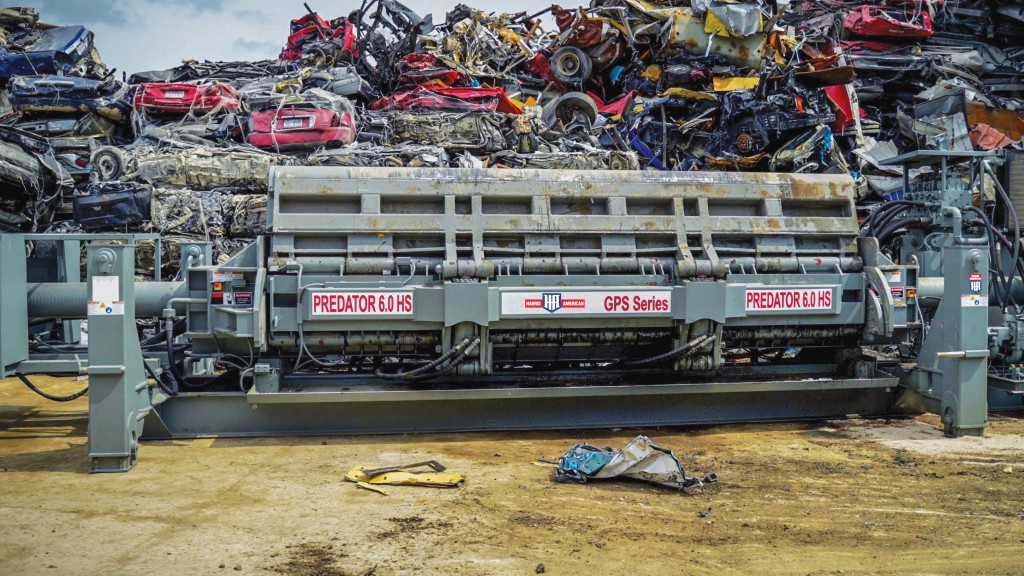
Harris American Company's acquisition of G.P.S. S.r.l. earlier this year was a natural and strategic evolution of the longstanding partnership between the two companies.
The relationship began in 2021, when Harris American Company signed a collaboration and supply agreement with the Italian equipment manufacturer, securing exclusive rights to market and sell select G.P.S. machines in North America. With the acquisition finalized, Harris American is now looking at what the deal means for its equipment lineup and future expansion.
Filling in the gaps
G.P.S. specializes in shear/baler/loggers and car baler/loggers, complementing Harris American's existing equipment portfolio with little overlap between the two manufacturers.
The Predator baler/logger and Destroyer baler/logger/shear from G.P.S. entered the North American market through the companies' partnership five years ago, with numerous units installed across the United States since then. The acquisition builds on that relationship, bringing G.P.S.'s equipment under Harris American's ownership and strengthening its position as a one-stop supplier for the recycling industry.
For D.J. VanDeusen, President of Harris American Company, the deal also represents a significant change in the company's involvement with G.P.S. equipment.
"We are not simply operating as a distributor for another manufacturer's product," VanDeusen says. "We now have our name on the product and are involved in all design, procurement, production, and service aspects of the equipment."
The next step
VanDeusen says the timing of the acquisition was driven by several factors: revenue from the Harris-G.P.S. partnership had grown steadily over the previous years, the equipment had established a record of reliability in the field, and the market outlook continued to improve.
For G.P.S., the acquisition brings additional resources to support future growth. Harris American can provide capital for new product development, along with expanded manufacturing, assembly, and warehouse capacity. According to VanDeusen, these resources will help G.P.S. move forward with previously identified growth opportunities and explore new areas of development.
Two design philosophies
The acquisition also brings together two approaches to equipment design.
"European manufacturers have a strong tendency to produce lighter machines than those traditionally built in the U.S.," says VanDeusen. "G.P.S., in particular, manufactures high-productivity machinery with reduced energy consumption."
He points to the Destroyer series of press shears as an example, which he says can process 35 to 40 tons of material per hour using four 100-hp motors.
Beyond equipment design, the acquisition creates opportunities for Harris American to expand its international reach.
"Thanks to G.P.S.'s strong presence in the European, African, Middle Eastern, and Asian markets, over time we will have the opportunity to penetrate markets that are still unexplored or where our presence is not yet widespread," VanDeusen says.
Efficiency will drive the next decade
Looking ahead to the next decade, VanDeusen expects energy efficiency and artificial intelligence to play an important role in equipment development.
"Our machinery will need to be increasingly efficient and consume less and less energy in order to achieve a cost-per-ton ratio that allows our customers to maintain healthy profit margins," he says. "We will also see an increasingly widespread use of artificial intelligence, particularly in customer service and in the area of preventive maintenance."
These developments could have practical implications for scrap processors, from reducing energy costs to identifying potential equipment issues before they result in unplanned downtime. They also reflect a broader focus on improving machine performance while keeping day-to-day operating expenses manageable.
For Harris American, these priorities will help guide future equipment development as it builds on its partnership with G.P.S. While those plans will take time to develop, the focus remains on producing equipment that meets the evolving operational and economic demands of the recycling industry.
______________________________________________________________________________________
This article originally appeared in the November/December 2026 issue of Recycling Product News.