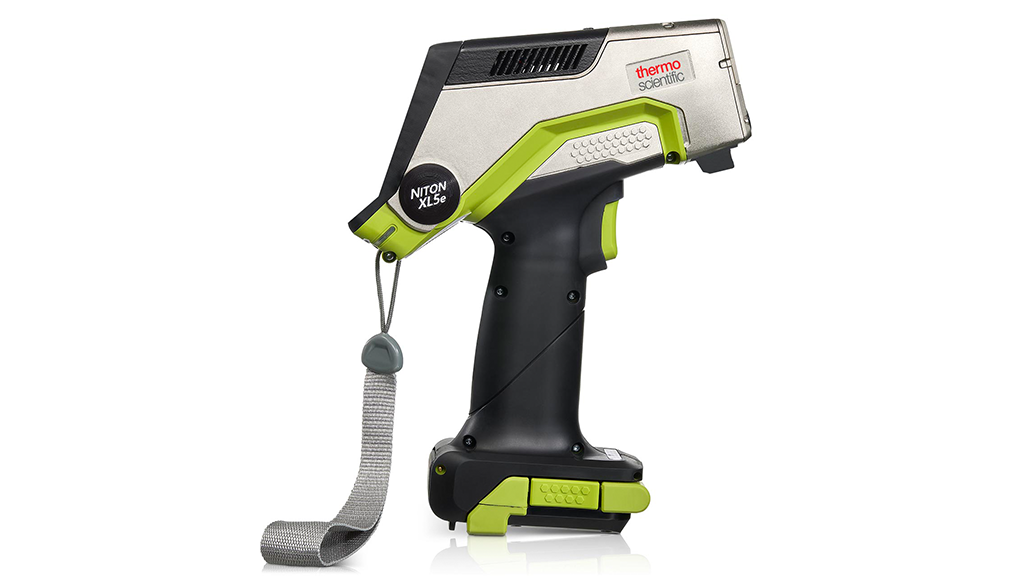

Choosing the right handheld XRF for scrap sorting starts with knowing what to measure
Clean vendor samples hide the weaknesses that cost yards money: oxidation, coatings, small parts, and close alloy grades
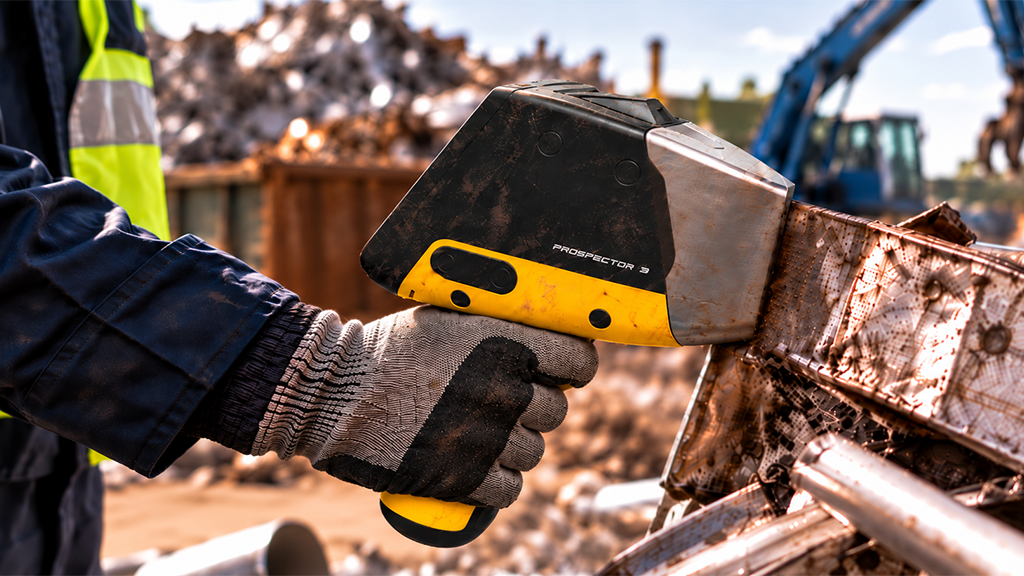
A handheld XRF demonstration should answer one practical question: can your operator use this instrument to make the right sorting decision on your actual scrap, quickly enough and consistently enough for your operation?
That is very different from proving that an analyzer can identify a clean piece of 304 stainless steel from a vendor's sample case.
Most modern handheld XRF analyzers perform well on straightforward alloys under good conditions. The differences become much more important when the material is oxidized, coated, dirty, small, irregular, chemically close to another grade, or simply difficult enough that the operator has to decide whether to trust the first result.
For a scrap yard, the real product being purchased is not a detector specification, a count-rate number, or a claim of "results in two seconds." It is the ability to reduce the cost of wrong commercial decisions without slowing the operation down. That is what the demo should test.
Let the yard choose the samples
The first rule of a meaningful XRF demo is simple: the vendor should not control the test.
A normal sales demonstration naturally starts with clean, known samples that the salesperson understands well and that prove that the analyzer works. It does not necessarily show how well it will work in your material stream.
Before the demonstration, prepare approximately 20-30 samples from your own yard. Give them blind IDs instead of alloy names. Include both routine materials and pieces that have caused trouble in the past.
A useful test set could include:
- 6061 and 6063 aluminum, including weathered or oxidized pieces;
- 5052 and 5083, or other aluminum grades where light-element performance becomes important;
- 304, 316, 321, and 347 stainless;
- A pair such as 304/304L or 316/316L to see whether the vendor communicates the limits of XRF correctly;
- A dirty or oxidized sample that can later be cleaned and measured again;
- A plated component;
- A small fastener, wire, rivet, or other item where beam placement matters;
- Several high-value nickel alloys where an incorrect sorting decision has meaningful financial consequences.
The most useful samples are the ones that could realistically end up in the wrong bin. Testing Inconel against carbon steel may produce an impressive instant result, but it tells you relatively little about the difference between two good instruments. Difficult aluminum grades, close stainless grades, coatings, oxidation, small geometry, and borderline chemistry tell you much more.
I would also include blind duplicates of several important samples. The same material can appear under two different sample IDs, perhaps with one surface clean and the other naturally oxidized. This helps reveal whether the result remains consistent as surface conditions change.
Test the material as it actually arrives
XRF measures the material at the surface. That makes surface condition part of the measurement. Paint, plating, oxidation, dirt, oil, and corrosion can all change the chemistry seen by the analyzer. On small parts, poor positioning can also allow the beam to see surrounding material instead of only the intended sample.
Do not prepare every sample perfectly before the demonstration. Test some pieces as they actually arrive in the yard. If the result is questionable, wipe, clean, or grind the same piece and measure it again. Record what changed.
This tells you more than whether the instrument is capable of producing the right answer under ideal conditions. It tells you how much additional work the operator will need to perform before getting a usable answer.
A two-second measurement that regularly requires cleaning, repositioning, and a second shot is not a two-second sorting decision.
Measure time to a usable decision, not time to the first number
"Analysis time: two seconds" sounds precise, but it is incomplete unless everyone agrees on what counts as the result. There are several possible endpoints:
- The first concentrations appear on the screen.
- A grade suggestion appears.
- The grade stops changing.
- The operator has enough information to trust the result.
- The operator decides where the piece goes.
Those are not the same thing. For scrap sorting, the metric I care about is: how long does it take from pulling the trigger until the operator has enough information to make the correct commercial decision on that piece without taking another measurement?
On an easy stainless sample, that may happen almost immediately. On difficult aluminum, a dirty surface, a small part, or a borderline alloy, it may take longer.
This matters because XRF precision depends on counting statistics. More measurement time means more counts and better statistical precision. Light-element analysis, especially when separating some 5000- and 6000-series aluminum grades using elements such as magnesium and silicon, can therefore be more demanding than routine identification of many stainless, nickel, or copper alloys.
The fastest instrument is not necessarily the one that displays something first. Imagine Analyzer A displays a grade almost immediately, then changes that grade twice during the next few seconds. Analyzer B takes slightly longer to produce its first grade but gives the correct and stable answer immediately. Which analyzer is faster?
For the operator, the second one may be faster because the useful endpoint is not the first text displayed on the screen. The useful endpoint is the decision.
During a comparative demo, I would record for every sample:
- Final result;
- Correct or incorrect sorting decision;
- Time to a usable decision;
- Whether a second measurement was needed;
- Whether cleaning or grinding was required.
Then compare the instruments across the full blind set. Do not compare their single best shots. The difficult 10 or 20 percent of the samples may tell you far more than the easy majority.
Look at the chemistry, not only the grade name
For routine work, a clear grade ID is exactly what an operator wants. During an instrument evaluation, however, do not stop at the grade name. Take a look at the chemistry.
On a borderline sample, ask:
- Why did the analyzer call this grade rather than the neighbouring grade?
- Which elements made the difference?
- How close are they to the specification limits?
- What happens when the chemistry sits between two possible matches?
A grade library is an important part of a handheld XRF system, but it should not create false certainty when the analytical information is insufficient.
In my view, an "unknown" or ambiguous result is not the most dangerous outcome. An unknown result tells the operator to stop, take another measurement, prepare the surface, or investigate further.
The more dangerous case is a wrong-but-confident result: the screen shows a plausible grade — the operator believes it — the material goes into the wrong stream.
The financial loss can occur in both directions. A valuable nickel alloy can disappear into a lower-value stainless pile and be sold too cheaply, or lower-value material can contaminate a premium stream and create a much larger problem when the load reaches the customer or mill.
A good system should therefore do more than produce a large percentage of grade names. Its analytical performance, grade library, and software behaviour should help the operator recognize when the answer deserves another look.
Verify repeatability before you trust the demo
A blind test only works if you know what the samples actually are.
For the most important samples in the comparison, establish a reliable reference beforehand. That may be a certified reference material, known chemistry from OES or laboratory analysis, or a sample with documented composition that you trust.
Do not judge an analyzer from one measurement. Choose several difficult samples and repeat the measurement multiple times on the same spot and on different areas of the piece. Watch both the reported chemistry and the grade identification.
The question is not whether the instrument can produce the correct answer once, but whether it produces a sufficiently consistent answer for the operator to make the same decision again.
For a company evaluating several instruments, especially for multiple yards, take the test one step further. Run the same blind sample set on more than one analyzer of the same model.
A carefully selected demonstration unit may perform well. A fleet purchase requires something more: confidence that different instruments, used by different operators at different locations, will lead to comparable sorting decisions. Document the test conditions, sample ID, reported chemistry, grade result, decision time, whether a repeat measurement was needed, and any surface preparation.
You do not need to turn a purchasing demo into a laboratory validation study. But you should collect enough evidence to answer three basic questions:
- Is the result correct?
- Is it repeatable?
- Will another instrument and another operator make the same commercial decision?
Deliberately test a problem XRF cannot solve
A good demonstration should include at least one task that handheld XRF cannot solve directly.
Carbon is the obvious example. Handheld XRF does not directly measure carbon. That means it cannot directly verify distinctions that depend on carbon content, such as the low-carbon designation in 304 versus 304L or 316 versus 316L.
This makes those pairs useful demonstration samples, but not because the analyzer should somehow identify the carbon. They test something else. Do the instrument, software, and salesperson communicate the limitation honestly?
If a system confidently presents an answer that the analytical method itself cannot support, the problem is bigger than one incorrect grade. The operator may develop confidence in results that should actually trigger another analytical method. Knowing when XRF is not enough is part of using XRF correctly.
Put the analyzer in the operator's hand
Do not let the application specialist perform the entire demonstration. Give the analyzer to the people who will actually use it.
Have an operator test 30 or 50 pieces wearing normal work gloves. Let the person move between samples, read the screen, change positions, deal with small or awkward geometry, and repeat questionable measurements.
This is where specifications such as weight and ergonomics become real. A difference that looks insignificant on a comparison table may feel very different after dozens or hundreds of measurements.
But the larger issue is not comfort by itself. It is whether people actually use the instrument as often as the process requires.
The useful question is not only how accurate the analyzer is when it is used correctly. It's also what percentage of the pieces that should be checked will actually be checked with the instrument during a busy shift.
An analytically excellent XRF provides no protection on a piece that nobody measures. A slow, awkward, or frustrating workflow can therefore create a business risk even when the analyzer itself performs very well in a controlled test.
Watch the operator during the demo:
- How quickly does the measurement become routine?
- How often does the operator have to repeat a test?
- How easy is it to aim at small targets?
- Can the result be interpreted without stopping the workflow?
Those observations belong in the buying decision.
Treat service and uptime as part of instrument performance
Service is often discussed after the analytical comparison. For a scrap yard, it belongs inside the comparison. If XRF becomes part of the sorting process and the instrument is unavailable, the problem is not simply the cost of a repair.
The yard has temporarily lost one of the tools it uses to protect the value of its material. That can mean relying on another analyzer, changing the workflow, delaying difficult decisions, or returning to visual sorting for some material.
Before purchasing, ask the vendor exactly what happens if the analyzer fails:
- Who answers the first support call?
- Can technical support diagnose the problem remotely?
- Where is the instrument repaired?
- What is the expected repair turnaround?
- Is a loaner available? Is it guaranteed, included in a service agreement, chargeable, or simply subject to availability?
- If a loaner arrives, is it configured with the same applications and ready to replace the primary analyzer in the actual workflow?
- Who pays shipping?
- Which types of damage are covered by warranty?
- What are the likely costs of replacing major components such as a detector or X-ray tube outside warranty?
- Are software updates included?
- What calibration, verification, or periodic service does the supplier require, and why?
For a multi-yard organization, these questions become even more important. One broken analyzer is a local problem. A service model that cannot support a fleet is a system-level problem. If a company is buying multiple instruments for several sites, it should understand whether support, loaner availability, spare parts, and technical expertise will scale with the fleet.
"Excellent service" is not a measurable promise. Transparent SLA indicating response times, repair processes, warranty terms, loaner policies, and costs are.
Calculate the economics after the analyzers pass the analytical test
Price matters. Scrap yards compare quotations, and they should. But the purchase price is only one line in the decision.
Once two or three analyzers have demonstrated acceptable performance on the yard's actual material, compare what happens during the years after the purchase. Look at:
- Warranty duration and exclusions;
- Expected repair costs for major components;
- Service contract options;
- Loaner availability;
- Software update policy;
- Calibration or verification requirements;
- Batteries and accessories;
- Training;
- Technical support;
- Downtime risk.
Then consider the supplier. Is competent support available locally? Is there someone who can visit the yard when a problem cannot be solved by phone? Does the supplier understand scrap operations rather than only analytical instrumentation?
Do you trust that company to support the instrument several years after the purchase?
When several modern XRF analyzers already perform adequately on the routine alloys in a scrap yard, these factors can matter more than small differences in headline specifications. That is also why a demo should not be designed simply to identify the analyzer with the fastest reading. The objective is to identify the system that creates the lowest operational risk.
What I would do in a one-hour comparative demo
If I had one hour to compare three handheld XRF analyzers before purchasing one, I would spend very little of it discussing detector names or headline specifications. I would:
- Use one blind set of my own scrap for every analyzer, not the vendor's standards.
- Start with the difficult samples. If every analyzer handles the easy material well, there is little value in spending most of the demo on it.
- Test dirty, oxidized, coated, and awkward samples before preparing their surfaces, then repeat after cleaning where necessary.
- Record chemistry as well as grade ID, especially on close or questionable matches.
- Repeat several difficult samples. Compare repeated measurements, not just the first successful result.
- Measure the time to a usable sorting decision, not just the time until the first number or grade appears.
- Include at least one task that exposes a limitation of XRF. I want to see how the system communicates uncertainty, not only how it celebrates successful matches.
- Put the instrument in the hands of the actual operator. Let that person run enough samples for ergonomics and workflow to become visible.
- If you are evaluating a fleet purchase, run the same blind set on at least two instruments of the same model. The goal is not only to evaluate one good demo unit, but to see whether the result can be reproduced across instruments and operators.
- Before discussing the final price, ask what happens if the analyzer stops working tomorrow morning.
The answers to that question may matter for years after the demo is over.
The best analyzer is the one that protects the decision
Choosing a handheld XRF for a scrap yard is not primarily a contest between detector specifications. It is a test of an entire decision system.
The analyzer has to measure the material, the software has to interpret it correctly, the operator has to understand when the result can be trusted, and the workflow has to be fast enough that the instrument is actually used.
Different instruments and operators have to produce sufficiently consistent decisions, and the supplier has to keep that system working after the sale.
That is why I would not choose an XRF simply because it produces the first result fastest, has the longest specification sheet, or wins one carefully prepared demonstration. I would choose the system that performs best on the material that actually costs my yard money when the decision is wrong, and that has the best chance of continuing to do so throughout its working life.
–––––––––––––––––––––––––––––––––––––––––––––––––––––––––––––––––––––––––––
Oleksandr Filipov, PhD, is Co-founder & CEO of Elvatech, a Ukrainian developer and manufacturer of handheld and benchtop XRF spectrometers and analyzers. Founded in 1991, Elvatech develops XRF instrumentation for scrap sorting and PMI, precious metals and jewelry, mining and geology, petroleum analysis, and other industrial applications.