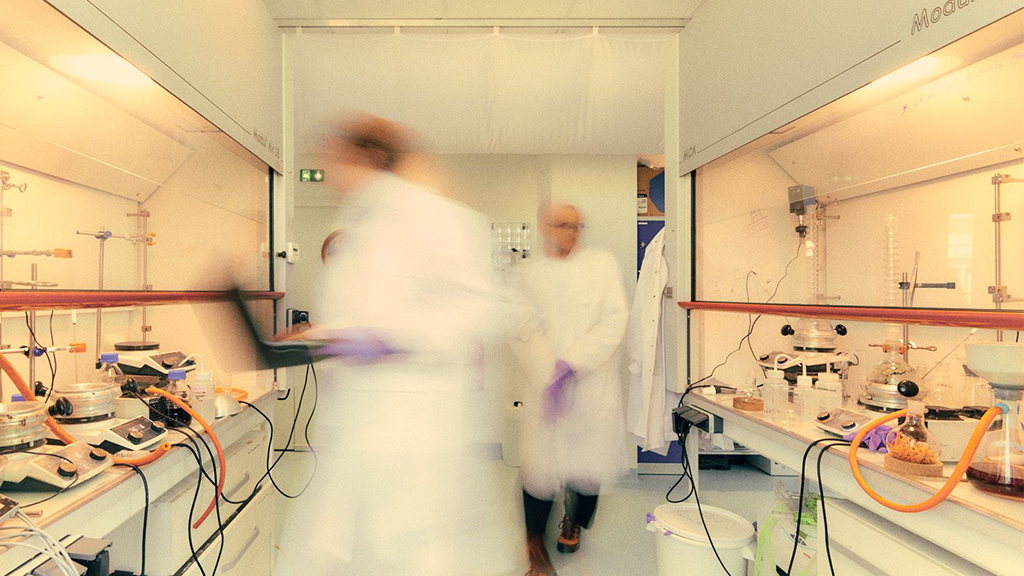

Textile recycling facility to process 19,200 tonnes of waste per year with STADLER design
STADLER supplied the sorting line and key treatment equipment for IGERS’ new textile recycling plant in Novara, Italy
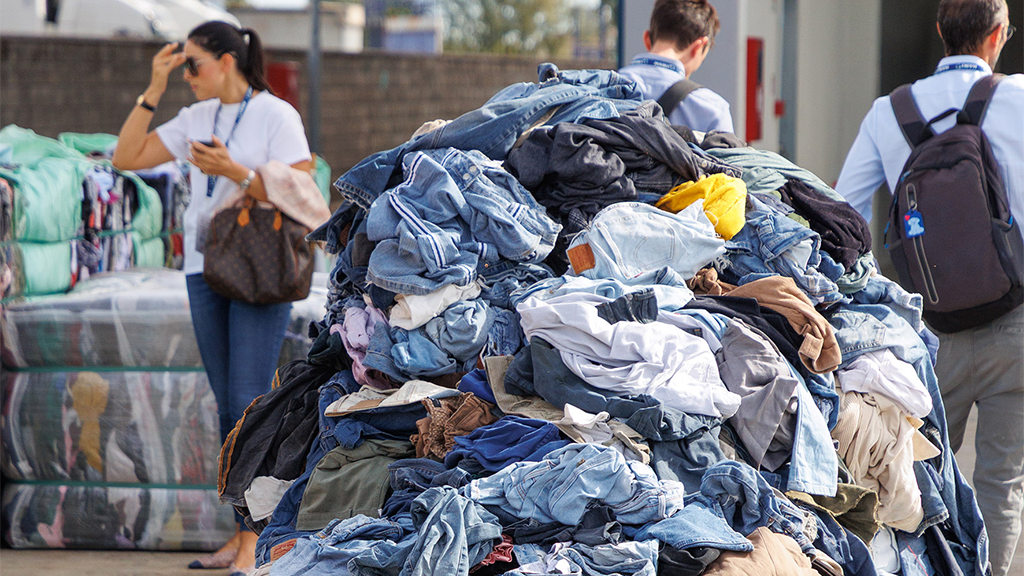
STADLER Group has opened a new textile recycling plant in San Pietro Mosezzo, in the province of Novara, Piedmont, Italy, for IGERS s.r.l.
The German company supported IGERS through the design phase through to plant layout design to fit the existing building. STADLER integrated technology and hardware into a cohesive automated sorting system.
"STADLER worked with us not simply as a supplier, but as a technology partner, understanding the specific requirements of a project that is both new and ambitious within the Italian context," says Gian Luca Miceli, CEO of IGERS.
Opened in September 2026, the San Pietro Mosezzo facility is the first in Italy to include all treatment phases of the textile recycling process, designed to produce high-quality flakes and frayed material suitable for the spinning industry from post-consumer and post-industrial textile waste, with full traceability throughout the entire process.
The facility has a capacity of 4 tph and is authorized to process up to 19,200 tonnes of textile waste per year. The plant comes at a time when textile recycling is gaining increasing importance across Europe. New requirements for separate textile collection and Extended Producer Responsibility are increasing the need for industrial solutions capable of sorting and preparing textile waste for high-quality recycling.
Patented process transforms textiles from beginning to end
Textile waste is highly heterogeneous, combining different fibres, composite materials, accessories, and contamination, with widely varying quality levels. Simultaneously, there is a growing need for transparency about how material is sorted and its final destination. IGERS has responded by designing a complete process of its own, patented in Italy, that runs from the initial buffer through sanitizing, sorting, and tearing to the final output.
"The distinctive value of our process lies in the integration of impurity separation, technology-based material sorting, mechanical regeneration and digital traceability," explains Gian Luca Miceli. "We do not consider these stages as isolated activities: they are parts of a single system that enables more accurate decisions to be made about the destination of each material stream."
"The opening of the San Pietro Mosezzo plant represents IGERS' transition from vision to industrial capability," he adds.
Textile recycling is a sector still in its early stages, with limited prior knowledge to draw on. Developing an industrial solution for textile recycling requires not only sorting technology, but also extensive expertise in plant engineering, material handling and system integration.
"We chose STADLER because we were looking for a partner with international experience and a proven ability to translate complex requirements into a reliable engineering solution," says Gian Luca Miceli. "In a project like this, technology is fundamental, but technology alone is not enough: you also need a structured approach, responsiveness, rigorous interface management, and attention to detail."
The project called for a significant coordination effort to bring together all the suppliers involved and harmonize the existing components, as well as a plant design offering maximum flexibility in sorting operations.
"IGERS approached us looking for a reliable partner who could turn their ideas into a real, scalable industrial solution," says Matteo Zaninelli, project manager at STADLER. "At the beginning, we focused mainly on the process: what IGERS wanted to achieve, the characteristics of the material and the required outputs. From there, we started developing the flow diagrams, selecting the most suitable equipment and finally, designing the complete layout around the available building. It was very much a step-by-step development, with IGERS bringing its knowledge of textile recycling and STADLER contributing its experience in plant engineering, material handling and sorting."
Textile materials require flexible processing machinery
"Textiles present very specific handling challenges," explains Matteo Zaninelli. "They are soft and flexible; they come in many different shapes and sizes; and they can fold, overlap, or become entangled."
Understanding how the material behaves was a joint effort. STADLER carried out extensive trials at its new Test Center in Germany, while IGERS conducted many tests of its own and shared considerable practical knowledge. The results helped define the most efficient configurations for feeding, dosing, conveying, and distributing textiles throughout the plant. The positioning of the dosing units and the design of their distribution hoppers were specifically studied around the behaviour of textile material. "These may seem like relatively small details, but they have a significant impact on the stability of the material flow and therefore on the performance of the entire sorting process," Zaninelli notes.
STADLER implemented two-stage NIR TOMRA sorting units
The STADLER sorting line comprises two dosing units, two TOMRA NIR optical sorters and 16 conveyors. Its main role is to prepare textile material for the subsequent recycling stages. The quality of separation is particularly important, as different textile fractions may have different destinations and require different downstream treatments. The line also provides a continuous, homogeneous material flow, creating more stable conditions for the downstream equipment and supporting both process efficiency and the quality of the final fractions.
In the initial sorting stage, the first NIR sorter separates pure textiles, such as 100 percent cotton or 100 percent wool, from blended textiles and impurities. While the high-value pure fractions are stored in a buffer, the second NIR sorter separates the mixed textile stream from impurities and non-conforming materials, such as pieces of hangers and leather. In the second stage, the buffered material is recirculated through the same sorting equipment, with the NIR sorters configured to separate it according to fibre type.
Flexibility, one of IGERS' key requirements, was built in from the start. The plant is designed to handle different incoming textile streams and throughputs, while giving IGERS the freedom to decide what happens to each output fraction — whether it goes to the baler, one of several storage containers, a recirculation buffer, or the fibre-opening process.
"This gives IGERS the possibility to adapt the plant to different materials and sorting strategies, which is particularly important in a market that is still evolving rapidly," says Zaninelli. The line is fully automated and requires just one plant manager, who starts and stops it and adjusts the NIR sorters' settings as needed.
Increasing textile circularity across Europe
"Our objective is to consolidate San Pietro Mosezzo as a leading industrial and technological platform," says Miceli. "Building on this foundation, we intend to progressively develop additional recycling hubs, in line with the availability of material streams, regional requirements and demand for high-quality recovered materials."
For STADLER, the IGERS project builds on experience gained through previous textile sorting projects, combined with its extensive expertise in plant engineering and system integration. The project further strengthens STADLER's know-how in developing integrated solutions for textile sorting and recycling.
"The plant built for IGERS demonstrates that textile recycling requires not only high-performance machinery, but also a strong ability to integrate different technologies, specialized engineering expertise, and a plant design capable of adapting to complex and variable material flows," says Matteo Zaninelli. "In this sense, the project is a concrete example of how we can support the development of industrial infrastructure for a sector that is expected to grow rapidly in the coming years."
"We expect textile sorting and recycling to become increasingly industrialized," he concludes. "Sorting technology has to develop together with the recycling processes it is feeding. Ultimately, our job is not simply to separate textiles, but to provide downstream processes with the right material, at the right quality, and in a consistent way."