
A deep dive into alligator shears
From size reduction to material separation, the shear earns its place in yards of every size
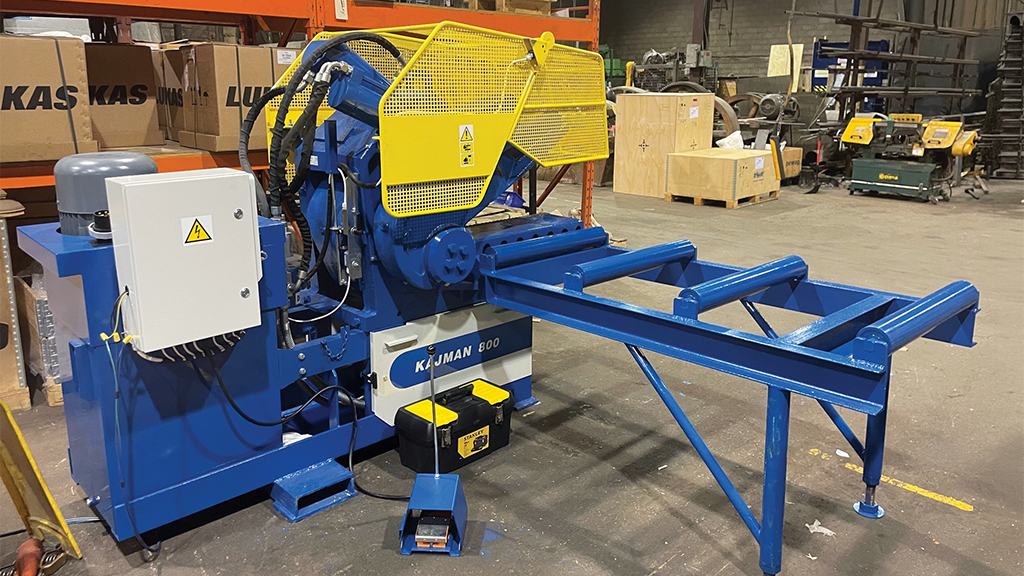
Walk through a hundred metal recycling yards, and you'll find an alligator shear in nearly all of them.
"I wouldn't necessarily call it the Swiss Army knife of a recycling yard, but I would definitely call it the toothbrush because there are very few recycling yards where you would not find an alligator shear," says Sean Abenstein, Chief Commercial Officer at Gensco Equipment. "Everybody's got one, and everybody needs to use one."
An alligator shear serves two core purposes in a recycling operation. The first is size reduction: cutting large pieces of scrap down into more manageable and salable sizes. The second is separating different metals that are physically joined together, so each can be sorted and sold as its own grade or type of scrap.
Alligator shears have been a fixture in metal recycling since before most of today's operators were born. Abenstein traces the equipment to the pre-1900s, but it is more commonly seen in the years following World War I, when mechanically operated cast-steel shears powered by large flywheels ran continuously. These machines were designed to cut ferrous and some non-ferrous metal through a cutting head, again and again, all day long.
Modern shears look different from those early flywheel machines, but the core job hasn't changed. Today's shears are typically electric-over-hydraulic: an electric motor powers the system, but the cutting stroke is performed by a hydraulic cylinder. That combination gives the shear strength while keeping its motion slow and controlled.
Shears vs. torches and saws
Asked why an alligator shear is often preferred over torch cutting or saw cutting, Abenstein points to the machine's design. Because the shear is hydraulically driven, it moves slowly but with enormous force.
Torch cutting comes with ongoing costs — replacing tips, consuming gas — and is best suited to ferrous material like structural beams or end-of-life machinery and equipment. Saw cutting comes with a cost as well: blades wear down and need frequent replacement. Abenstein points out that both are also more dangerous and create sparks, posing a fire risk.
Alligator shears, by contrast, are relatively low-maintenance and don't burn through consumables at the same rate, making them the more economical choice for high-volume, repetitive cutting work, says Abenstein.
Blades, bolts, and oil
Although alligator shears are known for requiring relatively little upkeep, they're not maintenance-free. Abenstein walks through the main service points, a short list compared to more complex processing equipment:
- Blades are the primary wear item, replaced when they crack, break, or simply stop cutting effectively as they dull.
- Bolts are typically swapped out at the same time as blades, since worn or chipped bolts become unusable or stretched.
- Hydraulic oil needs changing annually.
- Filters are usually changed once or twice a year.
- Lubrication of moving joints keeps the mechanism operating smoothly.
Choosing the right shear
There's no one-size-fits-all shear. Key questions to consider when deciding on a shear include:
What kind of hold-down is needed? Shears can come with a mechanical hold-down, adjustable across three or four positions, or a hydraulic-arm hold-down for material that shifts or moves during cutting.
What power is available on site? Voltage varies, and not every facility has three-phase power available. Gensco offers shears in a range of voltages to accommodate different electrical set-ups.
What type of material is being cut? An operator cutting copper-aluminum radiators, for example, benefits from a shear with a longer blade, allowing them to strip materials in only one or two cuts.
Blade length itself varies widely. Gensco's current lineup spans from 12 inches up to 40 inches. In many cases, customers gravitate toward the size they're already used to operating.
Operator training and safety
Before a shear ever enters service, Gensco sends a safety guide covering its operation and offers direct training support by phone or video call. Beyond that, individual facilities often layer on their own safety requirements, such as perimeter barriers or additional operator training.
Abenstein emphasizes that if a material is known to pose a risk, whether through combustion or by turning into a projectile, it either needs specialized guarding around the shear or shouldn't be cut on that equipment at all.
As for the skill level required, a general labourer can run a shear that's processing the same type of material repeatedly throughout the day, a task that doesn't demand much precision. On the other end of the spectrum, cutting high-tensile specialty materials like titanium, nickel alloy, iron-aluminum, or specific grades of stainless plate calls for a more experienced, skilled operator.
What matters most across the board, in Abenstein's view, isn't technical skill so much as competency and situational awareness.
The bottom line
The alligator shear scales across the entire industry. Small, family-run scrap operations use alligator shears just as much as the largest processors in North America. It does its job day after day, without demanding much in the way of upkeep or specialized skill for most of the material that passes through it.
That combination of dependability, versatility, and low maintenance is likely why the alligator shear has held its place in recycling yards for decades, and why it shows no signs of being replaced anytime soon.
______________________________________________________________________________________
This article originally appeared in the September/October 2026 issue of Recycling Product News.