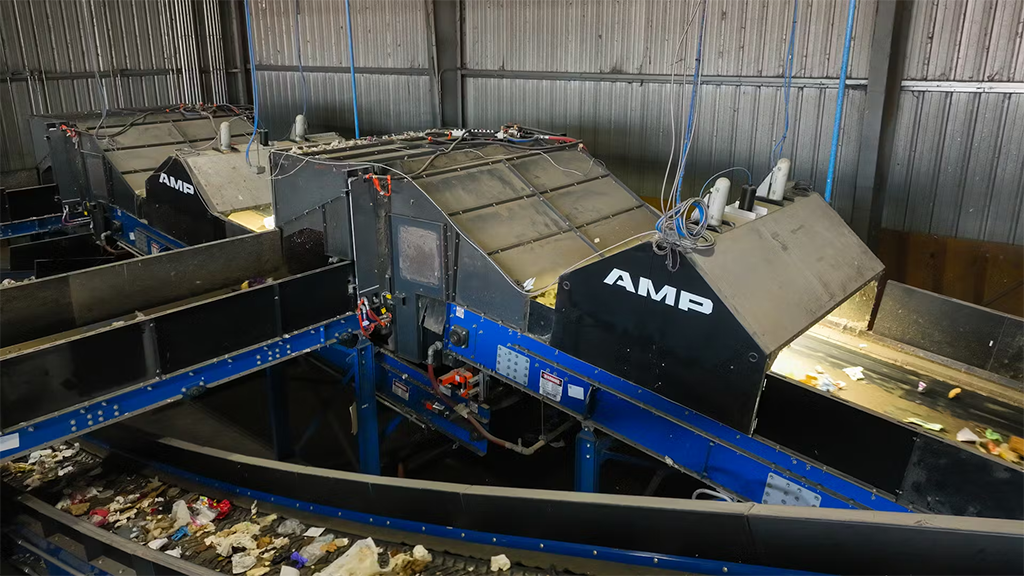

AMP installs 25-tph municipal solid waste sorting system at Michigan facility
Recovering cardboard and select plastics will preserve landfill space while allowing greater throughput at the waste-to-energy facility
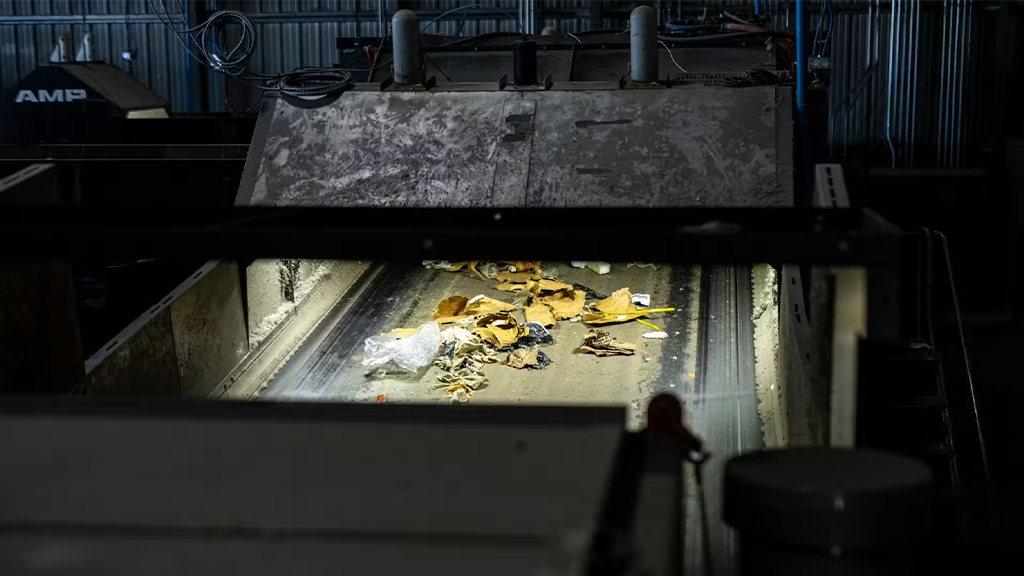
The Kent County Department of Public Works (DPW) in Michigan is partnering with AMP to deploy an AMP ONE municipal solid waste processing system designed to recover valuable commodities from mixed waste before they enter the county's waste-to-energy process.
By recovering recyclable materials before combustion, the system will return commodities such as cardboard and select plastics to productive use while improving the thermal characteristics of the remaining waste stream. The strategic deployment will enable the waste-to-energy facility to process more municipal solid waste within its existing operating limits, increase landfill diversion, and preserve regional landfill capacity.
Take a look inside Kent County's waste sorting facility
The system will process approximately 25 tons per hour of municipal solid waste from Kent County, using AMP's computer vision and pneumatic sortation technology to identify and recover recyclables from bagged trash.
With AMP's solution, Kent County can:
- Recover valuable commodities from mixed waste;
- Improve recovery of cardboard and plastics before waste-to-energy processing;
- Enable greater throughput at the waste-to-energy facility;
Extend regional landfill life; and - Integrate recycling and waste-to-energy into a unified waste management strategy.
Municipal solid waste represents a valuable resource stream
Municipal solid waste still contains significant quantities of recyclable material that are not captured by traditional recycling programs. By recovering these commodities before downstream processing, Kent County can increase resource recovery, preserve landfill capacity, and return valuable materials to productive use.
"Installation of sortation equipment at our Waste-to-Energy facility is an important step toward achieving our goal of reducing Kent County's landfill waste," said Dar Baas, director of DPW. "This will quickly become a best practice for the waste industry as we look to increase our efficiency; improve safety; increase recycling; and protect the air, land, and water in our community."
The project demonstrates a practical approach to modernizing municipal waste infrastructure by integrating AI-powered sortation into existing operations. The approach provides communities with a lower-risk, faster-to-deploy pathway for expanding material recovery while evaluating future infrastructure investments.
"Communities across the country face increasing pressure on landfill capacity while striving to improve recycling outcomes within existing infrastructure constraints," said Tim Stuart, AMP CEO. "This project demonstrates how AI-powered automation can help municipalities unlock more value from the waste stream, extend landfill life, and complement waste-to-energy systems in a cost-effective and scalable way."
The project builds on AMP's existing relationship with Kent County, which included the previous deployment of AMP's AI sortation technology at the county's Recycling & Education Center to support more efficient operations and advance the county's broader waste diversion goals.