

The real difference between granulators and shredders
The right machine for the right application can make all the difference in throughput, efficiency, and profitability
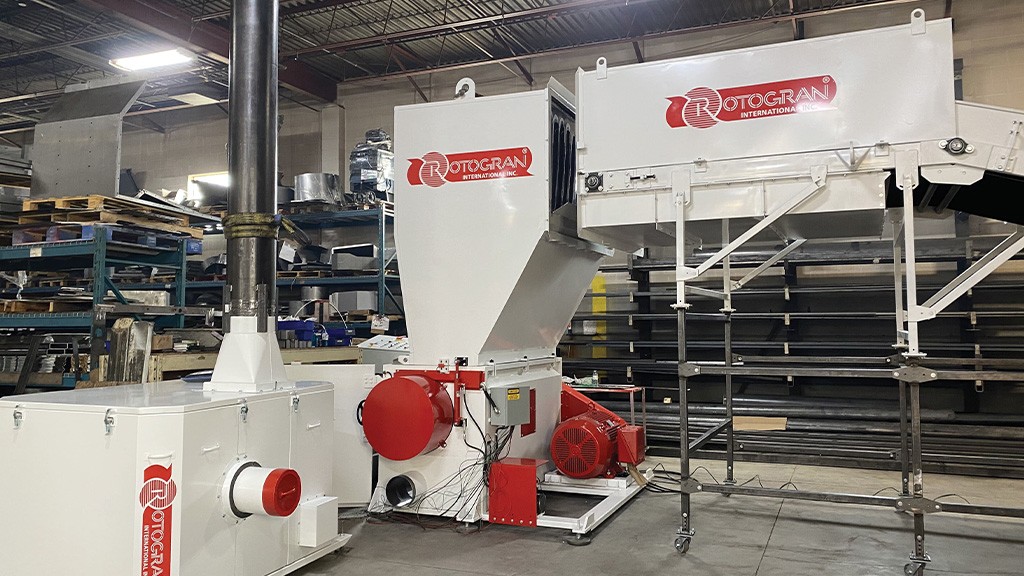
Granulators and shredders are both types of equipment used for size reduction. On the surface, it seems like they have similarities, but in reality, they are completely different types of machines.
You can't just trade out a shredder for a granulator, or vice versa, and expect the same results on the shop floor. These are fundamentally distinct types of machinery with several different design and operational considerations. In other words, they are built differently and work differently.
In recycling, every minute counts and every pound of material matters. The nature of the business is all about production, preventing downtime, and keeping machines running all the time.
The industry is moving away from fancy and toward functional. Recyclers and plastic processors have become more sophisticated and have upped their game. Understanding the key differences between granulators and shredders can help operations get the utmost production out of their machines. Believing they are interchangeable can be costly.
There is a place for both machines in the marketplace, and sometimes they even work together. But again, it's all very specific and materials-focused. Let's take a closer look.
What to know about granulators
Granulators are high-speed, inertia-driven machines that typically run around 500 rpm. These machines utilize speed and inertia to cut material into progressively smaller pieces. They are typically metered-fed by a conveyor or simply by hand. A steady, controlled flow of material maximizes the production rate of a granulator.
There's lots of physics involved as the flywheel and rotor carry stored energy into each cut, so the machine isn't relying solely on the motor for every pass of the blade. The heavier and more solid the flywheel and rotor assembly, the more cutting work it can do before the motor needs to kick in.
There's also an energy advantage. Because the machine carries all that inertia, stored energy powers through the cut first. Only once that energy is used up does it go directly to the horsepower motor — that's when amps go up, and the motor draws more electricity.
While many granulators were designed for light-duty in-house scrap, many plastic processors and recyclers are now seeking high-performance granulators as part of a complete package. Things have evolved quite a bit from the days when a granulator just sat beside an injection molding machine waiting for the next sprue.
There is also a greater demand for customization, especially when it comes to recycling and handling a wide range of scrap material. Custom-built granulators and systems help recyclers and manufacturers keep materials in use longer, reduce waste, and close the loop on production.
A common misperception is that materials must first pass through a shredder in a two-stage process; a well-built, tough granulator can take on those materials on its own as long as the wall is thin. The right granulator can tackle large parts, thin-walled material (such as thermoforming sheet), scrapped parts, and more.
This is where utilizing inertia, solid flywheels, geometry, and build quality all matter. With this level of engineering, you don't need to go to a pre-size step just because parts are larger. These strong granulators can even process larger parts, such as a 55-gallon drum, without the need for pre-shredding. The solution is to make the grinder big, strong, and narrow enough so that the granulator can handle it.
Granulator output is a more consistent, evenly sized regrind since it is a high-speed cutting machine. This is especially ideal for plastics processors who typically put the material back into a plastics machine (such as an extruder or injection molding machine) without additional steps. Recyclers, meanwhile, are more focused on throughput and cost per pound, and a well-built granulator delivers on both.
When to use a shredder
A shredder is a high-torque and low-speed machine (around 100 to 130 rpm) that shreds material instead of cutting it. The torque is a twisting force delivered through a motor and gearbox that ramps up significantly, tearing and ripping the plastic. The shredder can be shock-loaded since the load on the rotor shaft is controlled by a hydraulic ram mechanism. This allows you to dump a full load of material in the hopper and walk away.
Shredders are applicable for thick-wall material and purging, along with many heavy-duty applications. Since a shredder works on torque, the torn pieces vary widely in size and shape. Different shredder types include single-shaft, dual-shaft, and quad-shaft machines.
Something to note is that shredded material almost always needs a second processing step, typically passing through a granulator, before it can be reused in production. Think of it more as a volume-reduction step, not a finished-product step.
Thin-walled vs. thick-walled
Using size reduction machinery is all about the application itself. Using the wrong equipment for a specific application will be a costly mistake.
A key item to remember when considering a granulator or shredder is the material itself. Is it thin-walled or thick-walled? For instance, when using a granulator, thin-walled material, regardless of the application, does not need pre-shredding. A well-built and strong granulator handles it in one pass to deliver the regrind.
When it comes to thick-walled material and purging, this is where the shredder is appropriate.
It's vital to find a machinery manufacturer who builds and sells equipment around the application. Look for a manufacturer that is all about front-end application engineering, where they evaluate the specific scrap type, volume, and production goals to recommend the right machine.
Stacked size reduction systems
For the thin-wall plastics, a granulator can be used in one step. A shredder will get you halfway, but you would still need a granulator downstream.
For material that is designed to recycle back into the manufacturing process, if a shredder is used, oftentimes a second granulator option is also required. If the material is thick-walled, the shredder will use its brute-force torque to reduce it to a size the granulator can then finish.
Stacked configurations are an option when you need volume reduction on thick material before final grinding. The concept of stacking a shredder on a granulator was developed as a solution to save valuable floor space in terms of integrated design and fewer pieces of equipment required for the process.
When an application calls for both to work together, and floor space constraints are an issue, a granulator can be designed to sit under a shredder in a stacked configuration, low-profile and robust.
Solving a big issue in the field
However, there are sometimes issues on the shop floor with this stacked combination. As a result, Rotogran International designed a severe-duty granulator for use in stacked shredder/granulator applications.
Granulators working with shredders are generally sized to meet a customer's required production rate. The industry standard measurement for this is pounds per hour. For granulators, this rate should be achieved as a uniformly distributed material flow over the daily production time.
What generally happens is that an operator dumps a full gaylord of material into the stacked combo or loads up a standalone shredder (when equipped with a discharge conveyor) and walks away. The shredder immediately processes the entire load, but because the shredder can't meter the output uniformly, it floods the granulator below with a massive shock load, then sits idle until the next load arrives.
During this cycle of shock loading, the granulator is processing material at four to six times its designed production rate. Most granulators are built to be uniformly fed at a specified rate and not designed to absorb large shock loads for a short time, then wait idle for the next one.
This constant on-and-off overloading severely shortens the life of the granulator and increases downtime due to unexpected repairs. Rotogran engineered a purpose-built solution that is designed from the ground up for placement and integration under a shredder and is produced with all the considerations necessary for under-shredder applications.
The company currently has several of those granulators operating in integrated granulator-under-shredder applications. These granulators have successfully replaced other standard granulators that failed in this application and are performing without issue.
The bottom line
When it comes to choosing the right size reduction machinery, it's about selecting the solution that suits the application's needs. After all, every minute counts, so look for a big and strong machine to minimize downtime, maximize throughput, and profitability. Consider the material and choose a machine built to match.
__________________________________________________________________________________
Heather Caliendo is the communications manager for Rotogran International, a Canadian manufacturer of size reduction equipment for the plastics and recycling industry. Rotogran custom designs and builds granulators, fines separators, evacuation systems, and feed conveyors with metal separators.
This article originally appeared in the May/June 2026 issue of Recycling Product News.