
What insurance, restoration, and recycling are still getting wrong about lithium-ion battery contamination
Contaminated scrap from lithium-ion fires is moving through the recycling supply chain without protocols to stop it
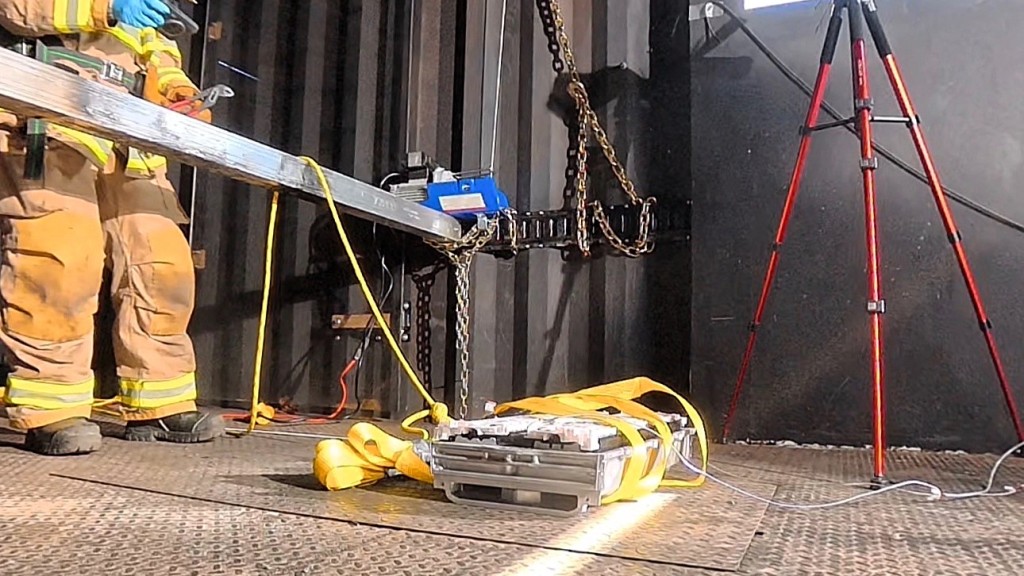
In July 2025, Clean Core Research published findings from a Newfoundland home where a 20V lithium-ion battery fire left behind a slow-moving chemical attack on electrical infrastructure, tools, and building materials, damage that continued long after the flames were extinguished. The response confirmed what we suspected: this is not an isolated knowledge gap. It is a systemic one.
Since that publication, we have heard from homeowners who could not get their insurers to take the chemistry seriously, and from restoration contractors who did not know there was a chemistry problem to begin with.
We have also heard about something the original article did not fully address: businesses. Warehouses, manufacturing facilities, commercial properties, data centres, and fleet operations that experienced lithium-ion events and, because they have more financial resources than the average homeowner, were able to commission independent testing and dig deeper into what was actually left behind. What they found was alarming.
The escalating battery threat
Lithium-ion battery incidents reported to Health Canada totalled 924 between 2013 and 2023, with 266 (nearly 29 percent) involving injuries and three fatalities:
- Toronto recorded 90 lithium-ion battery fires in 2025, a 210 percent increase from just 29 fires in 2022, with a further 18 percent rise from 2024 to 2025 alone.
- Montreal's fire service has reported a 195 percent increase over the past two years.
- New York City's FDNY saw structural fires caused by lithium-ion batteries surge 53 percent in early 2025 compared to the same period in 2024, even as aggressive enforcement brought fatalities from a peak of 18 deaths in 2023 down to one in 2025.
Health Canada formally designated lithium-ion batteries a hazard of concern in July 2024 and opened consultation on proposed mandatory safety 2025. The industries that manage the aftermath of these events are operating on protocols designed for a different era of fire chemistry.
What actually happens in a lithium-ion battery event
To understand why conventional approaches fail, you have to understand that a lithium-ion fire is not a fire in the traditional sense. It is a thermochemical event.
When a lithium-ion cell enters thermal runaway, triggered by overcharge, physical damage, manufacturing defect, or external heat, it does not simply burn its casing. Internal temperatures can exceed 700°C within seconds. The cell's electrolyte, typically a lithium hexafluorophosphate salt dissolved in organic solvents, decomposes under that extreme heat and produces a cascade of reactive compounds.
A 2025 study by UL Research Institute's Chemical Insights division found that exposure to thermal runaway emissions can damage DNA and impair the body's ability to make DNA repairs, raising concerns about both short and long-term health effects. Many of these gases are odourless and colourless, making them especially dangerous in enclosed commercial and residential spaces.
What the contamination leaves behind
The compounds that do not evaporate as a gas settle on floors, walls, ceilings, HVAC ductwork, electrical panels, server racks, shelving, inventory, machinery, and everything else in the affected environment. What makes lithium-ion soot fundamentally different from conventional fire residue is its pH.
Lithium-ion soot is also hygroscopic. It draws moisture from the ambient air and holds it, concentrating acids directly against whatever surface it has settled on. Corrosion in this context is not a side effect. It is an ongoing electrochemical reaction driven by humidity, time, and the chemistry of the soot itself.
"At Clean Core Research, we observe this in our laboratory regularly. Metal tools brought into a contaminated environment and not properly decontaminated will show visible corrosion within days. Stainless steel, which resists most conventional corrosive environments, develops pitting. Copper conductors develop fluoride and chloride deposits. Aluminum surfaces develop white powdery aluminum fluoride corrosion," says Randy Narine, president of Clean Core Research.
Hydrofluoric acid does not simply sit on a metal surface. It penetrates protective coatings and attacks from beneath, which is why structures and equipment that look clean on visual inspection can still be actively degrading weeks after an event.
The type of battery that failed also affects how damaging the contamination is. Common cathode materials, including NMC, LCO, and LFP, release transition-metal oxides and fluoride compounds during combustion, which become part of the settled contamination layer and accelerate chemical attack on materials.
More resources, more visibility into the problem
Homeowners who experience a lithium-ion event are largely dependent on their insurance adjuster's assessment of what happened and what remediation is warranted.
Most cannot afford independent testing, and the problem is often closed out before it is actually solved, leaving workers and occupants to reoccupy a space that continues to contaminate them.
Businesses are different. Recycling facilities, warehouses, commercial properties, data centres, and fleet operations have facility managers, safety officers, legal counsel, and the financial capacity to commission independent testing when something does not look right.
When companies do commission independent testing, the results frequently contradict what their initial restoration report claimed.
What businesses are finding
We have seen commercial facilities where a restoration company performed a standard clean, issued a completion certificate, and returned the space to operation, only for the facility operator to notice unusual corrosion on structural fasteners, electrical contact degradation, and rusting on equipment that had never rusted before.
When independent surface testing was conducted, acidic contamination was still present at levels that would have been caught by proper post-remediation verification. The restoration was not dishonest. The company used the tools and protocols available to them. The protocols were simply not designed for this class of contamination.
Commercial sectors at elevated risk
- Metal recycling facilities and MRFs: UL Solutions data shows that recycling-related Li-ion fires increased 187 percent from 2020 to 2024. Fortifying The Frontlines: The 9th Annual Waste & Recycling Facility Fire Report from Fire Rover reports that 448 waste and recycling facility fires were reported across North America in 2025, a record high. Contaminated scrap metal entering the stream degrades before processing and can generate HF vapour at the furnace.
- Warehouse and logistics: E-bike and e-pallet jack batteries are now standard in distribution operations. A single thermal runaway event in a storage bay can contaminate racking, conveyors, and inventory across a large footprint through HVAC redistribution.
- Data centres: UPS battery systems create a scenario where a single cell failure delivers HF-laden contamination directly to precision electrical infrastructure and cooling systems simultaneously.
- Manufacturing: Tooling, machinery, and precision components exposed to lithium-ion soot face accelerated corrosion that compromises tolerances and shortens equipment life with no visible warning signs.
- Commercial real estate: EV charging infrastructure in parking structures means a battery event in a garage can contaminate the entire building above through shared ventilation. Liability follows the building owner.
- Emergency services: Fire apparatus, ambulances, and police vehicles parked at Li-ion events absorb the same HF-laden soot that destroys metals in structures. Turnout gear, hose fittings, cab interiors, and equipment brackets are all exposed. The NFPA has launched a $1.06M DHS-funded study on this specific risk.
Financial consequences of battery fires
The financial consequences for a commercial operator are significant. Equipment that degrades before its expected service life, electrical infrastructure requiring premature replacement, inventory that becomes unsellable due to contamination exposure, and the liability exposure of returning employees to a space that has not been properly verified.
These are the operational realities for businesses that have experienced these events and had the resources to investigate properly.
Where standard insurance frameworks have not yet caught up
Insurance adjusters are trained to assess damage that has already occurred. Lithium-ion contamination creates damage that is still occurring at the time of assessment and will continue for months if the remediation does not address the underlying chemistry.
Leading reinsurers and underwriters are already responding to this reality. The January 2025 Moss Landing energy storage facility fire in Monterey County, California, drew intense scrutiny from reinsurers and accelerated underwriting changes, specifically at the large-scale battery energy storage system (BESS) and commercial energy sector tier. That recalibration is underway.
The gaps described in this section operate at a different level: commercial property policies, front-line adjuster assessments, and restoration completion standards for facilities and buildings. These are structurally separate conversations within the insurance industry, and the policy language and claims assessment frameworks at this level have not yet caught up to where reinsurance is already heading.
A critical exposure point for commercial operators is the pollution exclusion clause. Standard commercial property policies frequently exclude pollution-related claims. HF, hydrogen cyanide, and the fluoride compounds produced in a lithium-ion event are chemical contaminants by any technical definition.
When an insurer applies a pollution exclusion to a lithium-ion fire claim, it can exclude precisely the chemical damage that makes these events so costly. Environmental liability coverage fills that gap, but most commercial operators do not carry it specifically for this scenario, and few adjusters flag it at the time of the claim.
There is currently no standard policy language for lithium-ion battery risks in commercial property insurance. TransRe and other reinsurers have noted that as more claims come through, exclusions and subjectivities will become standardized across policies. Progressive carriers are actively developing updated frameworks; the practical gap commercial operators face today is the distance between where underwriting is heading and where front-line claims assessment currently stands.
Until that gap closes, the outcome of any individual claim depends heavily on the adjuster's familiarity with the chemistry and the operator's ability to document what actually happened.
Operators that cannot demonstrate thermal runaway testing results, emergency response plans, and proper battery storage compliance are increasingly facing surcharges, coverage limitations, or outright exclusions at renewal.
According to field investigation findings from Clean Core Research, "for a commercial operator, the insurance gap shows up as corroded equipment, degrading electrical contacts, and failing components in spaces that carry a restoration completion certificate, and a closed claim that does not cover what continues to go wrong."
Standard fire assessments do not include pH surface testing, HF residue detection, or corrosion risk evaluation of electrical infrastructure. The IICRC protocols that govern fire restoration in North America are comprehensive and well-developed for conventional fire events. They do not yet reflect the specific chemistry of lithium-ion events.
Commercial operators who understand this gap and document it independently are in a fundamentally stronger position than those who accept a completion certificate at face value.
The ongoing health exposure: workers, occupants, and ongoing liability
Beyond structural and equipment damage, there is an occupational health dimension to inadequately remediated lithium-ion fire scenes that neither insurance assessments nor restoration completion certificates reliably address.
Health Canada's data shows that of the 924 lithium-ion incidents reported between 2013 and 2023, nearly 29 percent involved injuries. That figure captures acute event injuries. It does not capture the ongoing exposure of workers re-occupying commercial spaces where lithium-ion contamination was not properly neutralized, and where the employer may carry direct occupational health and safety liability for that exposure.
A commercial space returned to operation after a standard clean may appear normal. The HF compounds that settled on surfaces during the event do not appear normal. They are odourless at low concentrations, colourless, and they continue to off-gas with each humidity cycle.
HVAC systems that redistributed contamination during the event will continue circulating it until the system is properly treated. An air quality test conducted three days after a fire does not capture the off-gassing profile of an occupied workspace six weeks later.
A warehouse worker, distribution centre employee, or manufacturing floor operator spending eight hours a day in a space with residual acid contamination on surfaces and in the ventilation system is not in a safe working environment, regardless of what the restoration completion certificate says.
Under Canadian occupational health and safety legislation, the employer bears responsibility for that exposure. The liability does not transfer to the restoration company simply because a certificate was issued.
What restoration companies are not looking for
Most fire restoration companies are skilled at what they were trained to do: remove soot, dry out water damage, deodorize, and return the structure to pre-loss condition.
The problem is that the standard approach was developed around conventional fire chemistry, where soot is alkaline, and removal of visible particulate is the primary objective. Applied to lithium-ion contamination, the same methods address the wrong problem.
When a restoration crew applies dry sponge cleaning followed by an alkaline degreaser wash to a lithium-ion fire scene, they may remove the visible soot. They will not neutralize the acid.
In some cases, certain alkaline cleaning agents create secondary reactions with fluoride compounds present on surfaces. Without surface pH testing before and after cleaning, and without specific protocols for HF neutralization using calcium-based or bicarbonate solutions, there is no objective measure of whether remediation was effective.
Metal recycling and the waste stream: a growing crisis
The recycling and metals processing sector faces a problem now well-documented in incident data but still largely unaddressed in facility operating procedures.
Recycling-related lithium-ion fires increased 187 percent between 2020 and 2024, according to UL Solutions' incident tracking. Publicly reported waste and recycling facility fires across North America reached a record 448 incidents in 2025, up from 430 in 2024 and 373 in 2023. July 2025 alone recorded 56 incidents, the highest single month ever tracked. The majority trace back to batteries that were not identified, segregated, or deactivated before entering the facility.
The contamination risk goes beyond the ignition event itself. When a commercial property, warehouse, or industrial facility is cleared after a lithium-ion fire, metals are removed from the site as scrap. Tools, structural components, racking, electrical infrastructure, and equipment all enter the recycling stream. They look like ordinary scrap. They are sorted, weighed, and processed like ordinary scrap. If they were exposed to lithium-ion soot and not properly decontaminated before removal, the chemistry travels with them.
Clean Core Research observes rapid and consistent corrosion in metals that were present during lithium-ion events. Tools showing no visible fire damage will develop visible rust within days of storage in a non-contaminated environment, if they absorbed HF or chloride compounds during the event.
By the time a recycling facility processes metals from a contaminated event, the material may have already significantly degraded, reducing purity, yield, and market value before it reaches the tipping floor. Processing equipment itself faces the same attack on its metal surfaces.
Processing risk: contaminated scrap in the furnace
Research measuring air emissions from lithium-ion battery fires in waste contexts has recorded HF peak concentrations of 17.2 mg/m³, with sustained fluoride levels between 5.2 and 13.3 mg/m³. These concentrations far exceed occupational exposure limits. When contaminated metals are shredded, sorted, or smelted, the same chemistry is released again in the processing environment.
There is currently no systematic intake protocol for identifying and segregating scrap metal from lithium-ion fire events in the North American recycling supply chain. The scrap arrives without disclosure because there is no established framework requiring it. Developing that protocol, and the rapid surface testing capability to support it, is a gap the recycling industry needs to close before volume, not just frequency, becomes the problem.
Fire, EMS, and police: the equipment nobody is decontaminating
When a fire truck arrives at a lithium-ion battery event, the crew is trained to fight the fire. What happens to the apparatus itself is a question most fire departments have not yet formally answered.
A fire truck or aerial ladder parked within the contamination perimeter of a lithium-ion event is exposed to the same HF-laden soot plume that attacks metals inside the structure. Every exposed metal surface on that apparatus: hose fittings, ladder rungs, cab door hinges, compartment hardware, pump panel components, is subject to the same acid chemistry.
The soot is hygroscopic. It settles, absorbs ambient moisture, and begins corroding. If the apparatus is not specifically decontaminated for lithium-ion chemistry before being returned to service, those corrosion reactions continue in the station.
Turnout gear presents a separate and compounding problem. Research published in Fire Technology (Springer Nature, 2025) confirmed that soot from lithium-ion battery fires contains PFAS (per- and polyfluoroalkyl substances), the same class of persistent compounds already the subject of major litigation against turnout gear manufacturers.
A firefighter whose gear absorbs lithium-ion soot is carrying both HF and chloride acid contamination and a PFAS load that standard gross decontamination does not fully remove. Research validated at the 2024 Urban Fire Forum confirmed that standard cleaning methods are insufficient for lithium-ion specific chemistry on PPE.
The NFPA Fire Protection Research Foundation has launched a three-year study, supported by $1.06 million in DHS funding, specifically to investigate firefighter contamination risks from lithium-ion battery fires. The study is analyzing contamination sources, assessing PPE cleaning effectiveness, and developing decontamination protocols for Li-ion specific chemistry.
The study confirms what front-line departments have been experiencing: current decontamination protocols were not designed for this class of event. Until protocols are updated, departments responding to lithium-ion events are making decontamination decisions without a validated framework.
EMS and police vehicles face the same exposure risk with even less guidance. Ambulances staging at a major lithium-ion event and police vehicles establishing a perimeter within the contamination plume carry the same surface chemistry back to their stations. No jurisdiction in Canada currently has a formal Li-ion specific decontamination protocol for emergency vehicle apparatus.
The standard of care has to change
Health Canada formally designated lithium-ion batteries a hazard of concern in July 2024 and opened public consultation on proposed mandatory safety requirements in December 2025. That regulatory momentum reflects a recognition that voluntary standards and public education have not kept pace with the volume and severity of incidents occurring across the country.
Regulatory change addresses what happens before a battery fails. The industries responsible for what happens after — insurance, restoration, recycling, and emergency services — are largely still operating without updated standards, updated training, or updated liability frameworks.
Insurance carriers: Standard commercial property policies were not written with Li-ion chemistry in mind. Pollution liability coverage that explicitly addresses thermal runaway byproducts is not yet standardized at the commercial property tier. Operators should review their current coverage with that specific gap in mind.
Restoration companies: Li-ion specific procedures, technicians trained in acid chemistry, and post-remediation pH verification as a completion standard, not just visual inspection.
Recycling and waste: 187 percent increase in Li-ion fires 2020-2024. Intake protocols must flag fire-exposed scrap. Workers need protection from HF vapour during shredding, sorting, and smelting.
Emergency services: Fire apparatus, EMS, and police vehicles need Li-ion specific decon protocols. The NFPA $1.06 million study is underway. Departments cannot wait for results before acting.
Commercial operators: Independent surface pH testing after any Li-ion event. Do not accept a completion certificate without verified post-remediation testing. Document everything for insurance.
Regulators and standards: IICRC fire restoration protocols must be updated for Li-ion chemistry. Health Canada proposed mandatory requirements in December 2025. Enforcement frameworks need to follow.
The metal degradation described in this article is not a projection. It is something that Clean Core Research observes in our laboratory regularly. Our tools, our equipment surfaces, and every metal object that enters a contaminated environment without proper decontamination reflect the chemistry documented here.
The clean energy transition is a net positive. The batteries that power it carry real risks when they fail, and those risks do not resolve themselves. The industries that understand chemistry will be best positioned to protect the people, assets, and operations in their care.