
Quantum Lifecycle Partners invests $14M in end-of-life e-plastic separation line
A multi-stage process offers a complete, end-to-end solution for electronics recycling under Ontario’s competitive EPR framework
Canadian technology lifecycle provider Quantum Lifecycle Partners opened its new Advanced Plastics Recovery Line at its Toronto facility. This new facility marks a significant step forward in Canada's ability to process and recover value from end-of-life electronics plastics domestically.
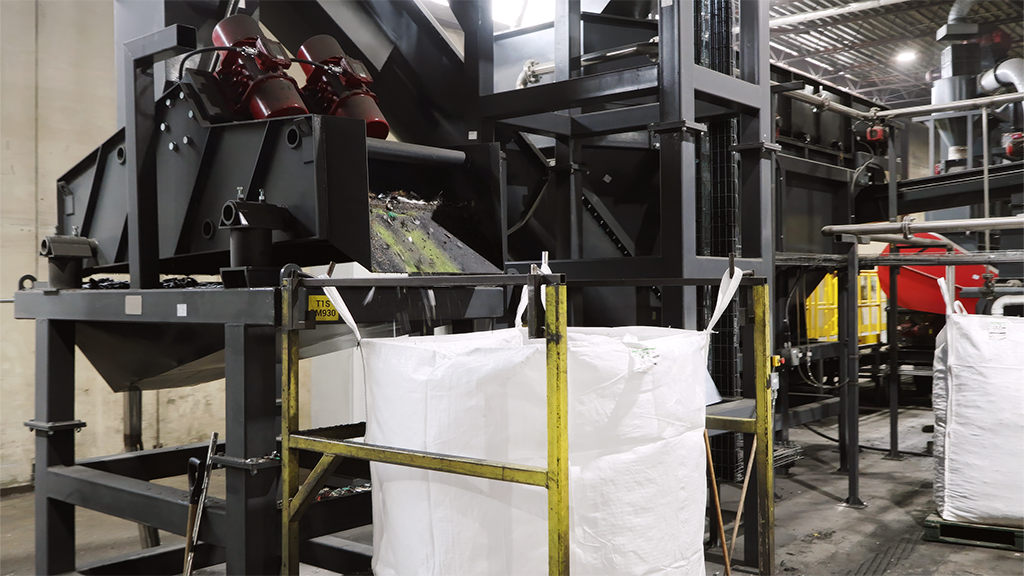
Quantum Lifecycle Partners' new float-sink separation system
The $4 million system, integrated into Quantum's existing $10 million electronics processing infrastructure, uses innovative float-sink separation technology to sort the mixed polymer streams recovered from end-of-life IT equipment, including computers, printers, and other electronic devices. The output is clean, sorted e-plastic flake that meets Basel Convention standards for international trade, producing a consistent, usable commodity from a waste stream that has historically been exported or downcycled.
Electronics plastics, such as the casings, housings, and components recovered from end-of-life devices, represent one of the most challenging streams in the recycling industry. Heterogeneous polymer mixes, flame retardants, and contamination have historically made it difficult to produce material that meets the quality threshold for legitimate global commodity markets.
Ontario's full EPR system requires advanced recovery lines for consumer packaging
The new plastics line expands the company's ability to offer producers a complete, end-to-end solution for their electronics recycling obligations under Ontario's competitive producer responsibility (EPR) framework. Ontario is currently the only province in Canada operating a fully competitive EPR system for electronics, in which multiple producer responsibility organizations compete for producer clients based on performance and value.
The facility has the capacity to scale operations to meet growing demand as Ontario's Extended Producer Responsibility (EPR) framework matures and more producers seek domestic processing options for their end-of-life electronics. A multi-stage process shreds, washes, and separates mixed e-plastics into clean, sorted polymer fractions by density. The technology was selected following a global evaluation of available systems and represents the current state of the art in e-plastic processing.
"This investment reflects our confidence in Ontario's approach to electronics recycling — a competitive framework that rewards operators who perform, invest, and innovate," says Gary Diamond, president, Quantum Lifecycle Partners. "Ontario has created conditions where it makes economic sense to build world-class domestic processing infrastructure here in Canada. We're demonstrating what that looks like in practice by creating a value-added commodity suitable for a global market."
The Honourable Todd J. McCarthy, Minister of the Environment, Conservation and Parks, attended the ribbon-cutting ceremony alongside Quantum's leadership team and representatives from the company's major producer and enterprise clients.
"This facility represents a meaningful step forward in what's possible for electronics recycling in Canada," says Clayton Miller, vice president of recycling, Quantum Lifecycle Partners. "For the first time, we're able to take the plastic fraction from end-of-life devices and produce a consistent, high-quality output that can re-enter the supply chain."
Miller says that opens up conversations with producers about closing the loop on their materials in ways that simply weren't available before. "It's the kind of infrastructure that makes a genuinely circular economy for electronics in Canada more than an aspiration."