
Where shredder performance really begins
How one Ontario recycler reduced wear and improved safety upstream
Running a shredder in 2026 is about managing risk as much as processing feedstock. Material streams are inconsistent. Electric vehicles are entering the scrap cycle. Unknown hazards arrive at the gate. Equipment is more connected, but also more complex. And when something goes wrong inside a shredder, the consequences are rarely minor.
For Attar Metals Inc., a full-service recycler based in Mississauga, Ontario, protecting the shredder meant shifting the focus upstream and addressing stress and risk.
The risks are not theoretical. Tony D'Alonzo, maintenance manager at Attar Metals, has spent four decades working around heavy equipment and shredder operations, watching how small problems escalate once material reaches the rotor. From his perspective, the most effective way to protect equipment and the people working around it is to reduce stress before material ever reaches the hammermill.
When the shredder becomes the bottleneck
Attar Metals processes a mix of ferrous and non-ferrous scrap from industrial suppliers, dealers, and public drop-off. Before 2023, Attar Metals was feeding raw material directly into its shredder line. The machine was handling the brunt of the work, and the wear reflected it.
"We noticed that the shredder was working too hard. Too many breakdowns... [there was] a lot of wear and tear on that machine," D'Alonzo says.
The result wasn't just maintenance hours. It was a strain across the system from engines to downstream conveyors. On top of wear, there was a safety concern.
"Oh, number one is explosions," D'Alonzo says when asked about the biggest risk on a shredder line.
High-speed rotors introduced friction and sparks. If the material contains residual fuels, pressurized components, or hidden hazards, the consequences can escalate quickly.
At that point, the issue was no longer throughput. It was protecting the shredder from what it was being asked to absorb. Something upstream had to change.
Rethinking the flow by adding pre-processing
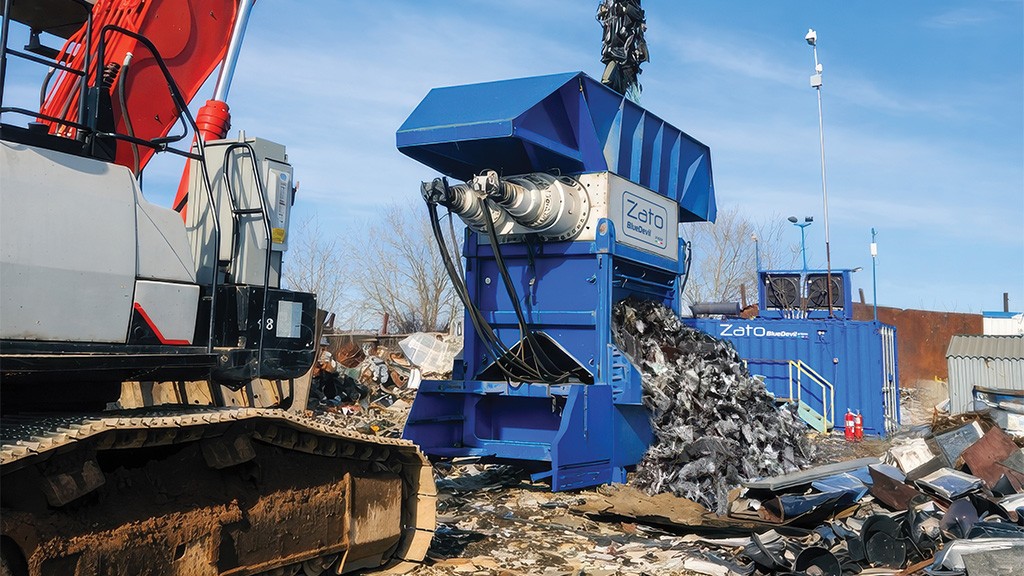
Attar Metals decided to expand the line and protect existing assets. In April 2023, Attar added the Blue Devil, a low-speed pre-shredder from Zato, positioned ahead of the shredder to prepare material before processing.
"It was an expansion to help our other machine out," D'Alonzo says.
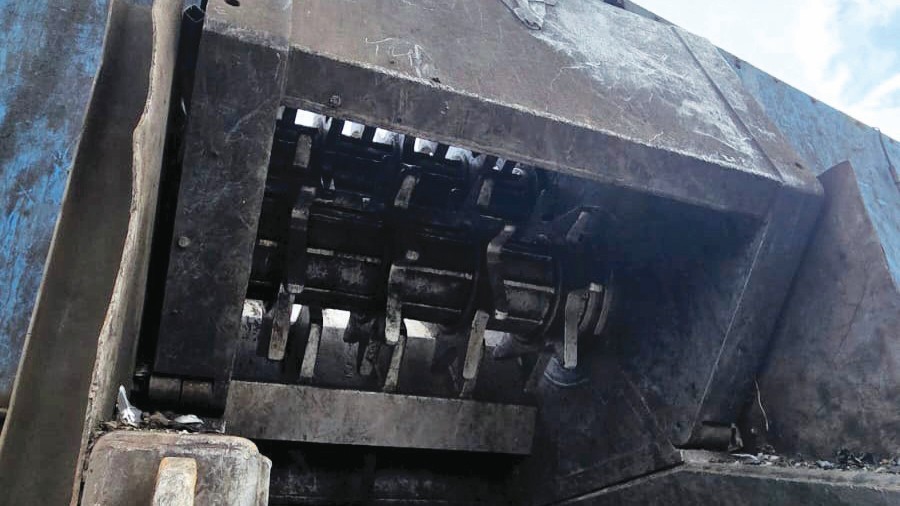
Zato's Blue Devil is designed around a twin-shaft, high-torque configuration that uses counter-rotating shafts and replaceable cutting blades to shear material rather than fracture it through impact. Instead of relying on speed, the machine applies controlled force, gradually opening and reducing incoming scrap before it reaches the hammermill.
While Attar deploys the Blue Devil as a pre-shredder ahead of its primary shredder, the platform can also operate as a standalone processing unit or for aluminum scrap or busheling applications.
For Attar Metals, that distinction proved critical. Rather than feeding large, irregular scrap directly into the shredder, the Blue Devil introduced a controlled first stage of size reduction. Operating at low rotational speed with high torque, it shears and opens incoming material gradually, reducing bulk density, exposing enclosed components, and breaking down oversized pieces into a homogenous feed for the high-speed rotor.
When contaminants, trapped gases, or dense unshreddables enter a shredder at full speed, the consequences can escalate quickly. By comparison, the Blue Devil's slow-speed pre-processing limits friction, reduces spark generation, and stabilizes material flow entering the primary shredder.
The result at Attar was measurable operational relief. The change altered how material entered the mill and how the shredder responded. Since installing the pre-shredder, D'Alonzo has seen a significant reduction in downtime.
"Our maintenance has come down, everything has come down," says D'Alonzo. "It's a lot easier on [the shredder] now. Everything has already been processed."
According to D'Alonzo, the benefits extended well beyond the shredder itself. Reduced impact loads translated into lower wear on hammers and liners, fewer conveyor jams downstream, and less strain on engines and support equipment.
Just as important was safety. By addressing oversized and potentially hazardous materials under controlled, low-speed conditions, the Blue Devil reduced the likelihood of high-energy events inside the shredder, reinforcing Attar's focus on protecting equipment and people in the yard.
Measurable impact
For Attar Metals, the effect of adding upstream pre-processing is reflected in measurable maintenance savings. Since installing the pre-shredder, the company has seen a reduction in maintenance demands on the shredder itself.
"The Zato took the brunt of the beating before it got into our shredder," D'Alonzo says.
By absorbing the initial stress of oversized and irregular scrap, the pre-shredder reduced the strain placed on hammers, liners, and internal components. The result has been fewer change-outs, fewer reactive repairs, and more predictable service intervals.
D'Alonzo estimates that Attar Metals has saved about 30 percent in maintenance costs on the shredder side.
In a shredder operation, that margin carries weight.
"30 percent is a huge number," he says. "When you're talking millions of dollars to run a shredder, 30 percent is a good chunk."
The reduction has also extended beyond the shredder itself. Lower shock loads and more consistent feed have eased wear on conveyors, bearings, and downstream equipment, stabilizing the broader system rather than simply extending component life inside the shredder.
Evaluating the right fit
For Attar Metals, selecting a pre-shredder was not simply a matter of capacity or horsepower. The team assessed how a new machine would integrate into the existing shredder line, how it would affect maintenance demands, and what kind of technical support would be available once it was installed.
"We went through a bunch of companies," D'Alonzo says as they explored which equipment met their criteria. Beyond specifications, the evaluation focused on practical considerations: parts access, service responsiveness, and real-world performance under production conditions.
Before committing, Attar toured Glenview Iron & Metal in Smiths Falls, Ontario, and visited a facility in Chicago — Belson Scrap Metal — where a Blue Devil was already operating in a live scrap environment. Seeing the machine process material at scale provided the clarity the team needed.
"They were putting [all kinds of material] in there," D'Alonzo says. "That gave us confidence."
According to D'Alonzo, Zato's ongoing support has remained an important part of the investment.
"These machines are very smart now," he says. "You need support behind them."
Practical decisions in an uncertain market
While the pre-shredder investment has delivered measurable results, Attar Metals is approaching future expansion cautiously. Even as the company considers additional downstream separation and system upgrades, broader market conditions continue to shape capital planning.
"I think that's what it is. It's just the uncertainty," D'Alonzo says. "The economic downturn has affected us all in the industry."
Procuring feedstock has also become more complex.
"My job has [become] a lot harder in the past 10 years," he says. "Before, I had to make one or two calls, but now it's 10 [or a] dozen."
In that environment, equipment decisions are evaluated differently. Throughput remains important, but reliability, service support, and risk reduction increasingly drive investment priorities.
For operators considering upstream pre-processing, D'Alonzo points to three practical considerations: safety, capability, and support.
"First and foremost, it's going to be safety," he says. "Second is what the machine can do... that fits your line of work and third... the support from your [supplier]."
The economics, in his view, follow naturally.
In a market where uptime defines profitability, conditioning scrap before it reaches the rotor is no longer simply a processing choice. For scrapyards like Attar Metals, it has become a strategy for protecting equipment, managing risk, and sustaining performance over the long term.
This article originally appeared in the March/April 2026 issue of Recycling Product News.