
Smarter sorting reshapes non-ferrous recovery
AI and evolving market demands influence sensor-based separation
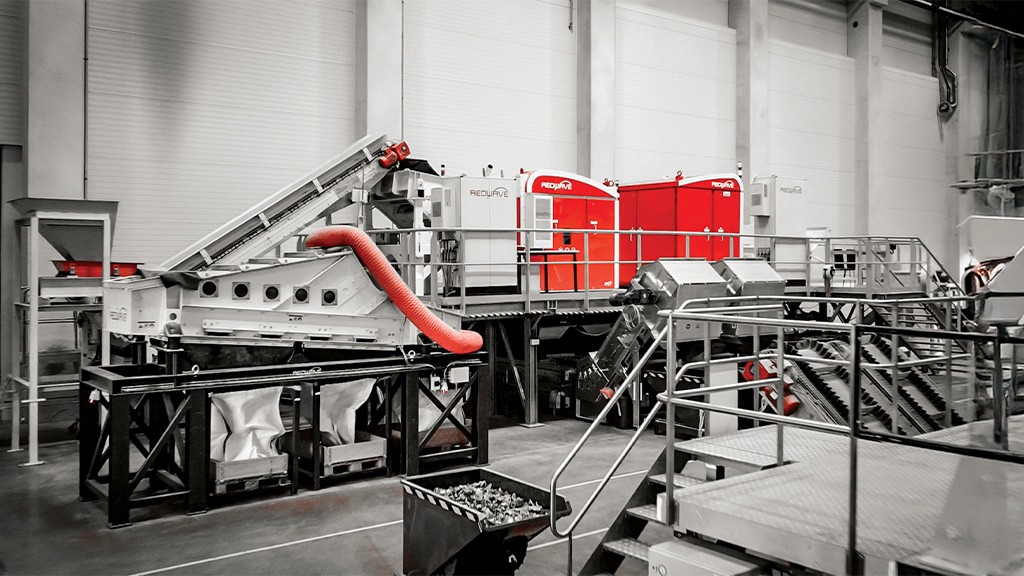
Non-ferrous recovery is entering a new phase as recyclers face growing pressure to deliver cleaner materials, recover more value domestically, and respond to rapidly shifting end-market requirements. Advances in sensor-based sorting, artificial intelligence, and material characterization are redefining how facilities approach non-ferrous processing, particularly within aluminum streams.
For REDWAVE, an Austria-based manufacturer of sensor-based sorting systems, current development efforts reflect broader industry shifts toward higher-purity outputs and more localized material processing.
Domestic processing drives demand for better sorting
One of the most significant drivers influencing non-ferrous recovery today is a global push to retain critical materials within regional markets rather than exporting mixed scrap streams.
"There's currently a little bit of a shift in the market," says Julian Tauterer, COO of REDWAVE USA. "More and more countries see it as more valuable to keep the materials and especially the non-ferrous metals within their own countries."
"For example, in Europe, there are currently laws being passed that no non-ferrous scrap can be exported anymore," says Tauterer. "The U.S. is also talking about such laws. Overall, the [future] strategy, as I see it, is to keep the resources inside the country, so as not to be dependent on other countries supplying those goods."
As export pathways tighten and domestic processors demand cleaner feedstock, recyclers can no longer rely on shipping mixed material overseas for manual sorting. Instead, facilities must produce higher-quality fractions earlier in the processing chain.
This shift is increasing demand for advanced sorting technologies capable of separating metals into more precisely defined categories and alloy groups.
Aluminum moves to the forefront
While high-value heavy metals such as copper and brass historically dominated development priorities, market dynamics are shifting. Aluminum, which accounts for the majority of non-ferrous volume, has become a central focus for recyclers and technology innovators.
"Aluminum makes up 80 to 85 percent of all the non-ferrous metals," says Tauterer. "The demand for aluminum is growing each year, so our current focus lies on further developing our existing hardware and software in order to produce different grades of aluminum."
Industry attention is increasingly focused on upgrading shredded aluminum streams into higher-value products. Recent discussions across the recycling sector — including the introduction of the Vesper aluminum scrap specification — highlight growing demand for separating wrought aluminum from mixed shredded fractions to prevent material downcycling.
Rather than simply recovering aluminum as a single commodity stream, recyclers are seeking separation by alloy and application.
"In the future, we will be talking about sorting individual aluminum series," he says, noting that separating cast from wrought aluminum represents an immediate priority before progressing toward more detailed alloy classification.
Advancing XRF sorting with AI
To address these requirements, REDWAVE is expanding the capabilities of its X-ray fluorescence (XRF) sorting systems, a technology widely used for elemental analysis in non-ferrous recovery.
"We are currently working on improving our XRF sorting technology," Tauterer says. "Especially in heavy metals, you have a very good identification and sorting method, and we are upgrading the sensor to also do more different sorting tasks inside the aluminum fraction."
Artificial intelligence plays a role in this development. Traditional XRF sorting identifies metals by analyzing specific spectral peaks associated with individual elements. REDWAVE's next step involves evaluating the entire spectral signature rather than isolated data points.
"What we are trying to do in the future is not look at single peaks, but look at the whole spectrum itself and compare whole spectrums with each other," Tauterer explains.
Alongside spectral analysis, visual AI is also being explored to recognize material characteristics based on appearance.
The goal is not to change the fundamental sorting process, but to improve identification accuracy and expand the number of recoverable product grades.
Automation reshapes operations
Beyond detection improvements, automation is influencing how recycling facilities manage non-ferrous lines overall. Data analysis and feedstock characterization are becoming as important as the sorting equipment itself.
"It is very essential to know what you put into the machine to have the best possible efficiency and purity," says Tauterer. "If you know your feed very well, then you can adjust either the sorting equipment or the pre-processing better."
AI applications are also expanding into plant optimization and maintenance planning.
"AI will play a huge role in plant optimization and also in maintenance," he says. "It can detect preventive maintenance needs or even decide which products are most efficient to create based on market conditions."
Tackling complex material streams
Despite technological advances, challenges remain, particularly in aluminum recovery, where industry specifications are still evolving.
"The industry itself is still figuring out what types of products they need," Tauterer says. "There are certain alloy groups which are currently difficult to detect and difficult to separate, and there is currently no perfect solution found yet."
At the same time, recyclers are beginning to reconsider material streams that were historically overlooked. Fine fractions, once screened out and landfilled, represent an emerging opportunity.
"A lot of customers screen out everything below half an inch and just throw it in the landfill," he says. "There's a lot of valuable material in this fraction which can be recovered and should be recovered."
Recovering these smaller particles could unlock additional revenue while reducing disposal costs.
Flexibility becomes the defining investment strategy
As technology, markets, and material flows continue to evolve, flexibility is emerging as the most important consideration for recyclers planning new investments.
"I think it's very important for the scrapyard of the future to have the most versatile equipment as possible," Tauterer says. "Requirements from five years ago differ a lot from requirements today, and they will continue to change."
Rather than designing systems for a single commodity or specification, Tauterer says operators need adaptable platforms to respond to price fluctuations, new product demands, and emerging recycling applications.
"Flexibility will be the key in the future to [keep] up with the demands," he says.
With AI integration accelerating, aluminum recovery expanding, and finer material streams gaining attention, non-ferrous processing is moving toward a more data-driven and precision-focused future where sorting technology plays an increasingly central role in maximizing resource recovery.
This article originally appeared in the March/April 2026 issue of Recycling Product News.