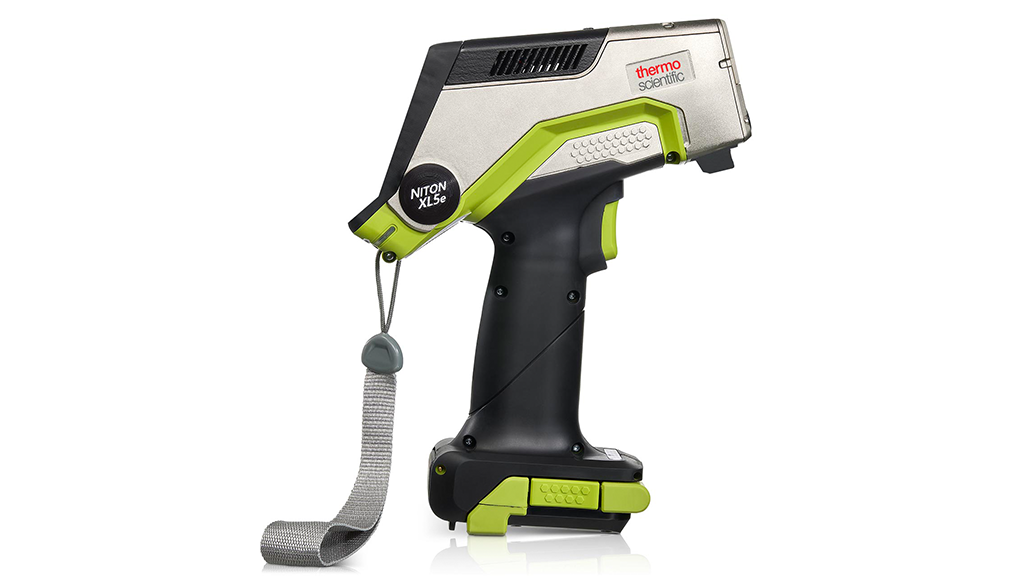

Optical emission spectrometers for metal identification
OES delivers accuracy and precision with low detection limits
Optical emission spectrometers are increasingly being used to verify chemistry, reduce downgrades, and support higher value recovery in metal recycling applications. Optical emission spectroscopy, or OES, can analyze a wide range of elements while delivering accuracy, precision, and low detection limits.
Tools like Hitachi's OE720 and OE750 instruments are now common sights in yards that handle mixed scrap. Below is a look at how this type of analysis technology addresses the challenges facing modern scrap processors and recycling facilities today.
Dealing with huge scrap turnover
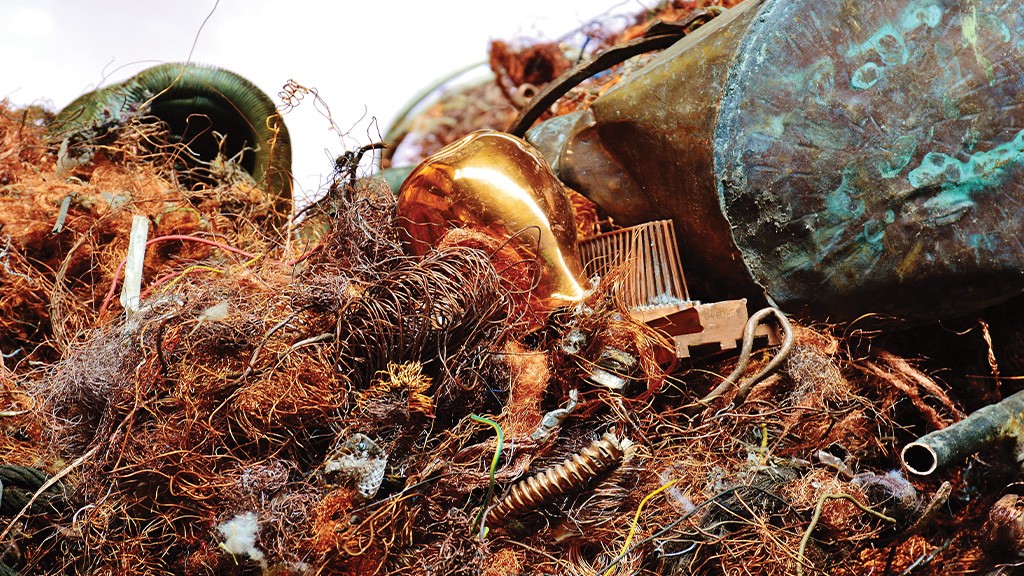
Recycling facilities and scrapyards have to sort through a huge amount of ferrous and non-ferrous scrap. Up to tens of thousands of tons per week is typical for large facilities. The ability to rapidly sort and verify the exact composition of each piece of scrap is essential to keep up with the huge volumes constantly arriving at the facility.
The OE720 and OE750 are built for quick decision-making in the yard. Each test is completed in seconds, and fast start-up times help operators avoid lost production at the beginning of a shift, keeping material moving from the moment work begins.
Identify the exact composition
Traditionally, handheld XRF analyzers have been used to separate and sort scrap metals. However, as demand within the foundry sector grows, OES analysis technology is becoming increasingly important to ensure recycled aluminum, copper, and steel meet stringent specifications to be suitable for melt feedstocks.
However, not all OES instruments are the same. The OE series utilizes CMOS detector technology, coupled with a LightWing optic design, which enables the detection of the entire range of elements within the ppm range necessary to meet today's industry demands with a single instrument.
Meeting tough regulations
Quality may be the driving force behind high-end analysis, but it's not the only challenge faced by metal recycling operations. To compete in today's landscape and qualify as a supplier for refineries, facilities must comply with an increasing range of environmental, safety, radioactivity, and transportation regulations.
The OE series helps facilities meet these by ensuring results are reliable and retrievable after analysis. Connectivity to Hitachi's cloud-based data management system ExTOPE Connect allows results to be stored and accessed when needed, which can be especially useful during audits.
Analyze copper, aluminum, and more
To get the most out of recycled metal, it is important to analyze tramp and trace elements within different base metals. A CMOS detector can detect key elements within copper, aluminum, and steel matrices. It can determine phosphorus at very low limits in near eutectic and hypereutectic aluminum-silicon alloys. The OE750 model can analyze nitrogen in steel, hydrogen and oxygen in titanium, and oxygen in copper. The OE720 spark spectrometer covers the full range of non-gaseous elements in metals, while the OE750 adds gas analysis.
This article originally appeared in the January/February 2026 issue of Recycling Product News.
Company info

2 Technology Park Dr., 2nd Floor
Westford, MA
US, 01886
Website:
hha.hitachi-hightech.com/en