
Issues and opportunities reshaping Canada’s construction waste industry
How regulatory reforms, strategic investments, and evolving political priorities will impact C&D waste recycling
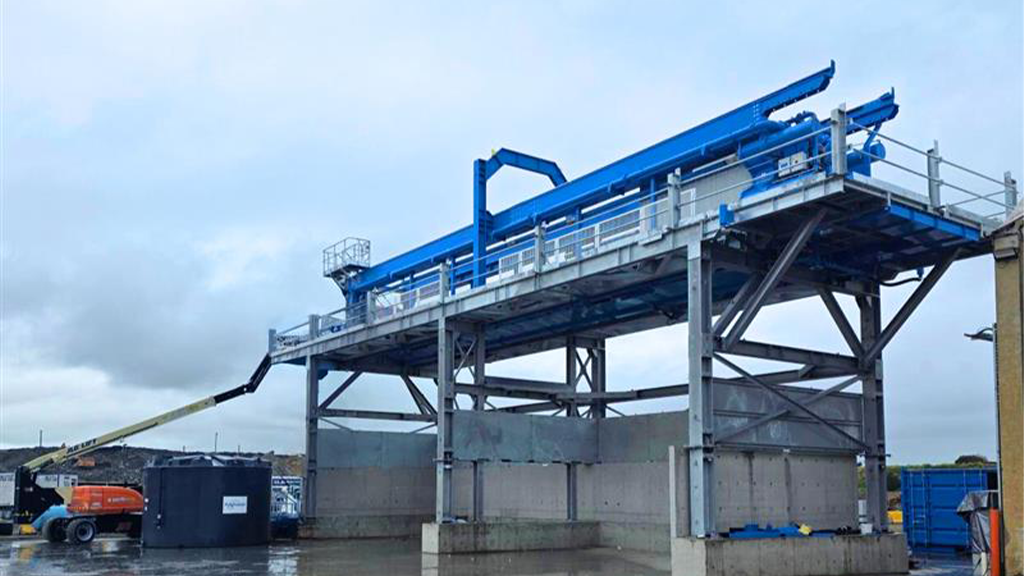
Following the Canadian federal election last April, it was predicted that there would be a significant impact on the construction and demolition (C&D) waste recycling sector. Regulatory reform, strategic investments, and shifting political priorities are widely expected to influence how material is processed and recovered across Canada.
Against that backdrop, this conversation draws on perspectives from across the industry to examine what those changes could mean in practice. CDE Group, a global manufacturer of wet processing equipment, provides technical context alongside broader industry insight from Ken Singer, publisher of Recycling Product News; Deanna Woods, director of people and product development at GRT; and Adrian Convery, business development manager at CDE.
CDE: Ken, in your role with two key industry publications, Heavy Equipment Guide and Recycling Product News, you are well-positioned to take the pulse of the industry. What are the biggest trends currently shaping Canada's construction and demolition industry, and how are businesses adapting?
Ken Singer: The Canadian construction and demolition recycling industry is undergoing a significant transformation, driven by technological advancements, regulatory changes, and a growing emphasis on sustainability. In parallel, the sorting and separation of C&D materials is growing alongside the off-site processing of these materials, which are aided by advancements in specialized equipment that enhance both the purity and value of recovered materials.
Canada has embraced a transition toward the circular economy at all levels of government by supporting a variety of emerging and developing sectors like selective demolition — dismantling buildings to preserve valuable materials for reuse and recycling.
Green building certifications, such as LEED, are encouraging the use of recycled and reclaimed materials in construction, promoting more sustainable building practices. The integration of recycled materials, use of recycled concrete, aggregates, reclaimed timber, and recycled steel is becoming more common in construction, reducing the reliance on virgin materials.
Excess soil management is another critical issue in Canada, and a growing C&D opportunity throughout the country. Ontario, for instance, recently introduced an excess soil regulation under the province's Environmental Protection Act that mandates the tracking, testing, and appropriate reuse, recycling, or compliant disposal of excess soils from construction sites.
Similar regulations are being discussed and are moving toward adoption in other provinces. Under this regulation, contractors and recyclers must now test soils for contamination, develop reuse strategies, and track soil movements via documentation like soil passports. This adds complexity, but also presents a significant opportunity for equipment and process manufacturers and recyclers looking to diversify their operations.
The current transportation and disposal of excess soils, especially if they're contaminated, is expensive and increasingly tightly regulated. Soil must often go to licensed receivers, with fees for tipping and handling the material, and ever-increasing transportation costs. There is debate on how these higher operational costs and the need for better material management planning early in project design stages will affect the construction industry, especially in a period where costs are increasing, margins are diminishing, and investment confidence is slowing. This is due to external factors, such as tariffs, which are putting pressure on the construction industry.
Some contractors are offering soil brokerage and logistical services that integrate with traditional C&D recycling operations. New revenue streams and services are being developed to manage soils sustainably and, hopefully, profitably. Many large excavation contractors are seeing this as a potential area in which to diversify their operations and services they offer to site owners.
Rising costs of landfill tipping fees continue to propel the recycling and diversion of C&D materials from the waste stream. On-site demolition, through modernized equipment and more integrated planning, is becoming faster, safer, and more efficient.
CDE: Adrian, could you elaborate on what you are currently seeing in Canada?
Adrian Convery: It's really interesting at the moment, with the Liberal government winning the latest election and deciding to keep the industrial carbon pricing. I can see that this is going to drive up the pricing of heavy-emitting projects like the cement industry, but it's going to incentivize emissions-reducing projects like recycled aggregates.
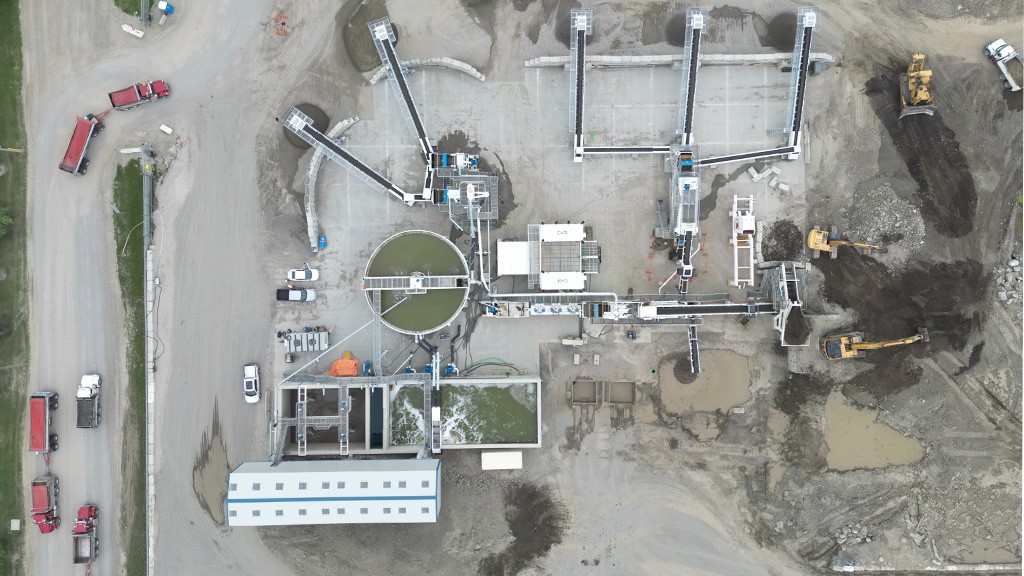
We have a project in Western Canada where circularity is a big theme, and they're looking at how they can reuse as much material as possible. Historically, on recycling sites like these, the clay has been the biggest waste fraction, and finding a home for how we can reuse that was very important. It's now found a use as a fly ash alternative in cement production.
CDE: Deanna, GRT is Canada's first resource regeneration facility. As a leader in this space, could you provide an overview of what GRT is doing to recover value from construction and demolition waste?
Deanna Woods: Every year, millions of tonnes of excavated soil are removed from construction sites and treated as waste. Resource regeneration turns this overlooked stream into a new supply chain: high-quality materials (we call it Regenerock) recovered through soil washing and reuse, not extraction.
By recovering usable resources from excess and unwanted soils, GRT cuts down on landfill use, reduces emissions from long-haul transport, and avoids the carbon cost of quarrying virgin rock. We make infrastructure circular. We give builders and governments a real way to meet climate and procurement goals, on time and on budget.
CDE: From your perspective, operating a waste recycling business, what are the key drivers for companies to shift from traditional disposal to more circular or sustainable C&D practices?
DW: The biggest driver is financial: the economics have to make sense for companies to change long-standing habits. If circular solutions can be cost-competitive or offer savings, adoption becomes much easier. Simplicity matters too; if the process is complicated or disruptive to existing workflows, uptake slows. At the same time, there's a broader societal shift underway as people recognize that our current "take-make-dispose" model is unsustainable.
The growing awareness that we can't keep extracting new resources while discarding old ones is pushing both the industry and the public to look for systems that recover, reuse, and regenerate materials instead of sending them to landfill.
CDE: What are the most common pain points for construction firms when it comes to managing demolition materials and waste?
DW: Rising soil disposal costs, limited landfill capacity, and the shortage of available greenfield sites in urban areas are major pressure points for construction firms. Regulatory shifts such as mandates for deconstruction over demolition can also create challenges; while the intent is positive, these policies can impose significant financial burdens if deconstruction businesses aren't given the support needed to scale up and compete on cost.
On the solutions side, enabling resource regeneration facilities in urban areas can help ease these pressures by reducing soil disposal costs and providing a low-cost, reliable supply of clean construction aggregates, creating a more sustainable and predictable materials cycle for the industry.
CDE: Ken, how is the growing focus on ESG (Environmental, Social, and Governance) reporting influencing decision-making in the C&D sector?
KS: Companies are under growing pressure to reduce the environmental impact of their operations. Waste diversion targets, often tied to ESG reporting, are leading to higher recycling rates, especially in large-scale projects. Municipalities and clients are preferring demolition contractors with strong waste management plans that emphasize recycling and reuse. ESG policies are pushing builders to source materials with recycled content, such as reclaimed wood, recycled aggregates, steel, and excess soils.
Firms are now required to report ESG performance more frequently as part of regulatory or investor disclosures. For C&D recyclers, this includes several key metrics such as the volume of materials diverted from landfill, the use of recycled inputs in construction, and emissions from waste transport and equipment.
We have also heard of possible carbon offsets. Companies lacking verified data on recycling rates and emissions may lose out on tendered bids. Public infrastructure projects across Canada now include ESG criteria in tender evaluations. Firms with poor environmental records or those lacking transparency are now often disqualified or scored lower.
CDE: Deanna, perhaps you could share an operator's view on this as well?
DW: While we haven't necessarily seen ESG commitments become a primary driver of decision-making in the C&D sector — most choices are still guided by economics — they have helped to raise awareness of sustainability and made circular economy concepts more accessible. This broader recognition benefits companies like GRT, as it lays the groundwork for systemic change. ESG is one tool among many that can help shift the paradigm toward a resource economy built on maximizing the value of materials already in circulation, rather than relying solely on virgin extraction.
CDE: How would you describe the current regulatory landscape around C&D waste in Canada, and what impact is it having on project planning and execution?
DW: The Canadian — and provincial — regulatory landscape is both a challenge and an opportunity. Most existing rules were developed without a circular economy in mind, so in the eyes of the law, "waste" remains waste, even if it can be recovered into a high-quality product. This limits reuse in a legal sense and slows innovation.
Product specifications also need to evolve, expanding how we define "raw materials" to include recovered resources. Without these changes, efforts to create a more sustainable built environment will be constrained — with knock-on effects for construction costs, housing affordability, and social equity.
CDE: Ken, looking ahead, what are your predictions for the future of Canada's C&D industry over the next 5 to 10 years, and what should businesses do now to prepare?
KS: Over the next 5 to 10 years, C&D recycling will become central to a fully circular construction industry in Canada. Material recovery will continue to expand rapidly. Reclaimed wood, recycled aggregates, and steel will be used at scale in new builds, reducing reliance on virgin materials. Construction products with recycled content will become more normative, driven by regulation. Increased adoption of equipment technology such as automation, AI, and data analytics will transform recycling operations. AI-driven robotic sorters will become more common, capable of recognizing and extracting valuable materials from mixed waste with higher precision.
A move toward stricter regulations and incentives by governments will dictate minimum recycling rates and require deconstruction plans for large developments. Green building codes will evolve to require specific percentages of recycled or reused materials. Tax incentives, carbon credits, and grants for firms that prioritize sustainable materials and recycling processes will propel growth. Landfill bans on certain recyclable construction materials, like untreated wood or concrete, may become more widespread. The success of the industry moving forward will be increased if industry advocacy helps inform and shape government regulation from the bottom up — not top down.
I would also expect to see more standardization in processes, certifications, and reporting, especially around emissions, diversion rates, and material quality. Skilled labour shortages and lack of training will no doubt present a persistent challenge. The materials processed in C&D recycling must also have an end market that is financially viable and can be profitable for the producer.
CDE: Adrian, you work with operators in this market daily. How do you see the industry landscape evolving into 2026?
AC: Last year, aggregate demand was down. Looking forward to 2026 and beyond, it's widely believed that aggregate demand will come back, and it will continue to grow from there. The sustainable and efficient way to source these aggregates is to have production close to the market. Recycling facilities, as we deliver at CDE, allow for this because they work on a smaller footprint than a new mining site.
I'd also like to see the permitting process become more streamlined. At the moment, all these soils are being sent to landfill when they can be used in infrastructure projects around the country. At the same time, this is still creating a high demand for primary aggregates, especially in projects where they're not needed.
This article originally appeared in the January/February 2026 issue of Recycling Product News.
Company info

430 Marti Drive
Dallas Fort Worth, TX
US, 76033
Website:
cdeglobal.com
Phone number:
682-350-0300