

A recap of global paper industry trends
How declining demand and higher operating costs reshaped production in 2025
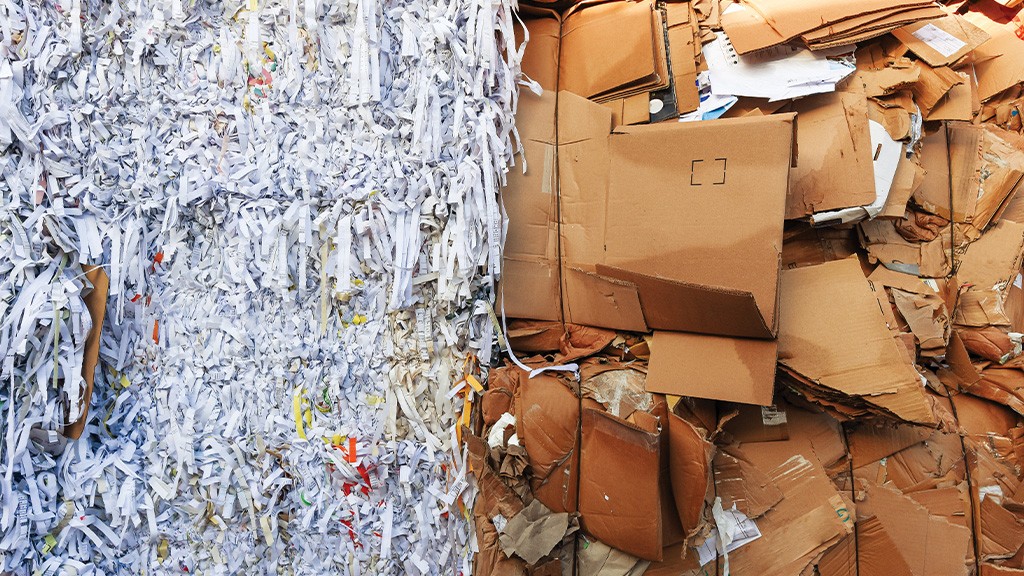
The global paper industry has faced ongoing structural changes as declining demand and higher operating costs have reshaped production. The consumption of newsprint, uncoated, and certain coated papers continued to decline, driven by the shift to digital formats in publishing, advertising, and corporate communications. This decline reduced operating rates, particularly at older mills dedicated to graphic papers, and exerted significant pressure on profit margins.
Rising energy, labour, and maintenance costs further constrained operations. Many aging facilities require significant capital investment to modernize equipment or meet environmental requirements.
Permanent mill closures
In several cases, expected returns did not justify upgrades, prompting operators to pursue permanent closures. This dynamic has been most evident at standalone mills lacking integrated pulp supply or downstream packaging operations.
In May 2025, Greif closed its paperboard mill in Los Angeles, California, following increased operating costs and limited integration opportunities. Similarly, in June last year, Metsa Group closed its Tako mill in Finland as part of a broader cost and profitability strategy. Such assets typically face higher unit costs, limited production flexibility, and weaker margins, leaving them more exposed to declining demand and rising costs.
By contrast, integrated operations combining pulp, paper, and packaging benefitted from internal fibre supply, scale efficiencies, and greater resilience to market fluctuations. Reflecting these conditions, Confederation of European Paper Industries (CEPI) noted that structural overcapacity in graphic papers remains a core challenge in Europe, particularly where declining demand coincides with rising energy and compliance costs. Closures have been concentrated at older, less efficient assets.
Regulatory factors
Trade and regulatory factors further increased cost pressures. U.S. tariffs on chemicals, machinery, spare parts, and selected paper inputs raised production costs and constrained sourcing options. According to the American Forest & Paper Association (AF&PA), additional trade-related input costs reduce competitiveness and limit manufacturers' ability to reinvest in aging assets, especially under weak demand conditions.
Extended Producer Responsibility (EPR) schemes implemented across the EU, UK, and parts of the U.S. shifted financial responsibility for the collection, recycling, and reporting of paper and packaging products to producers, affecting high-volume mills.
Regulatory requirements also expanded under the EU Deforestation Regulation (EUDR), which introduced fibre-sourcing due diligence obligations for mills supplying EU markets. While not direct drivers of closures, these measures increased administrative and compliance workloads. Capital allocation trends accelerated mill exits.
Producers increasingly redirected investment toward packaging grades, specialty papers, and recycled fibre, leaving low-margin commodity assets exposed. Environmental compliance costs, emissions obligations, and competition from subsidized imports further intensified rationalization.
AF&PA highlighted that capital deployment is increasingly focused on segments with stronger demand visibility and more stable margins, particularly packaging and fibre-based products. Closures across regions illustrate these trends.
Other notable closures
In North America, International Paper closed its Savannah and Riceboro containerboard mills in Georgia, removing approximately one million net tons of annual capacity and affecting roughly 1,100 jobs. Domtar permanently shut the Crofton mill in Canada, Georgia-Pacific closed its Memphis facility, Smurfit WestRock shuttered a California plant, and White Birch Papers ceased operations at FF Soucy in Quebec.
In Europe, closures linked to graphic paper overcapacity included UPM's Ettringen mill in Germany and Kaukas mill in Finland, Sappi's PM2 line in Finland, Feldmuehle in Germany, and Metsä Group's Tako mill in Finland.
In Latin America, Eldorado Brasil closed a pulp mill. In the Asia-Pacific region, closures were more selective, with Oji Fibre Solutions ending paper production at its Kinleith mill in New Zealand to focus on pulp amid rising energy costs and competitive pressures. Overall, closures reflected declining demand for print papers, rising operating and compliance costs, aging assets, and strategic capital reallocation toward higher-value segments.
EPR and EUDR added operational complexity, while tariffs contributed incremental cost pressures. The global industry is increasingly concentrated in modern, efficient facilities focused on packaging, specialty papers, and recycled fibre as legacy print capacity continues to exit.
New mills and recycling infrastructure in 2025
Alongside closures, investment in new production and recycling capacity continued across multiple regions. Capital focused on packaging grades, specialty papers, fluff pulp, and material recovery, reflecting market demand and regulatory drivers. Rising demand for sustainable packaging — supported by e-commerce, food and beverage consumption, and healthcare products — drove investment in corrugated, paperboard, and recyclable packaging facilities. Producers expanded output to offset declining print volumes with higher-margin products.
Circular economy policies and recycled fibre requirements encouraged the development of new Material Recovery Facilities (MRFs) and upgrades to existing plants. AI-assisted sorting, robotics, and automation improved fibre quality, throughput, and compliance with recycling mandates. EPR frameworks reinforced these investments by increasing demand for higher-quality recovered fibre.
Fluff pulp and tissue capacity expanded in Brazil, Europe, and China to meet demand for hygiene and absorbent products, with projects from Suzano, Ence, and Stora Enso. Packaging and specialty paper expansions progressed in Europe, China, and India, including corrugated and kraft projects from Rengo in Germany, Mondi's PM10 kraft line, Saha & Bright in India, and Guangxi Qiaoyu Paper in China.
MRF developments and recycling upgrades advanced across the U.S., UK, Australia, and Europe, including projects by Shoalhaven Council, Caerphilly and Bristol Waste Company, and Westchester MRF.
Facilities incorporated robotics-enabled systems and enhanced sorting lines to raise recovery efficiency and fibre quality. These investments reflect the industry's strategic shift toward packaging, specialty papers, and circular economy infrastructure. Global paper production is increasingly focused on modern, efficient, and environmentally compliant facilities, even as older graphic paper capacity continues to phase out.
This article originally appeared in the January/February 2026 issue of Recycling Product News.