

Leading a legacy at Rypac Metal Recycling
Dan Lundquist shows how the next generation is rewriting the rules
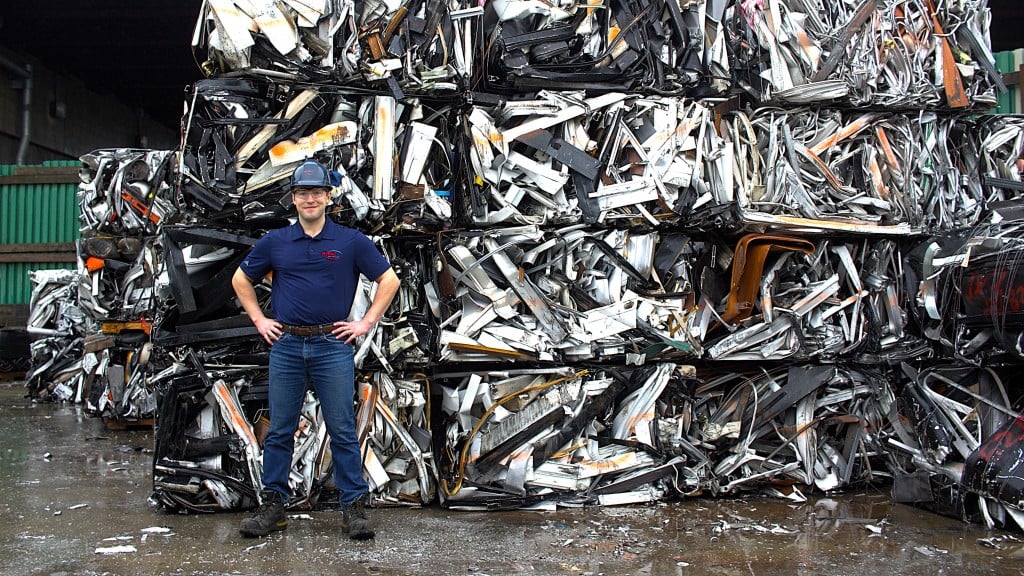
Rypac Metal Recycling occupies a familiar place in the industrial landscape, quietly processing materials that fuel the manufacturing process. For nearly 50 years, the family-owned company in Surrey, B.C., has built its reputation on consistency, technical knowledge, and long-term relationships across Western Canada.
Today, Rypac is entering a new chapter. This past May, Dan Lundquist assumed the role of president, becoming the third generation to lead the business. At 30 years old, Lundquist represents a growing cohort of younger leaders stepping into ownership and executive roles across the recycling industry. His leadership reflects a balance between preserving the fundamentals that built the company and preparing it for an increasingly complex, technology-driven future. Trade uncertainty, new material streams, and rising expectations for professionalism and stewardship shape this rapidly evolving industry.
A path back to the yard
Like many multi-generational recyclers, Lundquist's first exposure to the industry came early and informally. "I began in a yard at a very young age with a broom in hand, sweeping the ground," he says.
Still, joining the family business wasn't a given. "I went to university, then . . . law school. I thought I would be a lawyer. I started practicing and knew that it wasn't going to be for me."
When Craig Merritt, the second-generation owner, began to consider retirement and discussed potentially selling Rypac, the career pathway Lundquist had imagined no longer seemed like the right option.
"I completed my articles. I got called to the bar, and then I decided to come back to the scrapyard," says Lundquist. "I wanted to come back and see the legacy of my family continue."
Lundquist returned to the yard, working alongside Merritt to reacquaint himself with the business from the ground up.
Built on aluminum and adaptation
Rypac's story began in 1976, when Lundquist's grandfather, Roy Merritt, founded the company on the same Surrey site it occupies today.
"We began as a secondary aluminum foundry, the first one in Western Canada," says Lundquist.
The company was built through a collective family effort. Roy mortgaged the family home to get the business started. Craig, along with his siblings Brad and Corinne, were involved in building the business from the start. "It was all hands on deck helping, and it paid off," notes Lundquist.
A defining shift came in 2004, when Rypac exited smelting operations entirely.
"We shut down the furnace and went strictly into handling scrap and recycling," he says.
That pivot proved critical, enabling the company to focus on processing, upgrading, and trading materials rather than manufacturing them. While Rypac no longer smelts metal on site, aluminum remains central to the business.
"We work closely with the local manufacturing industry," Lundquist explains. "Not only do we service them on the scrap side, but we are also a distributor of primary and secondary alloys. It's a nice synergy."
The result is a circular relationship: Rypac removes scrap from manufacturers while supplying ingots back into their production lines.
A non-ferrous specialist
Today, Rypac is firmly positioned as a non-ferrous specialist serving retail, commercial, and dealer accounts throughout Western Canada.
"I like to say that we are non-ferrous people," Lundquist says. "We specialize in non-ferrous processing."
The company's focus is on producing high-quality, foundry-grade material. "We pride ourselves on being able to prepare high-quality packages for direct sale to consumers," says Lundquist. "We like to meet the specs and the requirements of our customers and exceed expectations in quality. [We are] continually trying to find new and innovative ways to handle material and capture value that was otherwise unavailable."
Rypac's differentiation comes from its ability to extract value from complexity, particularly mixed non-ferrous loads. That capability, Lundquist emphasizes, is rooted less in machinery and technology than in people.
"Our people are very well trained," he says. "Everyone in the yard knows how to identify different alloys and capture that value. At the end of the day, it always comes down to our people."
Using the right tools, the right way
While advanced sorting technologies dominate industry headlines, Lundquist takes a pragmatic view of innovation.
"We don't run a shredder," he says. "Our technology is not cutting-edge. It's analyzers that have been around for decades."
What matters, he explains, is not novelty but execution. "Training our team on how to assess mixed material and process it effectively, that's where the value is created."
This disciplined approach allows Rypac to upgrade material efficiently and share that value with suppliers. "We're able to provide a premium to our suppliers because we can process material in ways others can't," Lundquist says.
That efficiency also strengthens long-term relationships, reinforcing Rypac's role as a trusted partner rather than a transactional buyer.
Navigating uncertainty and responsibility
Like many Canadian recyclers, Rypac is operating amid significant external uncertainty. Trade policy, particularly tariffs and shifting U.S. relationships, has become a dominant concern.
"It's difficult to make long-term decisions," says Lundquist. "Not just around selling, but around where to invest and which customers those investments will serve."
This uncertainty has pushed recyclers into a role that increasingly blends material processing with market guidance. "Suppliers rely on us to stay informed and help them understand how policy changes could impact their business," explains Lundquist.
At the same time, the industry continues to contend with public perception challenges tied to theft-driven material flows such as catalytic converters and copper wire. Lundquist says Rypac places a strong emphasis on community responsibility.
"We always try to . . . be a good steward of the communities and the markets that we operate within. It's very, very important to us that we're seen as an ally and partner of local government, nonprofit agencies, and the community at large," he emphasizes. "The service we provide is essential."
That service, he notes, keeps metal out of landfills, reduces emissions, and reduces the need for virgin mining. "We're capturing value from material that would otherwise be a waste cost," he says.
Balancing progress and risk
Looking ahead, Lundquist sees both opportunity and complexity shaping the next decade of recycling.
"I think it's an incredibly exciting time to be part of this industry," he says. " All the technology that's coming out . . . seems to get more sophisticated each and every year. It is unlocking possibilities that were previously unthinkable."
For Rypac, future investment will focus on more precise separation, moving beyond broad alloy categories toward more rigid chemistries required by mills. "The specs are changing," says Lundquist. "It's up to us to adapt."
"We want to invest in sortation and processing technology that's going to allow us to take highly mixed loads and sort them, not just into general alloy categories, but specific alloys and specific chemistries that are required by the mills," Lundquist says.
At the same time, new material streams are introducing new risks. Lithium-ion batteries, in particular, are an industry-wide concern.
"There's not a metal recycler anywhere that hasn't heard of or seen someone affected by a lithium-ion battery fire," Lundquist says.
"Training is really important to make sure that staff are up to date on identification and risk factors to stop that material from entering the facility. Or if it does, handle it in the appropriate way."
E-waste presents similar challenges. "Not every facility has the systems expertise, people in place to handle it at scale," Lundquist says. "If we're not handling material efficiently . . . we're not doing our job. It's up to us to capture those resources, stop those resources from being wasted."
Leading change without losing the past
As a new president stepping into a long-established, family-run business, Lundquist is careful to separate meaningful progress from change made simply for the sake of novelty. In an industry where new technologies and ideas are constantly emerging, he believes leadership requires discernment as much as ambition.
"Not all change is progress," he says. "Just because you're doing something new doesn't mean you're doing something better."
That perspective is shaped, in part, by the depth of experience within the Rypac team itself. Many employees have spent decades with the company, and some worked alongside Lundquist when he was still a teenager loading containers in the yard. Leading a team with that level of institutional knowledge, Lundquist says, demands clarity, respect, and a practical understanding of how change affects day-to-day work.
Rather than pushing transformation from the top down, Lundquist focuses on outcomes. "The goal is to make things better and easier," he says. When a change genuinely improves efficiency, safety, or workflow, acceptance tends to follow naturally.
This emphasis on thoughtful evolution, embracing new opportunities while preserving practices that continue to work, also informs Lundquist's broader view of next-generation leadership in the recycling industry. As more young leaders step into roles once held by founders and long-time operators, he sees the challenge not as redesigning the sector, but as carrying forward its most effective lessons while adapting them to a changing landscape.
Building the next generation through CARI
Outside of his Rypac day job, Lundquist plays an active role in helping shape the industry as a Board Member and Chair of the Next Gen Committee for the Canadian Association of Recycling Industries (CARI).
He credits CARI president and CEO Jacqueline Lotzkar with revitalizing the organization. "She's added structure and a clear mission," he says.
The Next Gen committee focuses on creating networking and educational opportunities for the under-40 recyclers nationwide. "Millennials aren't the new kids on the block anymore," says Lundquist. "We're becoming the norm of the workforce."
The goal is to build a pipeline of future leaders for companies and the association. "We want to develop a group of talent within this country so we have future leaders of CARI lined up, future board members, and to provide that community [where] we can all come together and learn from each other."
A growing role for recycling in Canada's future
The timing of that work is significant, as economic pressures and policy shifts push Canada toward greater domestic manufacturing and stronger supply-chain resilience. Lundquist believes recyclers will play a central role in meeting that demand, particularly as manufacturers look for reliable, near-term sources of raw material.
"Manufacturing requires the materials we produce, and we're producing them right now."
Unlike traditional resource development, recycling can respond quickly to shifting market needs. While new mines require lengthy permitting, capital investment, and years of development before material reaches the market, recycling infrastructure can scale in far shorter timelines.
"It takes years to commission a new mine," says Lundquist. "It doesn't take years to commission a new recycling line."
That immediacy, he says, positions recyclers as a critical link in revitalizing Canadian manufacturing. It also underscores the need for a coordinated industry voice as policy discussions evolve.
Partnership as a guiding principle
That national role, Lundquist believes, ultimately comes down to how recyclers work with the partners closest to them: customers, suppliers, and manufacturers who rely on recycled material as a dependable input. For Rypac, collaboration is not just a value statement, but a practical strategy for navigating change.
"We see our customers and suppliers as partners," he says. "Partners in the work of taking what would otherwise be waste and converting it into new recycled materials for use in their manufacturing."
As material specifications tighten and new streams enter the recycling system, Lundquist sees Rypac's future as inseparable from the success of those partners. The company's approach is built around growing alongside them. Rypac strives to adapt processing capabilities, invest in expertise, and respond to evolving requirements without losing sight of the fundamentals that have sustained the business for decades.
"We want to adapt and grow with [those partners]," he says. "There's a lot we can improve through collaboration."
For Rypac, that philosophy reflects both its history and its path forward: a family business shaped by risk and resilience, now led by a new generation focused on precision, people, and a recycling industry that is no longer just waiting for the future.
This article originally appeared in the January/February 2026 issue of Recycling Product News.
Company info
11849 Tannery Rd
Surrey, BC
CA, V3V 3W8
Website:
rypacmetalrecycling.com
Phone number:
604-580-7471