
The tech-human connection for material handling safety
Modern equipment technology is transforming site safety with more proactive features and options than ever before
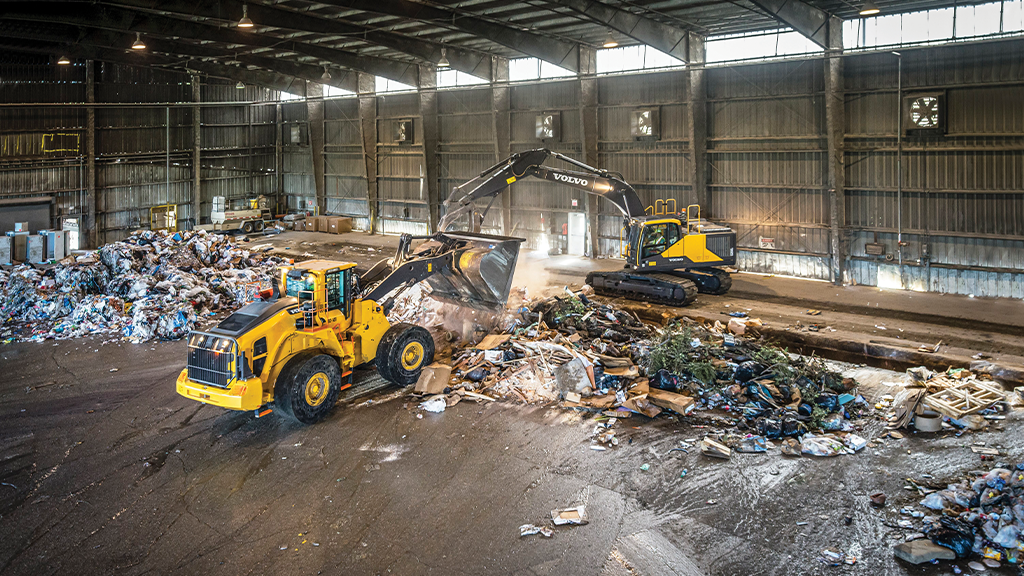
Waste and recycling facilities are busy, dynamic places where heavy equipment works nonstop to sort and move massive amounts of material. Worker safety is the top priority on these sites, and all that machine power comes with inherent risk.
Fortunately, modern equipment technology is transforming site safety with more proactive features and options than we've ever had before. These advancements, often integrated directly into the machines, are designed to give operators and managers the tools they need to mitigate risk and prevent accidents before they happen.
Here's a look at some of the latest technologies making operators and machines smarter, along with the practices your operators — and all team members — should follow to protect themselves, each other, and your assets.
Visibility to navigate a crowded site
In a busy scrapyard or a municipal waste transfer station, a material handler's job is to efficiently move or stack materials. However, a constant flow of trucks, ground workers, and other equipment can create a chaotic, high-risk environment. The sheer size of a material handling machine can create significant blind spots that people and other vehicles can easily enter.
This is where enhanced visibility technology becomes critical. Standard mirrors and even the most vigilant operator can't match the coverage provided by a full 360-degree view. Systems like Volvo Smart View address this by strategically placing multiple high-definition cameras on the machine. The feeds are stitched together to create a unified, bird's-eye view of the machine and its surroundings on a monitor inside the cab.
In some cases, this technology can go a step further and differentiate between humans and objects, which Volvo calls Smart View with Obstacle Detection. The aforementioned cameras, radar sensors, and deep learning technology work together to alert the operator with a real-time visual and audible warning if something or someone is in a designated danger zone. This is particularly helpful in a fast-paced environment where quick reactions make all the difference.
Addressing bad habits
While technology has advanced, a worksite's safety still relies heavily on human behaviour. For example, an operator might be operating too fast for the conditions, swinging the boom erratically, or using the machine in a way that puts unnecessary stress on its components. At a waste facility where productivity goals rank right up there with safety, unsafe habits can creep in over time without anyone noticing until it's too late.
Technology can also support safer operating habits, guiding operators with data and on-the-fly feedback. Many OEMs have made base-level telematics systems and/or assistive software standard, and these platforms have moved beyond just tracking machine hours and location. They're powerful safety tools that can monitor things like operator behaviour and utilization trends to provide valuable insights to site managers.
For example, an operator coaching app (like the one in Volvo Load Assist for wheel loaders) can provide real-time guidance for inefficient habits like excessive idling and harsh use of the throttle and brakes. This not only improves safety by encouraging smarter and smoother operation, but also boosts fuel efficiency and reduces machine wear and tear.
An advanced telematics system like Volvo ActiveCare Direct is another good example. Beyond tracking machine health, it provides a comprehensive report on operator habits and outcomes. The system can log instances of erratic movement, speeding, or other improper practices.
When it identifies a potential safety issue, the system notifies the customer and their dealer. This allows a manager to discuss the issue with the operator and provide training before a minor issue escalates into a major one.
By turning operator behaviour into actionable data, operator assist programs and telematics systems help create a culture of continuous improvement and accountability, leading to a safer and more efficient worksite.
Avoiding unexpected breakdowns
A daily walk-around inspection is your first line of defense against a mechanical failure that could lead to an accident. But in the rush to get going, it's easy for this step to get skipped.
Imagine an operator starting their shift on a material handler, eager to clear a backlog of materials. They bypass the walkaround to save time, unaware that a hydraulic hose has a small leak or that an attachment pin is starting to come loose. But a seemingly small issue like one of these can quickly become a major hazard.
A failing hydraulic line could cause the boom to drop unexpectedly, while a loose attachment pin could lead to a grappler or magnet detaching mid-lift. In a scrapyard where you're lifting heavy, sharp, and/or unstable objects, this could lead to a serious accident or significant damage. This is why a machine walkaround is non-negotiable.
At a minimum, a material handler walkaround should include:
Visual inspection: Check for any visible damage, leaks, or loose bolts. Look for signs of stress on the machine's frame.
Fluid levels: Verify that hydraulic fluid, engine oil, and coolant are at the proper levels.
Attachment integrity: Inspect the attachment for wear, and make sure all pins, locks, and couplers are secure.
Cab and visibility: Ensure that the cab is reasonably clean and free of loose objects. Check all mirrors and lights to make sure they're functional and properly adjusted.
Create a culture of safety
In the end, technology is only one part of the equation. While tools like 360-degree cameras, operator coaching software, and advanced telematics are invaluable, they're most effective when integrated into a strong culture of safety. This environment is built on a commitment from every single team member to prioritize safety above all else. It's about empowering everyone with the knowledge, training, and equipment they need to do their jobs safely.
For contractors and facility managers, this means investing in the latest equipment technology and ensuring that operators are thoroughly trained on how to use it. It also means fostering an environment where a walkaround is never rushed and where reporting a safety concern is encouraged and acted upon immediately. For operators, it means taking ownership of their safety and the safety of those around them and understanding that a few minutes of precaution can prevent a lifetime of regret.
The waste and recycling industry is always evolving, and so are the tools we use to keep it safe. By embracing technology and building a safety-first culture into every part of the job, we can help ensure that everyone gets home safe at the end of the day.
This article originally appeared in the November/December 2026 issue of Recycling Product News.