
Visia transforms recycling with advanced hazard detection and real-time insights
Optimizing operations and protecting workers with AI-powered material tracking
In the world of recycling, hazards are often hidden in plain sight. Lithium-ion batteries, pressurized tanks, and other dangerous materials can slip through manual sorting, triggering thermal events, fires, and operational downtime. As material streams become increasingly more complex and regulatory scrutiny intensifies, traditional sorting and reporting methods can no longer provide the speed, accuracy, or actionable insights operators need to manage risk and optimize operations.
Enter Visia, an innovative technology company driven by a passion for transforming recycling operations. With AI-powered X-ray and machine learning systems, Visia is equipping facilities to detect hazards, improve throughput, and unlock real-time operational insights, all while safeguarding workers and valuable resources.
"I think the thing that really excites us is [there is] an opportunity for us to . . . play a part in redirecting these critical materials where they belong," says Raghav Mecheri, Visia founder and CEO.
How it all began
Visia's origin story began as a typical college experiment. "We were 19-year-olds in engineering and design at Columbia, and we had no idea how recycling really worked," recalls Mecheri.
The team's first project was an AI-powered trash can: a self-sorting consumer receptacle that could identify materials by using cameras and drop them into the correct bin. While the device itself wasn't commercially viable, the experiment sparked a fascination with the industrial side of recycling.
Over the course of a year and a half, they connected with operators, studied facility workflows, and learned that the biggest challenge in recycling was unpredictability: what came in and what went out. That insight became Visia's mission.
Today, the company deploys imaging systems, including cameras, X-rays, and CT scanners, paired with machine learning models to detect hazards, analyze material streams, and provide real-time operational insights.
Building on that early curiosity, Visia turned insight into impact. The team applied their understanding of material unpredictability to create AI-powered systems that detect hazards, streamline workflows, and give operators real-time control over their facilities. These innovations set the stage for Visia's first major deployments.
Case Study 1: Innovation in hazard detection
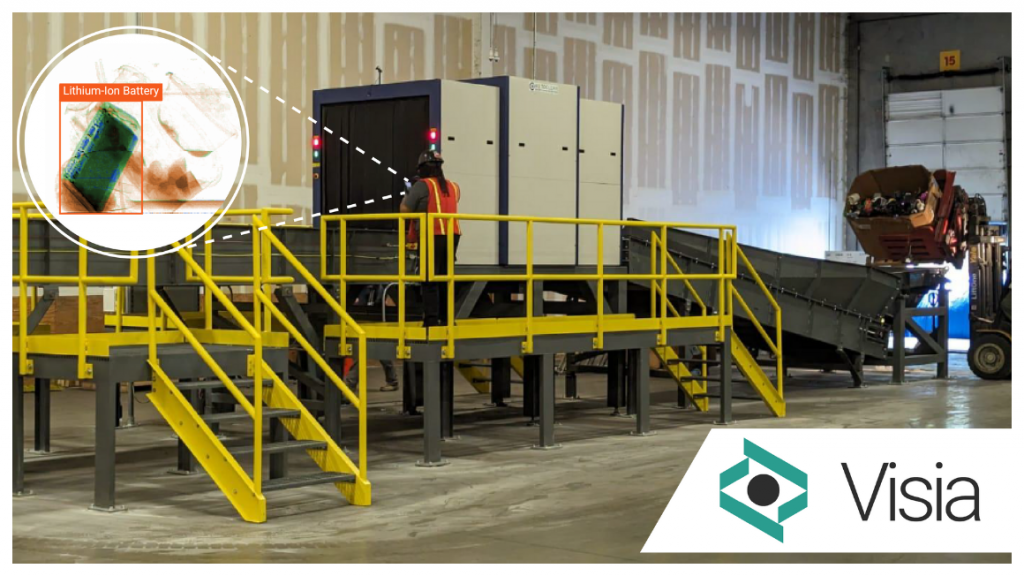
After a battery fire destroyed its facility, Rumpke Recycling needed a proactive solution. Relying on manual sorting left hazardous items undetected, exposing both personnel and machinery to potential harm. The solution came in the form of Visia's AI-powered X-ray system, installed on Rumpke's pre-sort line.
The system uses machine learning to automatically identify hazardous items, including lithium-ion batteries and gas tanks, through dense piles of materials. A mounted laser pointer alerts sorters to the exact location of flagged items, enabling precise, targeted removal.
Rumpke's operations team now accesses real-time data through Visia's dashboard, replacing manual audits with continuous insight. The system learns and improves over time, adapting to the facility's evolving material stream. Since implementing the technology, Rumpke has detected and removed hazardous items with zero shredder fires, demonstrating the transformative potential of AI in high-risk operations.
Case Study 2: Scaling insights for C&D recycling
Visia's impact isn't limited to hazardous item detection. In construction and demolition (C&D) recycling, reporting and compliance pose major challenges. Premier Recycle, a leading C&D recycler in the Bay Area, needed a scalable solution to deliver accurate diversion data across multiple job sites without slowing operations or creating administrative burdens.
Previously, teams relied on manual photo uploads, spreadsheets, and hand-built reports to meet LEED and CALGreen requirements. The process was labour-intensive, time-consuming, and prone to human error.
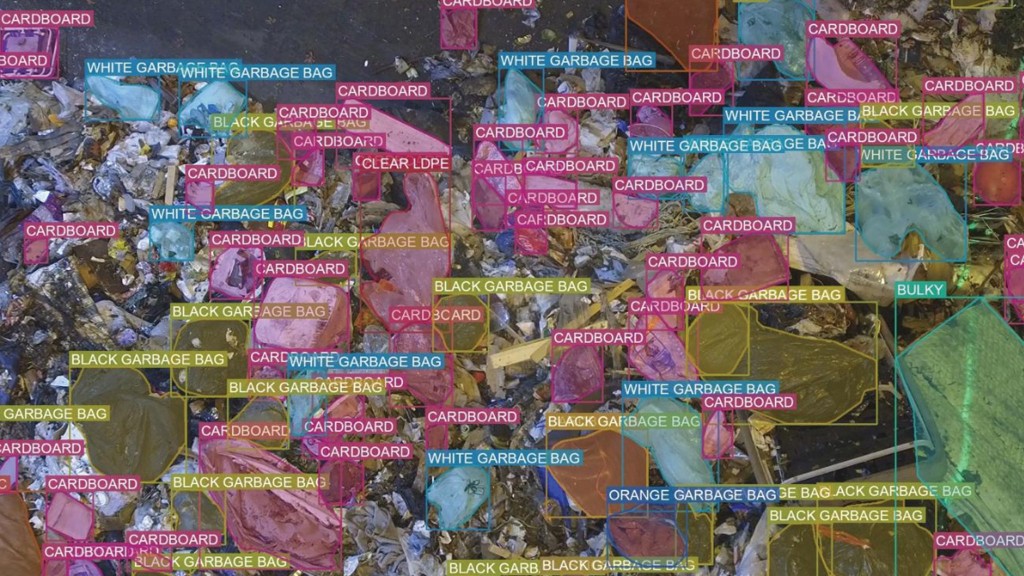
By implementing Visia's AI-powered material characterization system, Premier Recycle transformed this workflow. Using a mobile app, teams capture photos of incoming loads, which the system automatically classifies by material type. Material data is processed in real time, enabling instant, LEED-compliant diversion reporting.
"It's something that we call forward-deployed engineering, where we literally have a more involved engineering presence with our customer sites, where we work with them to figure out how this data gets used, and all the different ways we can [impact] operations," says Mecheri.
The results speak for themselves: Premier now achieves 98+ percent data accuracy, has eliminated manual photo review and data entry, and saves approximately 80 payroll hours per month. The digital platform will scale easily for future growth, creating a blueprint for circular construction practices.
Case Study 3: Enhancing safety and efficiency in e-scrap
Visia's solutions also extend into electronics recycling. PedalPoint Recycling (formerly evTerra) implemented AI-powered hazard detection on pre-sort lines, scanning dense e-scrap loads in real time. The system differentiates battery chemistries, such as lithium-ion and lead-acid, helping facilities optimize downstream processes and comply with strict handling protocols.
Once proven at a single site, the technology quickly expanded across PedalPoint's national operations, standardizing safety protocols, providing real-time data, and improving throughput. Each facility benefits from a unified, chemistry-specific detection system, preventing thermal events while allowing PedalPoint to reduce QC staff by 67 percent.
Beyond operational efficiency, the team at Visia sees a bigger picture. By ensuring that valuable resources are recovered and redirected, Visia is supporting operational ROI and the circular economy as a whole.
Transformative technology, thoughtful deployment
It's not just the technology that sets Visia apart. It's the philosophy behind its deployment. The team emphasizes selecting the right customers and ensuring readiness for success before expanding to new geographies. This careful approach ensures that facilities get the full benefit of the system, backed by on-site expertise and ongoing support.
"We're really in no rush to deploy," explains Mecheri. "The goal is to define customers who will see value, where we'll be able to implement quickly, and who we can support to the standard we believe in." It's an approach that balances strategic independence with deep customer partnerships, empowering operators to unlock transformative value from day one.
Looking ahead
Visia is redefining recycling with AI and machine learning, fuelled by a team passionate about finding smarter, more impactful ways to transform operations. As material streams grow more complex and regulatory requirements tighten, Visia's technology equips facilities to operate safer, more efficiently, and with greater insight into critical material recovery. At its core, the company's story is one of innovation, ambition, and the belief that AI can empower recyclers to achieve more than ever before.