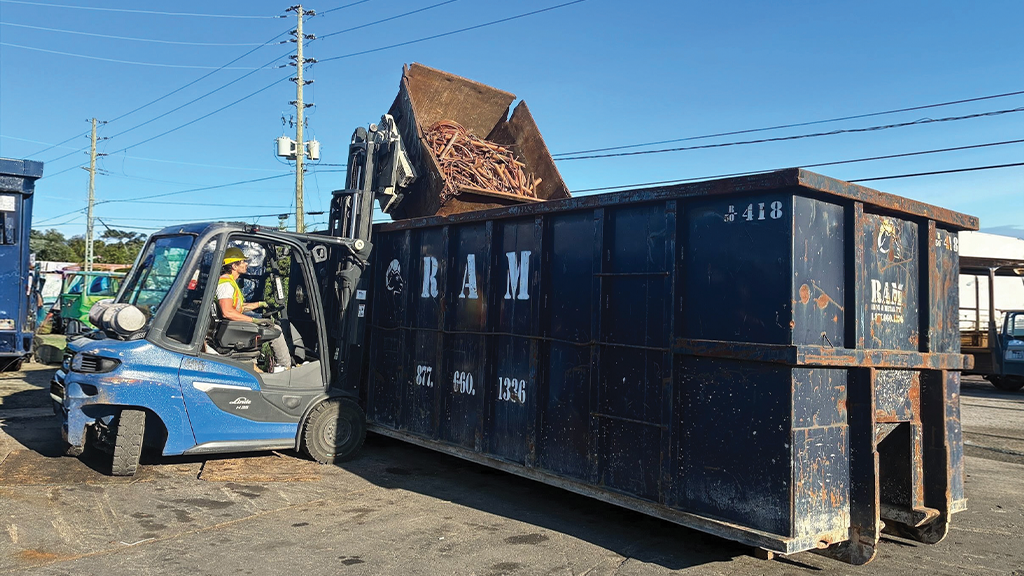

by Tracy Shaw, Canadian Association of Recycling Industries
Critics of our industry often contend recycling costs more than it is worth. They say that curbside collection programs are burdens placed on taxpayers that cost significantly more than sending material to landfill. They say the only value in recycling is as a placebo, making foolish but well-meaning citizens feel like they are saving the planet. And, they say, the material collected only ends up in landfills anyway.
Condemnations like these have reverberated since John Tierney infamously declared recycling “a waste of time and money” in his 1996 New York Times article “Recycling is Garbage.”
By contrast, supporters of the recycling industry generally promote its environmental benefits. They say recycling reduces greenhouse gas emissions and preserves natural resources. Certainly, the environmental benefits of our industry are something to be touted. Lifecycle analyses on recycled goods have proven recycling requires significantly less energy expenditure than the mining of virgin materials. But being green is not enough to garner support in the current economic climate. It is time the recycling industry made known its significant contribution to the world economy.
The BIR estimates 1.6 million people work directly in the global recycling industry, handling more than 600 million tonnes of recyclables each year and generating billions of dollars of economic activity worldwide. Studies from Europe, the U.S. and Canada all show the same results: the recycling industry generates jobs and boosts economies. Using recycled material helps manufacturers reduce production costs and makes them more competitive. The industry drives the innovation of new technologies and products, which is vital to economic growth.
In 2008, CARI conducted an informal survey of the Canadian recycling industry that concluded it directly employs approximately 34,000 workers, and indirectly creates jobs for approximately 85,000 Canadians. In 2010 Canadian recyclers exported approximately 5.9 million tonnes of metal, valued at $3.6 billion (CAD).
Last year ISRI released the results of a comprehensive study of the economic and environmental impact of the U.S. scrap recycling industry. Their report revealed the U.S. recycling industry generates more than $90 billion (USD) in total economic activity, and supports over 450,000 jobs. Moreover, the industry has added 10,000 jobs since the beginning of the global recession.
These findings are echoed in the 2011 Earnings Jobs & Innovation Report produced by the European Environment Agency, which concluded that the importance of the recycling industry to the European economy was continuing to increase despite the world economic downturn. As in Canada and the U.S., jobs generated directly by the recycling industry range from low- to high-skill and often pay above minimum wage.
The EEA report found that employment related to recycling was also steadily increasing, and that recycling a tonne of waste “will pay $101 (USD) more in salaries and wages than disposing of it in a landfill.” As to the “wasteful” curbside programs, a 2009 study of the Ontario Blue Box, MHSW and WEEE programs concluded the value added to the province per tonne of material recycled was $645 (CAD), compared to $49 per tonne of material sent to landfill.
The report showed the waste industry generated 0.7 jobs for every 1,000 tonnes of material collected, while recycling generated 6.6 jobs per 1,000 tonnes. These provincial recycling programs directly support 7,900 full-time-equivalent jobs, which create $387 million (CAD) of labour income. The fact is recycling creates jobs and revenue. Yes, recycling is good for the environment and we can be proud of that, but it is also immensely important to the world’s economic growth. Spread the word.