

The next generation of recycling
121 cities demonstrate composting as the next step
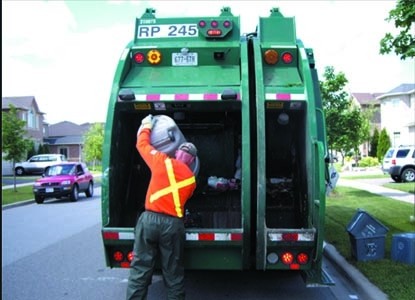
A new report from the Center for a Competitive Waste Industry, out of Madison, Wisconsin suggests strongly that the next generation of recycling is the composting of food scraps and soiled paper. The report surveyed 121 cities in Canada and the U.S., all early adopters of expanded organics recovery programs, and concludes that the cities surveyed demonstrate how to raise diversion of municipal solid wastes generated from 1/3 to more than 2/3.
The 79-page report is entitled "Beyond Recycling: Composting Food Scraps and Soiled Paper" and was prepared with the assistance of Gary Liss & Associates and Steve Sherman (formerly with Environmental Science Associates). It provides recycle program managers with a guidebook of best practices for expanding beyond recycling, and composters with advice on how to process food scraps. The survey was developed with the goal of encouraging and optimizing future efforts, and to provide understanding as to what can be learned from the 121 early-adopters that collect organic materials from the residential sector. Funding for the study was provided in part by the Environmental Protection Agency (Region 9) which covers California, Nevada, Arizona, Hawaii, Guam and American Samoa.
The one-hundred and twenty-one cities across North America, dubbed early adopters by the report, were found to have already embarked on an expansion beyond recycling bottles, cans and newspapers, which exploded in the 1990s in response to the landfill crisis. According to Peter Anderson, Executive Director of the Center for a Competitive Waste Industry and the report's primary author; "Now in the 21st century, separating food scraps and soiled paper, along with grass clippings and leaves, for centralized composting has emerged as the key activity households can do to stave off global warming."
Chief reasons the surveyed communities reported for composting food scraps and soiled paper (source-separated organics) instead of burying them in the ground, included: a major reduction in greenhouse gas emissions; a significant reduction in threats from groundwater pollution; and an increase in overall diversion rates. Other key findings and conclusions of the "Beyond Recycling" report include the fact that diversion of more than 3/4 of our food, soiled paper and yard trimmings (which together comprise over half of household discards) is feasible, and that proven techniques exist to dramatically reduce the cost of expanded composting by changing trash collection from weekly to every two weeks, or even monthly.
Also according to the report, the reasons for diverting food scraps include the fact that organic waste accounts for over 60 percent of municipal solid waste disposed of in landfills, food scraps account for over 20 percent of municipal solid waste, organic materials in landfills decompose to create methane, and that food scraps in landfills contribute to leachate production. Finally, the report concludes the following benefits of organic waste diversion & composting: it helps to achieve zero waste, it helps to achieve climate change goals, it decreases the need for synthetic fertilizers and pesticides, it sequesters carbon by increasing stored soil carbon, it increases water retention of soil thus decreasing demand for irrigation, it improves crop yields and quality, and it improves soil tilth.
The Center for a Competitive Waste Industry champions efforts to restore and maintain competition in the solid waste industry of special interest for public works directors, independent haulers, businesses using solid waste services, anti-trust regulators and recyclers.
The Center for a Competitive Waste Industry conducts research on the impact of concentration on prices charged for waste services and on the ability of the public to expand recycling. It also investigates possible collusive conduct and helps coordinate the efforts of those interested in protecting competitive markets for waste services.
For more information: contact Peter Anderson at (608) 231-1100, Gary Liss at (916) 652-7850 or Laura Moreno (EPA Region 9) at (415)-947-4240.
Center for a Competitive Waste Industry
www.competitivewaste.org