

U.S. Federal e-waste effort gets mixed reaction from environmental organizations
New report makes some good recommendations but fails to address the ‘toxic tide’ of waste dumped in developing countries
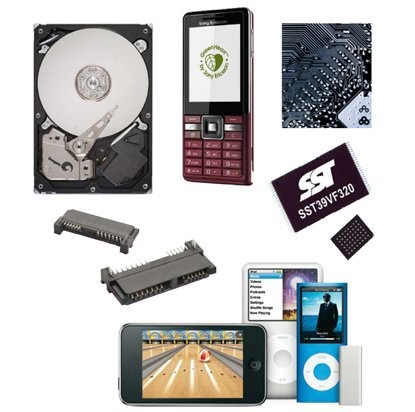
On July 20th, an Interagency Task Force – chaired by the White House Council on Environmental Quality, Environmental Protection Agency, and General Services Administration, released “A National Strategy for Electronics Stewardship.”
The report makes a variety of important recommendations to promote green design of electronics, and to improve handling of e-waste coming from federal agencies, but according to some environmental groups, it also falls short on the issue of e-waste exports to developing countries.
“The Nation’s largest single consumer of electronics, the Federal Government, will now be the Nation’s most responsible user of electronics. The steps outlined in the report will ensure that government leads by example and that the billions of dollars in IT equipment the government cycles through annually will be either reused or recycled properly,” said GSA Administrator Martha Johnson.
“A robust electronics recycling industry in America would create new opportunities to efficiently and profitably address a growing pollution threat,” said EPA Administrator Lisa P. Jackson. “The participation of industry leaders like Dell, Sprint and Sony is absolutely essential to this effort, and will help ensure that the work of the federal government -- the largest electronics consumer around -- is protecting our people from pollution at the same time we support savings and job creation through e-cycling and re-use of valuable materials."
According to environmental groups, including the Electronics Takeback Coalition, and BAN, the report has some good recommendations on green design and on using certified recyclers, but it completely fails to address what is generally recognized as the most serious e-waste problem – e-waste exporting to developing countries. One of the report’s stated goals is to ensure that the federal agencies will “lead by example” in managing their used electronics.
“We are very disappointed that the Task Force missed the opportunity handed to them by President Obama’s mandate to truly lead by example and ensure that all federal agencies do the right thing and not export obsolete used electronic equipment unless it is fully functional,” said Barbara Kyle, National Coordinator of the Electronic TakeBack Coalition (ETBC), a national environmental coalition which promotes responsible recycling of e-waste.
“We have other companies like Dell, HP, Apple, Samsung that have set the leadership bar there, so I don’t understand why our own federal government can’t do the same with its own e-waste.”
The ETBC did applaud the commitment by the GSA to use its purchasing power to promote greener products, and to get involved in the standards setting processes.
“Sadly, this report is a living contradiction,” said Jim Puckett, Executive Director of the Basel Action Network. “On the one hand it claims to promote responsible recycling and job creation here in the U.S., but then does nothing to prevent e-waste exporting, which squanders our critical metals resources, and poisons children abroad while exporting good recycling jobs from our country. This report shows why we need Congress to pass the Responsible Electronics Recycling Act, now under consideration in both the Senate and Congress, to truly address this issue.”
According to BAN, currently, most U.S. electronic waste is exported to developing countries, by many U.S. companies that claim to be recyclers, to be bashed, burned, flushed with acids, and melted down in unsafe conditions in developing countries. Eighty percent of children in Guiyu, China, a region where many “recycled” electronics wind up, have elevated levels of lead in their blood, due to the toxins in those electronics, much of which originates in the U.S. The plastics in the imported electronics are typically burned outdoors, which can emit deadly dioxin or furans, which are breathed in by workers and nearby residents.
Nancy Sutley, Chair of the White House Council on Environmental Quality, said; “Through a strong federal partnership, and coordination with manufacturers, retailers, recyclers, State and local governments, and other stakeholders, the actions outlined here will help address the potential health and environmental problems caused by the mismanagement of discarded electronics.”
“This strategy will encourage the recycling of these valuable resources and allow the U.S. to take advantage of the economic opportunities of remanufacturing and create jobs of the future here in America,” she said.
Michael Dell, chairman and CEO, Dell Inc. said; "Our goal at Dell is to deliver the highest quality and most efficient products to our customers with the least environmental impact."
"Last fiscal year, we diverted more than 150 million pounds of end-of-life electronics globally from landfills, and we are well on our way to meeting our goal of recycling 1 billion pounds by 2014. We encourage everyone in our industry to commit to easier, more responsible recycling as we all work to protect our planet," said Dell.
“To be recognized by the EPA for responsible e-waste recycling is an honor for Sprint and a chance to build on our industry-first Electronics Stewardship Policy,” said Sprint CEO Dan Hesse. “Our current policy and today’s commitment with the EPA highlights our goal to handle electronic waste holistically – from product design to disposal – and is another proof point to our broader commitment to sustainability innovation.”
“At Sony, any product we make and put our name on, we will take back and recycle in the most responsible manner,” said Mark Small, Vice President for Corporate Environment, Safety and Health.“
‘We Make It, We Take It Back’ has been Sony’s policy since 1995. This partnership – in coordination with the EPA and other stakeholders – will help us reach our “Road to Zero” goal, Sony’s vision of zero waste and zero environmental impact throughout the complete life cycle of all our products and related activities.”
The Institute of Scrap Recycling Industries, Inc. (ISRI) recently lauded the Obama Administration for taking concrete, practical steps to address how the U.S. Government will manage its used and end-of-life electronics while refuting an effort to ban such legitimate international trade, a move that would deliver a serious blow to the vibrant U.S. scrap recycling industry.
ISRI President Robin Wiener said that the Administration’s announcement closely mirrored ISRI’s position for stepped up enforcement of the federal CRT rule to stop illegal exports, increased third-party certifications of responsible recyclers and continued exchange of U.S. technology and best practices to help strengthen the environmentally responsible processing of electronics globally.
“Our federal government is the largest source of used and end-of-life electronics. It is encouraging to see that the government is taking a strong position on the responsible management of these materials,” Wiener said.
“Even more, we are encouraged by the Obama Administration's flat dismissal of burdensome and overreaching legislation that would ban exports and pull the rug out from under an industry that continues to create jobs and contribute to both the U.S. and global economy. Today’s announcement includes practical, effective steps that actually address bad actors instead of shutting down an industry.”
ISRI said that the July announcement by Obama Administration officials and industry leaders shows that the sustainable path forward in ensuring the proper handling of electronics is to promote the safe and responsible recycling of electronics at home and abroad–in direct contrast to the approach taken in legislation (HR 2284/S1270) recently introduced in Congress.
According to a 2011 Electronics Recycling Industry Survey, the U.S. electronics recycling industry continues to show tremendous growth and strong domestic capacity. The $5 billion-a-year industry employs more than 30,000 full-time workers in the United States and collected and processed over 3.5 million tons of used and end-of-life electronics equipment in 2010, up from 1.8 million tons in 2009.
More information on the EPA and industry collaboration: http://www.epa.gov/electronicsstrategy
More information on GSA’s electronic stewardship goals and promoting federal agencies’ purchasing Environmentally Preferable Products: http://www.gsa.gov/portal/content/187053
Link to Task Force Report - http://www.epa.gov/epawaste/conserve/materials/ecycling/taskforce/docs/strategy.pdfEE
E–waste Overview - www.electronicstakeback.com
E-waste reports, films and photos – www.ban.org and www.ban.org/photogallery/index.html
E-waste legislation - http://www.electronicstakeback.com/promote-good-laws/federal-legislation/